What Is a WhatsApp Chatbot?
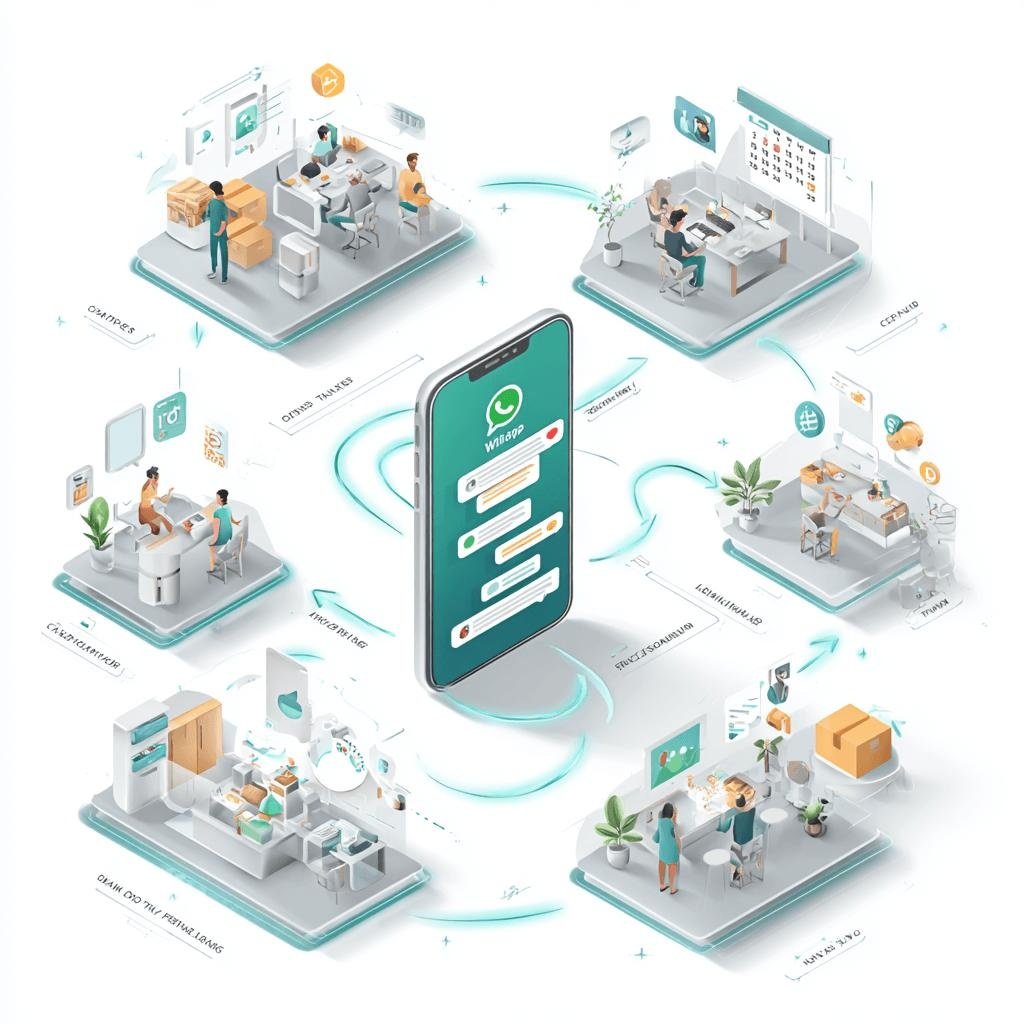
A WhatsApp chatbot is an automated software system that communicates with customers through WhatsApp and responds to their questions, requests, and actions without requiring a human to answer every message manually. Businesses can use a WhatsApp chatbot to provide instant customer support, share information, collect leads, send notifications, answer frequently asked questions, book appointments, and guide customers through different stages of a buying journey.
WhatsApp has become one of the most widely used communication platforms for businesses and customers. However, managing hundreds or thousands of customer conversations manually can become difficult. Messages can arrive at any time, customers may expect quick responses, and sales teams may not always be available. A WhatsApp chatbot helps businesses automate repetitive conversations while keeping communication convenient and accessible.
Unlike traditional communication channels where customers may need to call a business or wait for an email response, a WhatsApp chatbot allows customers to start a conversation directly from an application they already use every day.
For businesses, this creates an opportunity to combine customer service, marketing, sales, lead generation, and automation in one communication channel.
How Does a WhatsApp Chatbot Work?
A WhatsApp chatbot works by connecting WhatsApp communication with an automated conversational system. When a customer sends a message, the chatbot analyses the message or the selected option and provides a predefined or intelligent response.
The process can be simple or highly advanced depending on the business requirement.
For example, imagine a customer visits a company’s website and clicks a WhatsApp button. The WhatsApp chatbot can immediately greet the customer:
“Hi! Welcome to Digital Marketing India. How can we help you today?”
The customer may then see options such as:
- SEO Services
- Google Business Profile
- Website Development
- Social Media Marketing
- Google Ads
- WhatsApp Marketing
- Talk to an Expert
If the customer selects SEO Services, the WhatsApp chatbot can automatically provide relevant information and ask qualifying questions such as:
“What type of business do you operate?”
“Which city do you want to target?”
“Would you like a free consultation?”
The answers can then be forwarded to a sales team or stored in a CRM system.
This makes the WhatsApp chatbot more than a simple automatic reply system. When properly designed, it becomes a digital assistant that can support multiple stages of customer interaction.
Why Is a WhatsApp Chatbot Important for Modern Businesses?
Customers increasingly expect businesses to respond quickly. A delayed response can sometimes mean a lost lead, particularly when customers are comparing multiple businesses.
A WhatsApp chatbot can provide immediate assistance, even when employees are unavailable.
For example, a customer may enquire about a service at 10 PM. Instead of waiting until the next morning, the WhatsApp chatbot can answer basic questions, collect contact details, provide service information, and request a preferred callback time.
The sales team can then follow up with a qualified lead later.
This can improve the customer experience while reducing repetitive work for employees.
A WhatsApp chatbot can also help businesses maintain consistency. Every customer receives the same important information, reducing the possibility of employees accidentally sharing outdated prices, incorrect service details, or incomplete information.
For growing companies, automation can become particularly valuable because the number of conversations can increase faster than the size of the customer support team.
10 Major Benefits of a WhatsApp Chatbot
A properly planned WhatsApp chatbot can provide several benefits to businesses across different industries.
1. Instant Customer Responses
One of the biggest advantages is speed.
A WhatsApp chatbot can respond immediately to common customer questions. Customers don’t necessarily have to wait for office hours or for an employee to become available.
2. 24/7 Availability
A WhatsApp chatbot can remain active around the clock. Customers can enquire about products, services, appointments, locations, or other information outside normal working hours.
3. Lead Generation
Businesses can use a WhatsApp chatbot to collect names, phone numbers, business details, requirements, budgets, locations, and other information.
This helps sales teams receive more structured enquiries.
4. Reduced Repetitive Work
Employees often spend significant amounts of time answering the same questions.
A WhatsApp chatbot can automate frequently asked questions so employees can focus on complex conversations and high-value customers.
5. Better Customer Experience
Customers generally prefer convenient communication. Since WhatsApp is already familiar to many users, interacting with a WhatsApp chatbot can feel simpler than navigating complicated websites or waiting on hold.
6. Faster Sales Conversations
A WhatsApp chatbot can guide prospects through a structured conversation and identify their requirements before a salesperson gets involved.
7. Appointment Booking
Businesses such as clinics, salons, consultants, educational institutions, and service providers can use automation to help customers request or schedule appointments.
8. Automated Notifications
Businesses can use WhatsApp communication for important updates such as appointment reminders, order updates, delivery notifications, payment reminders, and service alerts, subject to applicable WhatsApp policies and customer consent.
9. CRM Integration
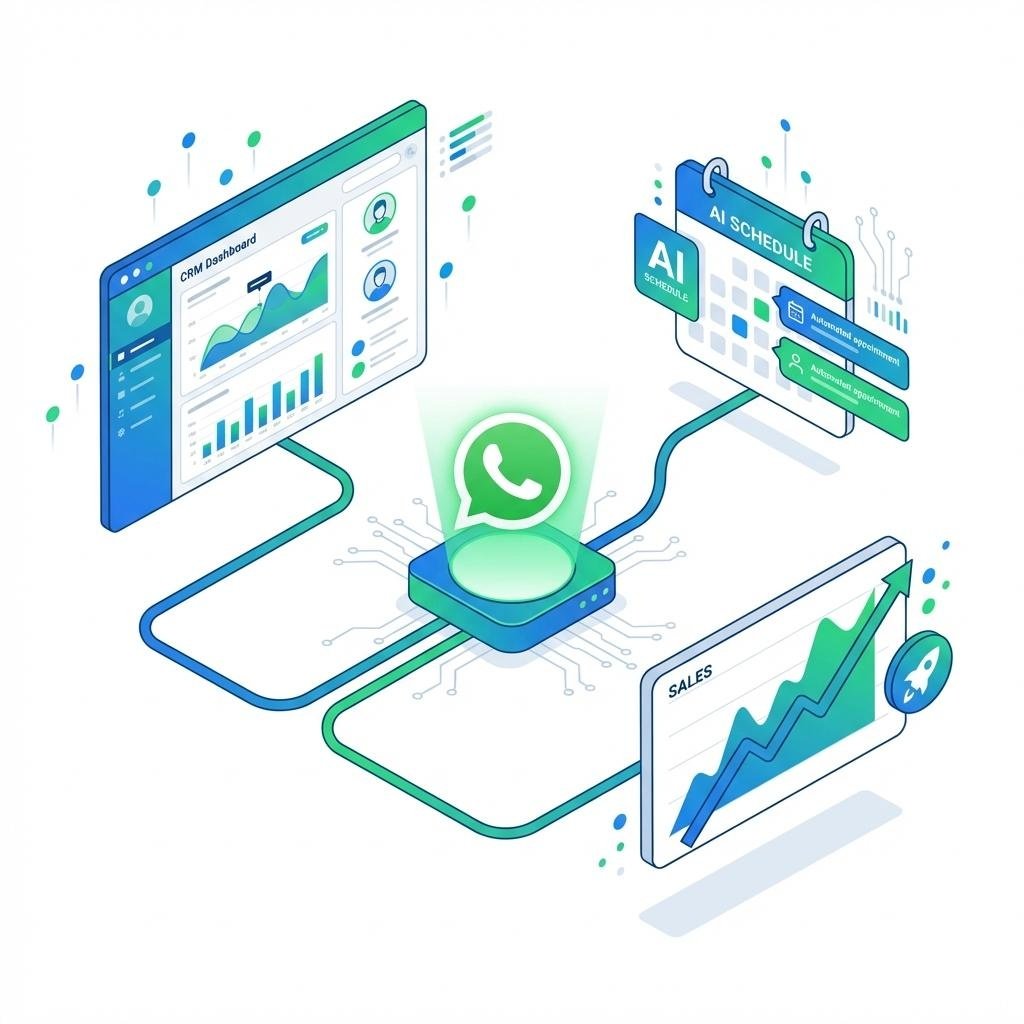
A WhatsApp chatbot can be connected with CRM systems so that customer information and conversation data can be organised for follow-up.
10. Scalable Communication
As a company grows, handling more conversations manually can become difficult. Automation allows businesses to manage a larger volume of routine enquiries without increasing staff proportionally.
WhatsApp Chatbot for Lead Generation
Lead generation is one of the most valuable applications of a WhatsApp chatbot.
Traditional lead-generation campaigns often send users to landing pages where they have to fill out forms. Some users may abandon the form because it feels lengthy or inconvenient.
A WhatsApp chatbot can make the process conversational.
For example:
Bot: Hi! Are you looking for digital marketing services?
Customer: Yes.
Bot: Great! Which service are you interested in?
Customer: SEO.
Bot: Which city do you want to target?
Customer: Ludhiana.
Bot: What is your website URL?
The chatbot can continue asking relevant questions and collect the information required by the sales team.
This process can help businesses identify the customer’s requirement before a salesperson calls.
For example, a digital marketing agency could use a WhatsApp chatbot to qualify prospects interested in SEO, Google Business Profile optimisation, paid advertising, website development, or social media marketing.
The key is to keep the conversation short and useful. Customers should not feel like they are completing a complicated questionnaire.
WhatsApp Chatbot for Customer Support
Customer support is another major use case.
A business may receive hundreds of questions about:
- Business hours
- Pricing
- Services
- Product availability
- Delivery
- Returns
- Appointment timings
- Locations
- Payment methods
- Order status
- Basic troubleshooting
A WhatsApp chatbot can handle many repetitive questions automatically.
For example, an e-commerce business could create a menu:
1. Track Order
2. Return Product
3. Delivery Information
4. Talk to Support
When a customer chooses Track Order, the chatbot can ask for the order number and retrieve the relevant information through an integrated system.
If the issue is too complex for automation, the WhatsApp chatbot can transfer the conversation to a human representative.
This combination of automation and human support is often more effective than trying to automate every interaction.
WhatsApp Chatbot for Sales and Marketing
A WhatsApp chatbot can also support sales and marketing campaigns.
Businesses can use conversational campaigns to introduce new products, explain services, qualify prospects, distribute offers, and guide customers toward a purchase.
For example, a real estate company can use a WhatsApp chatbot to ask:
“What type of property are you looking for?”
The customer can select:
- Apartment
- Villa
- Commercial Property
- Plot
The chatbot can then ask about location, budget, property size, and preferred timeline.
Similarly, an education company can use a WhatsApp chatbot to understand whether a student is interested in online courses, professional certifications, or career counselling.
A marketing automation system can then help the business organise these leads and continue communication appropriately.
However, businesses should avoid excessive or unwanted messaging. Customer consent, relevant communication, and applicable WhatsApp policies should always be considered when planning automated campaigns.
WhatsApp Chatbot for Appointment Booking
Appointment-based businesses can benefit significantly from automation.
Doctors, clinics, salons, consultants, fitness centres, educational institutions, and professional service providers can use a WhatsApp chatbot to simplify appointment enquiries.
A typical flow might look like this:
Welcome → Select Service → Choose Date → Choose Time → Enter Details → Confirm Appointment
For example:
Bot: Which service would you like to book?
Customer: Consultation.
Bot: Please select your preferred date.
The system can then connect with a booking platform or calendar, depending on the technical setup.
After confirmation, automated reminders can help reduce missed appointments.
This creates a smoother experience for both customers and staff.
WhatsApp Chatbot for E-Commerce Businesses
E-commerce businesses receive a large number of customer questions before and after purchases.
A WhatsApp chatbot can help customers discover products, answer basic questions, provide order information, and support post-purchase communication.
For example, a customer may ask:
“Do you have running shoes under ₹3,000?”
An intelligent chatbot connected to a product catalogue could guide the customer toward relevant products.
Other common conversations can include:
“Where is my order?”
“What is your return policy?”
“How long will delivery take?”
“Do you deliver to my city?”
Automation can reduce the workload of customer support teams while giving customers a faster communication channel.
WhatsApp Chatbot vs Traditional Customer Support
Traditional customer support generally depends heavily on human agents. While human support remains essential for complicated situations, not every conversation requires manual intervention.
A WhatsApp chatbot can handle repetitive tasks while human representatives manage conversations requiring empathy, judgement, negotiation, or detailed problem-solving.
| Traditional Support | WhatsApp Chatbot |
|---|---|
| Mainly dependent on staff availability | Automated responses can operate continuously |
| Repetitive questions consume staff time | Frequently asked questions can be automated |
| Response time may vary | Instant responses for automated flows |
| Scaling requires additional staff | Automation can handle larger routine volumes |
| Manual lead qualification | Automated lead qualification |
| Separate processes may be required | Multiple workflows can be connected |
The goal should not necessarily be to replace human employees.
Instead, a WhatsApp chatbot should be used to support human teams and automate repetitive communication.
What Features Should a WhatsApp Chatbot Have?
The right features depend on the business and its objectives.
Some commonly useful features include:
Automated Greetings
A chatbot can welcome customers and provide clear options.
Interactive Menus
Buttons and menus can help customers reach the correct information quickly.
FAQ Automation
Frequently asked questions can be answered automatically.
Lead Capture
The chatbot can collect customer information and requirements.
Human Handover
Customers should have an option to connect with a human representative when necessary.
CRM Integration
Customer details can be transferred into a CRM for sales and follow-up.
Appointment Scheduling
Businesses can connect booking workflows with their scheduling systems.
Notifications
Order updates, reminders, and other relevant notifications can be automated where permitted.
Analytics
Businesses can monitor conversations, leads, response patterns, and conversion-related metrics.
AI Integration
Advanced systems can use AI to understand natural-language questions and provide more flexible responses.
WhatsApp Chatbot and AI Chatbot: What Is the Difference?
A WhatsApp chatbot and an AI chatbot are not necessarily the same thing.
A basic WhatsApp chatbot generally follows predefined workflows. Customers choose options or use specific keywords, and the system provides the corresponding response.
An AI chatbot can understand a wider range of natural-language questions and generate more flexible responses.
For example, a rule-based chatbot may understand:
“Pricing”
and provide a predefined pricing message.
An AI-powered chatbot may understand different variations such as:
“How much does your SEO service cost?”
“Can you tell me your SEO packages?”
“What do you charge for SEO?”
and identify that all three questions are related to pricing.
AI can therefore make conversations more flexible.
However, businesses should still establish clear boundaries, provide accurate information, and include human escalation where necessary.
How Businesses Can Use a WhatsApp Chatbot Effectively
Simply installing a WhatsApp chatbot is not enough.
The chatbot needs to be designed around actual customer journeys.
Start by identifying the questions customers ask most frequently.
For example:
- What services do you provide?
- How much does the service cost?
- Where are you located?
- How can I book a consultation?
- How long does the process take?
- Can I speak to someone?
- How can I get a quotation?
These questions can become the foundation of the chatbot workflow.
Next, identify the primary objective.
Is the goal to:
Generate leads?
Provide support?
Book appointments?
Sell products?
Share information?
Qualify prospects?
The chatbot should be designed around that objective.
A good WhatsApp chatbot should also keep conversations simple. Customers should not have to navigate through ten menus before reaching an answer.
WhatsApp Chatbot Development for Different Industries
Almost any customer-facing business can explore chatbot automation.
Healthcare
Clinics can automate basic enquiries, appointment requests, location information, and reminders.
Education
Institutions can provide course information, admission details, enquiry forms, and counselling requests.
Real Estate
Agents can qualify property enquiries based on location, budget, property type, and requirements.
E-Commerce
Online stores can support product discovery, order tracking, FAQs, and customer service.
Hospitality
Hotels and travel companies can automate booking enquiries, availability questions, location details, and customer assistance.
Professional Services
Consultants, agencies, and service providers can use a WhatsApp chatbot for lead generation, qualification, appointment requests, and FAQs.
Local Businesses
Local businesses can use automation to respond to enquiries, share business information, collect leads, and direct customers to appropriate services.
The exact workflow should always be customised according to the business’s customer journey.

Common Mistakes to Avoid With a WhatsApp Chatbot
Automation can improve communication, but poor chatbot design can create frustration.
Making the Conversation Too Long
Customers want answers quickly. Avoid unnecessary questions.
Hiding Human Support
Always provide a clear route to a human representative for complicated issues.
Using Generic Responses
Messages should be relevant to the customer’s actual question.
Over-Automating
Not every conversation should be automated. Sensitive or complicated interactions may require human assistance.
Ignoring Customer Consent
Businesses should communicate responsibly and follow applicable messaging requirements and platform policies.
Not Updating Information
Outdated pricing, offers, business hours, or service details can damage customer trust.
Failing to Track Results
Businesses should monitor whether the chatbot is actually generating useful leads, reducing support workload, or improving conversions.
How to Choose a WhatsApp Chatbot Development Service
Choosing the right development partner is important because chatbot projects often involve more than creating automated replies.
A professional chatbot development service should understand:
- Business objectives
- Customer journey
- WhatsApp integration
- Lead-generation workflows
- CRM integration
- Marketing automation
- Human handover
- Data management
- Analytics
- Ongoing maintenance
Before starting development, businesses should clearly define what they expect the system to achieve.
For example, a company looking for lead generation may require a completely different chatbot workflow from an e-commerce company looking for order support.
A professional development approach should therefore begin with strategy, followed by conversation design, technical integration, testing, deployment, and optimisation.
Why Choose Digital Marketing India for WhatsApp Chatbot Solutions?
Saurabh Kumar, with 15+ years of experience in digital marketing, provides businesses with digital solutions designed around marketing, communication, automation, and online growth.
Digital Marketing India offers WhatsApp Marketing, WhatsApp Chatbot Development, AI Chatbot Development, Website Live Chat Integration, Marketing Automation, CRM Integration, Email Marketing Automation, and Lead Nurturing Automation.
These services can be combined with other digital marketing solutions depending on business requirements.
For example, a business may generate leads through Google Ads or Meta Ads and then use a WhatsApp chatbot to qualify those leads. The qualified leads can subsequently be transferred into a CRM system for sales follow-up.
Similarly, SEO and Google Business Profile optimisation can help attract customers organically, while WhatsApp automation can support the communication process after an enquiry.

Digital Marketing India also provides:
- Website & App Development
- SEO Services
- Local SEO
- Google Business Profile Optimisation
- Social Media Marketing
- Meta Ads
- Google Ads
- YouTube Ads
- Lead Generation Campaigns
- Creative Services
- Video Production
- Content Marketing
- Analytics & Reporting
- Online Reputation Management
This integrated approach can help businesses connect different parts of their digital marketing ecosystem instead of treating every marketing channel separately.
How Much Does a WhatsApp Chatbot Cost?
The cost of a WhatsApp chatbot depends on the complexity of the project.
A basic chatbot with predefined menus and FAQs may require a relatively simple setup.
A more advanced system involving AI, CRM integration, lead qualification, appointment booking, API integrations, analytics, and customised workflows will generally require more development work.
Factors that can influence cost include:
- Number of chatbot workflows
- Number of integrations
- CRM requirements
- AI functionality
- Appointment or booking systems
- Product catalogue integration
- Number of automated messages
- Analytics requirements
- Custom development
- Maintenance and support
Therefore, businesses should avoid choosing a chatbot solely on the basis of the lowest development price.
The better approach is to evaluate the expected business outcome and choose a solution that can scale with future requirements.
Future of WhatsApp Chatbot Automation
Business communication is increasingly moving toward conversational experiences.
Customers don’t always want to fill out lengthy forms or navigate multiple pages. They often want to ask a question and receive a direct answer.
This makes conversational automation increasingly relevant.
The future of WhatsApp chatbot technology is likely to involve deeper AI capabilities, CRM integration, personalised conversations, automated lead nurturing, voice capabilities, analytics, and integration with broader marketing systems.
AI can help businesses move from simple keyword-based automation toward more natural conversations.
However, technology should remain focused on customer needs.
The best chatbot is not necessarily the one with the most features. It is the one that helps customers complete their intended task quickly and accurately.
Final Thoughts on WhatsApp Chatbot
A WhatsApp chatbot can become a valuable communication and automation tool for businesses that receive regular customer enquiries. From answering FAQs and capturing leads to supporting sales, booking appointments, sending notifications, and integrating with CRM systems, chatbot automation can reduce repetitive work and create faster customer interactions.
The real value comes from strategic implementation.
A business should first understand its customers, identify repetitive communication tasks, define clear objectives, and then build the chatbot around those requirements.
When combined with SEO, Google Business Profile optimisation, social media marketing, paid advertising, website development, CRM integration, and marketing automation, a WhatsApp chatbot can become part of a complete digital growth ecosystem.
For businesses looking to automate customer communication and improve lead management, professional WhatsApp chatbot development can be an important step toward building a faster, more scalable, and customer-friendly digital communication system.
About Saurabh Kumar
Saurabh Kumar has 15+ years of experience in digital marketing and provides a wide range of digital marketing, development, automation, creative, content, advertising, and analytics solutions through Digital Marketing India.
Official Address
S15-00709, Vaidehi Niwas
Bhairomunna Link Road
Sahnewal, Ludhiana, Punjab – 141120
Contact
+91 76966 77728
Digital Marketing India – Core Services
Website & App Development: Business websites, e-commerce websites, custom web applications, mobile applications, landing pages, maintenance and support.
SEO Services: Local SEO, On-Page SEO, Off-Page SEO, Technical SEO, E-Commerce SEO, Google Business Profile optimisation, SEO audits and competitor analysis.
Social Media Marketing: Facebook, Instagram, LinkedIn and YouTube marketing, social media management, content creation and strategy.
Paid Advertising: Meta Ads, Google Ads, YouTube Ads, LinkedIn Ads, remarketing and lead-generation campaigns.
Automation & Communication: WhatsApp Marketing, Bulk SMS Marketing, Voice Call Marketing, WhatsApp Chatbot Development, AI Chatbot Development, Website Live Chat Integration, Marketing Automation, CRM Integration, Email Marketing Automation and Lead Nurturing Automation.
Creative Services: Graphic design, social media creatives, logo design, banners, brochures and brand identity.
Video Production: Video editing, Reels editing, YouTube editing, corporate videos, motion graphics and promotional videos.
Content Marketing: Content writing, blog writing, website content, SEO content and ad copywriting.
Analytics & Reporting: Google Analytics setup, conversion tracking, performance reporting and ROI analysis.
Online Reputation Management: Google review management, brand monitoring and online reputation building.
If your business is looking for a way to automate customer conversations, capture better leads, improve response times, and connect WhatsApp communication with your broader digital marketing strategy, a professionally planned WhatsApp chatbot can be a strong solution.