Introduction
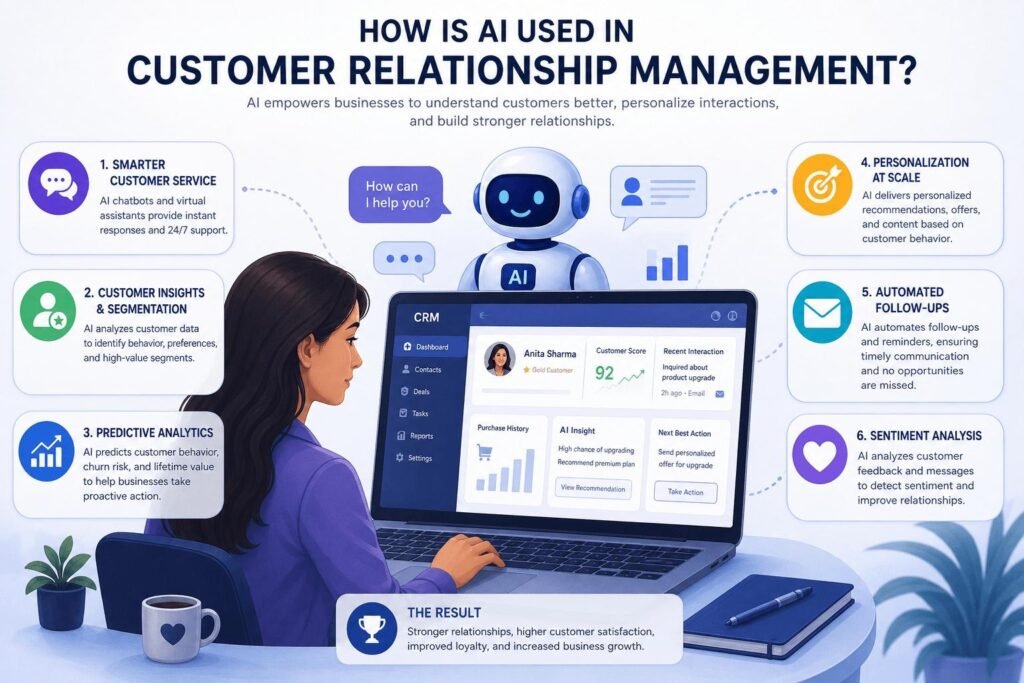
In today’s competitive digital environment, businesses receive enquiries from websites, Google Business Profiles, social media, advertisements, WhatsApp, email, phone calls, and multiple other channels. Managing these enquiries manually can quickly become complicated. A CRM System provides businesses with a structured way to organize customer information, track leads, manage conversations, automate repetitive activities, and improve sales performance.
A modern CRM System is much more than a digital address book. It can become the central platform through which a company manages prospects, customers, marketing activities, sales pipelines, follow-ups, communication, and reporting. When properly implemented, a CRM System helps businesses reduce missed opportunities while giving sales and marketing teams a clearer view of every customer interaction.
For businesses investing in SEO, social media marketing, Google Ads, Meta Ads, WhatsApp marketing, email campaigns, and lead-generation activities, connecting these channels with a CRM System can make the entire process more organized and measurable.
Digital Marketing India, led by Saurabh Kumar with 15+ years of experience in digital marketing, provides digital marketing, website development, SEO, advertising, automation, communication, creative, video, content, analytics, and online reputation solutions designed to help businesses build stronger digital operations.
1. CRM System Helps Centralize Customer Information
One of the biggest advantages of a CRM System is centralized customer data.
Businesses often store customer information in spreadsheets, notebooks, email inboxes, WhatsApp chats, phone contacts, and different software platforms. This fragmented approach makes it difficult to understand the complete customer journey.
A CRM System brings important information into one organized environment. Depending on the business and software used, this may include:
- Customer name and contact details
- Lead source
- Previous conversations
- Enquiry history
- Sales stage
- Follow-up dates
- Purchase history
- Notes and requirements
- Assigned salesperson
- Marketing interactions
- Customer preferences
With a CRM System, sales representatives can access relevant information without searching through multiple platforms.
This centralized approach can also improve collaboration because different departments can work with the same customer information.
2. CRM System Improves Lead Management
Generating leads is only one part of successful digital marketing. Managing those leads effectively is equally important.
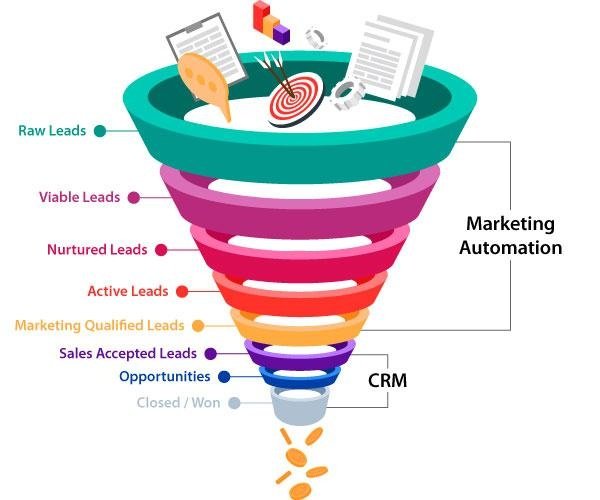
A CRM System allows businesses to record leads and organize them according to their current position in the sales process. For example, leads can be categorized as:
New Lead → Contacted → Qualified → Proposal Sent → Negotiation → Won/Lost
This creates a clear sales pipeline.
Without a CRM System, leads can easily be forgotten or followed up too late. A structured system makes it easier to identify which prospects require immediate attention.
Lead management becomes particularly valuable when a business receives enquiries from Google Ads, Meta Ads, landing pages, websites, WhatsApp campaigns, social media, and organic search.
Instead of treating every enquiry as an isolated conversation, a CRM System can create a consistent process for moving prospects toward conversion.
3. CRM System Makes Follow-Ups More Organized
Follow-up is one of the most important parts of sales.
A potential customer may not be ready to purchase during the first conversation. They may need additional information, a quotation, a demonstration, a consultation, or simply more time.
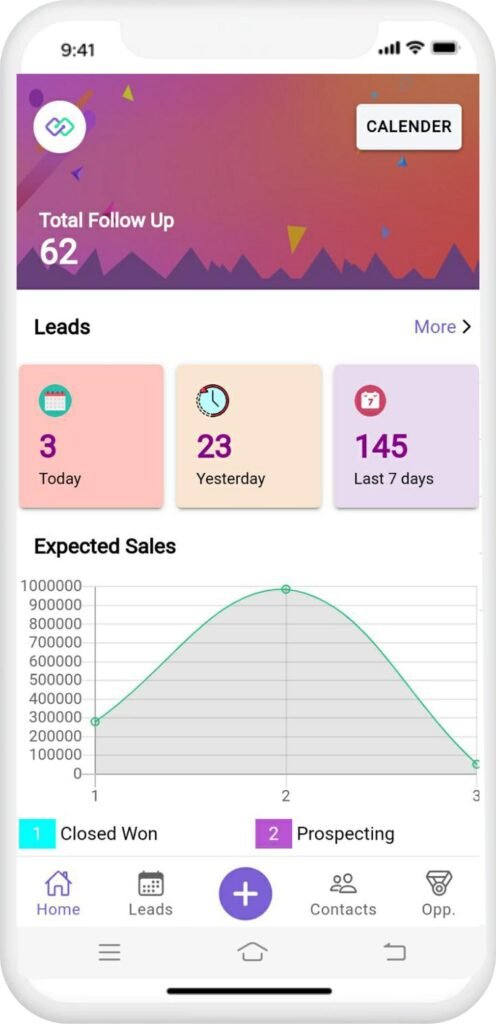
A CRM System can help sales teams schedule follow-up activities and maintain records of previous conversations.
For example, if a prospect requests a call after three days, the salesperson can record that activity. When the follow-up date arrives, the team knows what was discussed previously and what action should happen next.
This reduces dependence on memory.
A systematic follow-up process can also improve customer experience because prospects receive timely communication rather than having to repeatedly contact the company themselves.
4. CRM System Supports Sales Pipeline Management
A sales pipeline provides a visual representation of where prospects are in the buying process.
A CRM System can help businesses create customized stages according to their sales model.
For a service company, the pipeline could look like:
Enquiry → Requirement Discussion → Consultation → Proposal → Negotiation → Payment → Customer
For an e-commerce business, the stages may be completely different.
The value of a CRM System lies in its flexibility. Businesses can design workflows that match their actual processes.
Sales managers can also identify bottlenecks. If a large number of prospects remain stuck at the proposal stage, the company can investigate why. Perhaps pricing, communication, product information, or follow-up needs improvement.
This turns sales management from guesswork into a more structured process.
5. CRM System Connects Marketing and Sales
Marketing teams generate awareness and leads, while sales teams convert qualified prospects into customers. If these departments operate separately, valuable information can be lost.
A CRM System can help bridge this gap.
For example, a company running Google Ads can identify which campaigns are generating enquiries. Similarly, leads from Meta Ads, organic SEO, social media, or landing pages can be tracked according to their source.
This allows businesses to ask important questions:
- Which marketing channel generates the most leads?
- Which channel produces the most qualified prospects?
- Which campaigns generate actual customers?
- What is the cost of acquiring a customer?
- Which source provides the best return?
By connecting marketing and sales information, a CRM System can provide a more complete picture of campaign performance.
6. CRM System Enables Marketing Automation
Modern businesses cannot manually perform every repetitive marketing task.
Marketing automation can handle activities such as:
- Welcome emails
- Lead notifications
- Follow-up messages
- Customer reminders
- Email sequences
- Lead nurturing
- Appointment reminders
- Re-engagement campaigns
- Internal sales notifications
When a CRM System is integrated with marketing automation tools, actions can be triggered according to customer behaviour.
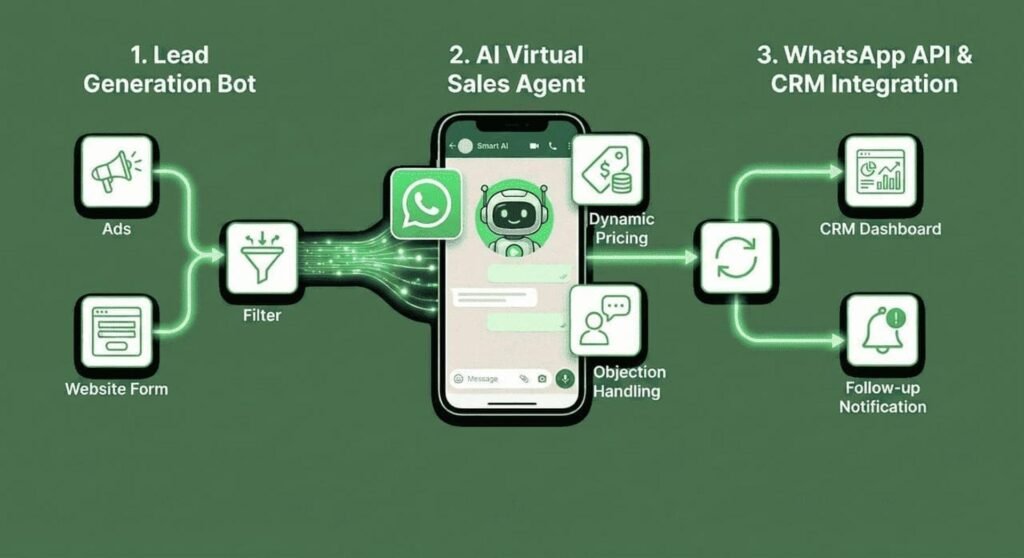
For example, when someone submits a website enquiry, the CRM System can record the lead and notify the appropriate salesperson. A follow-up email may also be triggered automatically.
Automation does not necessarily replace human communication. Instead, it helps teams spend less time on repetitive administration and more time on meaningful customer interactions.
7. CRM System Strengthens WhatsApp and Communication Management
WhatsApp has become an important communication channel for businesses, especially in India.
Customers frequently use WhatsApp to ask about prices, services, appointments, product availability, quotations, and other information.
Managing these conversations manually can become difficult as enquiry volume increases.
A CRM System integrated with WhatsApp solutions can help businesses organize communication more systematically.
Depending on the technology being used, businesses can create workflows for:
- Enquiry acknowledgement
- Lead notifications
- Follow-up reminders
- Promotional communication
- Customer updates
- Appointment reminders
- Lead nurturing
- Support communication
A business can combine WhatsApp Marketing, Bulk SMS Marketing, IVR solutions, website chat, and CRM integration into a broader communication strategy.
8. CRM System Improves Customer Retention
Acquiring a new customer can require significant marketing and sales effort. Therefore, retaining existing customers is equally important.
A CRM System helps businesses maintain customer histories and identify opportunities for future engagement.
For example, a business can record when a customer purchased a service, when maintenance is due, or when a renewal may be required.
This information can support retention campaigns.
Businesses can also segment customers according to purchase history, interests, location, engagement level, or other relevant criteria.
Personalized communication becomes easier when customer information is organized.
Instead of sending the same message to everyone, companies can develop more relevant communication based on customer data.
9. CRM System Helps Businesses Track Marketing ROI
Digital marketing provides access to enormous amounts of data, but collecting data is not the same as understanding performance.
A CRM System can help connect marketing activity with actual sales outcomes.
Consider a company running campaigns across:
- Google Ads
- SEO
- YouTube
The number of leads generated by each channel is useful, but businesses also need to understand how many leads eventually became customers.
When lead-source information is connected to sales records, companies can evaluate marketing performance more effectively.
This can support decisions about advertising budgets and campaign optimization.
Google Analytics setup, conversion tracking, performance reports, and ROI analysis can further strengthen the measurement process.
10. CRM System Supports Better Customer Segmentation
Not every customer has the same needs.
A business may have new prospects, returning customers, high-value customers, inactive customers, and prospects who have not yet made a purchase.
A CRM System can help organize audiences into useful segments.
For example:
New Leads: People who have recently contacted the company.
Qualified Leads: Prospects who meet specific requirements.
Existing Customers: People who have already purchased.
Repeat Customers: Customers who have purchased multiple times.
Inactive Customers: Customers who have not interacted recently.
This segmentation can improve marketing relevance.
Businesses can create different communication strategies for different groups instead of sending identical messages to their entire database.
11. CRM System Can Improve Team Productivity
Administrative work can consume a significant amount of employee time.
Salespeople may spend hours searching for customer details, updating spreadsheets, remembering follow-up dates, and preparing repetitive reports.
A CRM System can organize many of these activities in one place.
Team members can see assigned leads, upcoming activities, sales stages, customer records, and follow-up requirements.
Managers can also monitor team activity through dashboards and reports.
This creates greater visibility across the organization.
A well-configured CRM System can therefore contribute to productivity by reducing unnecessary manual processes and creating clearer workflows.
12. CRM System Integrates With Websites and Lead Forms
A company website is often one of its most important lead-generation assets.
Visitors may submit enquiry forms, request quotations, book consultations, download resources, or ask questions through live chat.
Without integration, employees may have to manually transfer these enquiries into another system.
CRM integration can automate this process.
When a visitor submits a form, the information can potentially be transferred directly into the CRM System. The relevant salesperson can receive a notification and the lead can automatically enter the appropriate sales pipeline.
Website Live Chat Integration can further enhance the process by allowing businesses to capture conversations and enquiries.
Landing page development combined with CRM integration can also create efficient lead-generation campaigns.
13. CRM System Supports Lead Nurturing
Not every prospect is ready to buy immediately.
Some people may need several interactions before making a purchasing decision.
Lead nurturing is the process of maintaining relevant communication with prospects until they become ready to take action.
A CRM System can support this process by recording interactions and triggering appropriate communication workflows.
For example, a prospect who downloads a guide may receive educational emails. Someone who requests pricing may receive a follow-up sequence. A previous customer may receive information about an additional service.
Lead nurturing is particularly useful for businesses with longer sales cycles.
Instead of abandoning prospects who do not convert immediately, companies can maintain structured relationships with them.
14. CRM System Helps With Reporting and Business Decisions
Business growth requires informed decisions.
A CRM System can provide reports that help management understand sales activity, lead volume, conversion rates, revenue opportunities, and team performance.
Useful metrics may include:
- Total leads
- Qualified leads
- Conversion rate
- Lead source
- Sales pipeline value
- Average sales cycle
- Follow-up performance
- Customer acquisition cost
- Customer retention
- Campaign performance
These insights can reveal trends that may not be visible through basic spreadsheets.
For example, if SEO generates fewer leads than paid advertising but produces customers at a lower acquisition cost, the business may reconsider how its marketing budget is distributed.
Data-driven decision-making allows companies to continuously improve their strategies.
15. CRM System Creates a More Scalable Digital Business
A small business may initially manage customers using spreadsheets and messaging applications. As the company grows, however, the number of leads, customers, employees, campaigns, and interactions can increase dramatically.
At that stage, manual systems may become difficult to maintain.
A CRM System provides a foundation for scalable customer and sales management.
Businesses can combine CRM integration with:
- Website development
- Mobile applications
- SEO
- Google Business Profile optimization
- Social media marketing
- Google Ads
- Meta Ads
- WhatsApp marketing
- Email automation
- AI chatbots
- Website live chat
- Lead nurturing
- Analytics
This creates a connected digital ecosystem.
The objective is not simply to install software. The real goal is to build a process in which leads are captured, organized, communicated with, nurtured, converted, and retained efficiently.
How Digital Marketing India Can Help With CRM and Automation
Implementing technology without a clear strategy can create unnecessary complexity. Businesses need to understand their customer journey first and then select the right combination of tools, integrations, automation, and marketing channels.
Digital Marketing India, led by Saurabh Kumar, provides a broad range of digital services for businesses looking to strengthen their online presence and customer acquisition systems.
Website & App Development
Services include business website development, e-commerce website development, custom web applications, mobile application development for Android and iOS, landing pages, and website maintenance.
A well-designed website can become an important lead-generation channel and can be connected with CRM workflows.

SEO Services
SEO services include local SEO, on-page SEO, off-page SEO, technical SEO, e-commerce SEO, Google Business Profile optimization, SEO audits, and competitor analysis.
Search visibility can generate consistent organic traffic and enquiries that can then be managed through structured CRM processes.
Social Media Marketing
Businesses can build their social presence through Facebook Marketing, Instagram Marketing, LinkedIn Marketing, YouTube Marketing, social media management, content creation, and strategy.
Social media enquiries can also become part of a broader lead-management workflow.
Paid Advertising
Paid advertising services cover Google Ads, Meta Ads, YouTube Ads, LinkedIn Ads, remarketing, and lead-generation campaigns.
Connecting paid campaigns with CRM processes helps businesses understand not just how many leads they generate but what happens to those leads afterward.
Automation & Communication Solutions
Automation is a key part of modern customer management.
Digital Marketing India offers solutions including WhatsApp Marketing, Bulk SMS Marketing, IVR and promotional calls, WhatsApp Chatbot Development, AI Chatbot Development, website live chat, marketing automation, CRM integration, email marketing automation, and lead nurturing automation.
These services can help businesses reduce repetitive tasks and improve response processes.
Creative Services
Brand communication requires consistent visual identity.
Services include graphic designing, social media creatives, logo design, banners, brochures, and brand identity design.
Video Production
Video services include video editing, Reels editing, YouTube video editing, corporate videos, motion graphics, and promotional videos.
Video content can support awareness, engagement, lead generation, and remarketing campaigns.
Content Marketing
Content services include content writing, blog writing, website content, SEO content, and ad copywriting.
High-quality content can support SEO while helping potential customers understand a company’s products and services.
Analytics & Reporting
Analytics services include Google Analytics setup, conversion tracking, performance reports, and ROI analysis.
These capabilities are particularly valuable when businesses want to understand the relationship between marketing expenditure, leads, conversions, and revenue.
Online Reputation Management
Online reputation can strongly influence customer decisions.
Digital Marketing India provides Google review management, brand monitoring, and online reputation-building solutions to help businesses develop and maintain a stronger online presence.
Why Businesses Should Consider CRM Integration
A CRM System becomes significantly more valuable when it is integrated with the tools a company already uses.
Imagine a customer journey where a prospect discovers a company through Google search, visits the website, submits a form, receives an automated WhatsApp acknowledgement, speaks with a salesperson, receives a quotation, gets a follow-up reminder, and eventually becomes a customer.
If these activities are disconnected, important information can disappear between platforms.
With CRM integration, businesses can create a more connected workflow.
The exact integrations required depend on the company’s industry, sales cycle, customer volume, marketing channels, and internal processes.
A good implementation should therefore begin with business requirements rather than software features alone.
CRM System Best Practices for Businesses
Choosing a CRM System is only the beginning. Businesses also need an effective implementation strategy.
Keep Customer Data Clean
Duplicate, outdated, or incomplete records can reduce the usefulness of any CRM platform. Teams should establish clear data-management practices.
Define Sales Stages
Sales stages should reflect the actual customer journey. Avoid creating too many unnecessary stages.
Automate Repetitive Activities
Tasks such as notifications, reminders, email sequences, and lead assignments may be suitable for automation.
Train Employees
Employees should understand how and when to use the system. A sophisticated platform is not useful if the team does not use it consistently.
Track Meaningful Metrics
Businesses should focus on metrics that support actual decisions rather than collecting data simply because it is available.
Review the Process Regularly
Customer behaviour, marketing channels, and business objectives change. CRM workflows should therefore be reviewed and optimized periodically.
CRM System and the Future of Digital Business
The future of digital marketing is becoming increasingly connected.
Businesses are moving beyond individual tools and toward integrated ecosystems involving websites, advertising platforms, social media, automation, chatbots, analytics, and customer-management platforms.
Artificial intelligence is also creating new possibilities for customer communication, lead qualification, content personalization, chat support, and automation.
However, technology alone does not guarantee growth.
Successful implementation requires a combination of strategy, accurate data, useful content, effective marketing, timely communication, and consistent customer service.
A CRM System can provide the infrastructure that connects many of these activities.
For growing businesses, this means greater visibility into the customer journey and potentially faster, more organized responses to opportunities.
Conclusion
A CRM System can play an important role in modern business growth by bringing customer information, sales activities, marketing campaigns, communication, automation, and reporting into a more organized framework.
From capturing leads and scheduling follow-ups to integrating WhatsApp communication, websites, advertising campaigns, email automation, analytics, and lead nurturing, a CRM System can help businesses create a more structured customer journey.
The greatest benefit comes when CRM technology is combined with a well-planned digital marketing strategy. SEO can attract organic traffic, paid advertising can generate targeted leads, social media can build engagement, websites can capture enquiries, automation can improve response times, and analytics can measure results.
With 15+ years of digital marketing experience, Saurabh Kumar and Digital Marketing India offer integrated digital solutions covering website and app development, SEO, social media marketing, paid advertising, automation, communication solutions, creative services, video production, content marketing, analytics, and online reputation management.
If your business is receiving leads from multiple channels but struggling to organize follow-ups, customer information, communication, or sales reporting, implementing the right CRM System and connecting it with your digital marketing infrastructure can be an important step toward building a more efficient and scalable business.
Contact: +91 76966 77728
Official Address: S15-00709, Vaidehi Niwas, Bhairomunna Link Road, Sahnewal, Ludhiana, Punjab – 141120