Introduction: Why Businesses Need a CRM Solution
In today’s competitive digital marketplace, businesses need more than good products and services to grow. They need an organized way to manage leads, customers, sales conversations, follow-ups, marketing activities, and business data. A CRM Solution helps businesses bring these activities together in one centralized system. Instead of depending on spreadsheets, scattered messages, manual reminders, and disconnected applications, companies can use a CRM Solution to create a more structured and efficient customer management process.
A modern CRM Solution can help businesses capture leads, track customer interactions, manage sales pipelines, automate repetitive tasks, and understand customer behavior. Whether a company is a startup, local business, e-commerce brand, professional service provider, or established organization, an effective CRM Solution can improve the way teams communicate with prospects and existing customers.
With the increasing importance of digital marketing, businesses are generating leads through Google Ads, social media, websites, WhatsApp, landing pages, email campaigns, and other channels. However, generating leads is only one part of the growth process. Businesses also need an effective system to organize and convert those leads. This is where a CRM Solution becomes valuable.
1. What Is a CRM Solution?
A CRM Solution is a technology system designed to help businesses manage relationships and interactions with current and potential customers. CRM stands for Customer Relationship Management. The purpose of a CRM Solution is to organize customer information and make it easier for businesses to manage the entire customer journey.
A CRM Solution can store information such as customer names, phone numbers, email addresses, previous conversations, enquiries, purchases, follow-up dates, sales stages, and communication history. Instead of keeping information in multiple places, teams can access relevant customer information through a centralized platform.
For example, when a potential customer submits an enquiry through a website, a CRM Solution can record the lead and assign it to the appropriate salesperson. The salesperson can then contact the prospect, update the lead status, schedule a follow-up, and move the opportunity through the sales pipeline.
The exact features depend on the CRM Solution selected or developed for the business, but the overall objective remains the same: better organization, stronger customer relationships, and improved operational efficiency.
2. How a CRM Solution Improves Lead Management
Lead management is one of the most important areas where a CRM Solution can make a difference. Businesses may receive enquiries from multiple sources, including websites, Google Business Profile, social media, paid advertisements, WhatsApp, phone calls, email campaigns, and landing pages.
Without a centralized system, some enquiries may be missed or followed up too late. A CRM Solution can help businesses collect and organize these leads in a structured database.
Sales teams can categorize leads based on their source, interest, location, requirements, budget, or stage in the buying journey. This makes it easier to prioritize prospects and plan follow-ups.
A CRM Solution can also help businesses identify which marketing channels are producing better-quality leads. This information can support smarter marketing decisions and improve the overall lead conversion process.
3. CRM Solution for Sales Pipeline Management
Managing a sales pipeline manually can become difficult as a business grows. Salespeople may have dozens or hundreds of prospects at different stages of the buying journey.
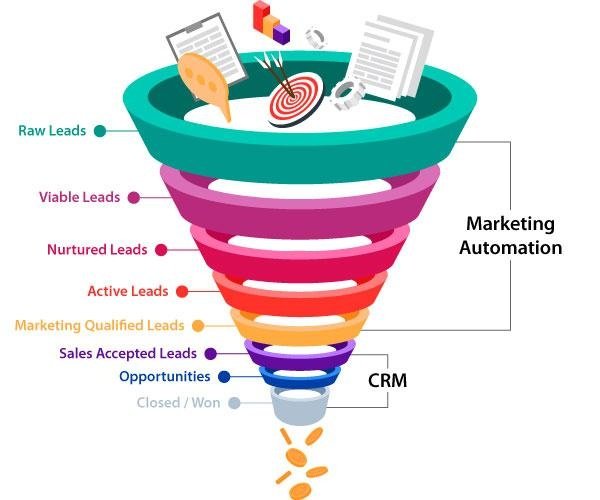
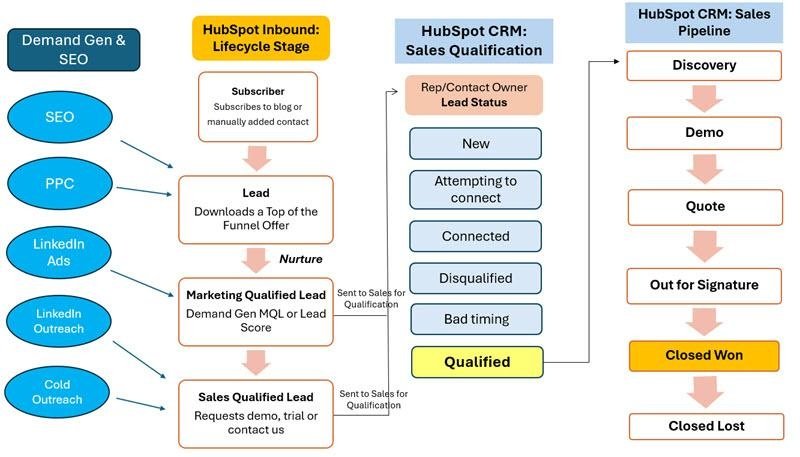
A CRM Solution provides a visual and structured way to manage these opportunities. Leads can be moved through stages such as:
- New Lead
- Contacted
- Qualified
- Proposal Sent
- Negotiation
- Converted
- Lost
This gives sales managers a clearer understanding of current opportunities.
With a CRM Solution, managers can identify which deals need attention, which sales representatives require support, and where prospects are dropping out of the sales process.
Pipeline visibility also makes sales forecasting more organized. Businesses can review potential opportunities and make decisions based on actual sales data instead of assumptions.
4. CRM Solution for Customer Relationship Management
Customer relationships do not end after the first sale. Businesses need to communicate with customers, understand their requirements, provide support, and encourage repeat purchases.
A CRM Solution can maintain a history of customer interactions. Teams can review previous conversations, enquiries, purchases, complaints, service requests, and other relevant information before contacting a customer.
This creates a more personalized experience.
For example, if a customer contacts a company about an existing service, the support team can review the customer’s information before responding. This reduces the need for customers to repeatedly explain their situation.
A well-implemented CRM Solution can therefore help businesses build stronger and more consistent customer relationships.
5. CRM Solution for Marketing Automation
Digital marketing involves numerous repetitive activities. Businesses may need to send emails, follow up with leads, distribute promotional messages, nurture prospects, and communicate with customers at different stages.
A CRM Solution can support marketing automation by connecting customer information with communication workflows.
For example, a business can create an automated sequence for a new lead. The lead may receive an initial acknowledgement, followed by educational content, a sales message, and a follow-up reminder.
CRM-based marketing automation can help businesses maintain consistent communication without requiring employees to perform every activity manually.
When combined with email marketing, WhatsApp communication, SMS campaigns, remarketing, and other digital channels, a CRM Solution can become an important part of a broader marketing ecosystem.
6. CRM Solution for WhatsApp and Communication
WhatsApp has become an important communication channel for many businesses. Customers frequently use messaging platforms to ask questions, request prices, schedule appointments, or enquire about products and services.
A CRM Solution can help businesses organize communication generated through channels such as WhatsApp, email, SMS, website chat, and phone calls.
With appropriate integrations, businesses can capture conversations, assign enquiries to team members, and maintain communication records.
WhatsApp marketing can also be connected with lead nurturing workflows. For instance, a prospect who has shown interest in a product may receive relevant information or a follow-up message according to the business’s communication strategy.
The goal of a CRM Solution is not simply to send more messages. It is to make communication more relevant, timely, organized, and measurable.
7. CRM Solution for Better Customer Support
Customer support is another area where a CRM Solution can improve business operations. When customer information is spread across different systems, support teams may struggle to find the right information quickly.
A centralized CRM Solution gives authorized team members access to relevant customer records. They can review previous interactions and understand the context before responding.
Businesses can also use CRM workflows to create support tickets, assign requests, monitor response times, and track issue resolution.
This can make customer support more structured.
For service-based businesses, maintaining detailed customer records is particularly useful because customer relationships may continue for months or years. A CRM Solution can help teams maintain continuity even when different employees handle different customer interactions.
8. CRM Solution for Sales Team Productivity
Sales teams spend significant time performing administrative activities such as entering data, updating spreadsheets, setting reminders, writing follow-up notes, and checking customer records.
A CRM Solution can reduce the amount of manual work required for many of these activities.
Automated reminders can help sales representatives remember important follow-ups. Lead assignment rules can help distribute enquiries among team members. Templates can simplify repetitive communication, while dashboards can provide quick access to sales information.
The result is a more organized workflow.
A CRM Solution can also help managers monitor team activity without relying entirely on manual reports. They can review the number of leads assigned, contacted, qualified, converted, or lost.
9. CRM Solution for Business Automation
Automation is one of the strongest advantages of a modern CRM Solution. Businesses can create workflows for repetitive tasks and reduce unnecessary manual intervention.
Examples include:
- Automatic lead assignment
- Follow-up reminders
- Email notifications
- Lead status updates
- Customer onboarding workflows
- Appointment reminders
- Sales alerts
- Marketing sequences
- Customer re-engagement campaigns
- Internal task notifications
Automation does not mean removing human interaction from the customer journey. Instead, a CRM Solution can help employees spend more time on meaningful customer conversations while routine administrative work is handled through workflows.
Businesses can gradually automate processes according to their requirements rather than attempting to automate everything at once.
10. CRM Solution for Data and Reporting
Business decisions are stronger when they are supported by reliable information. A CRM Solution can provide reports and dashboards that help businesses understand their sales and customer activities.
Important metrics may include:
- Number of new leads
- Lead sources
- Conversion rate
- Sales pipeline value
- Sales representative performance
- Follow-up activity
- Customer retention
- Campaign performance
- Revenue generated
- Lost opportunities
These insights can help business owners identify what is working and what needs improvement.
For example, if a company discovers that one marketing channel generates a large number of enquiries but very few conversions, it may need to review the quality of those leads. A CRM Solution can help connect marketing activity with sales outcomes.
11. CRM Solution and Digital Marketing Integration
Digital marketing and CRM systems can work together to create a more complete customer acquisition process.
A business may use SEO to attract organic visitors, Google Ads to generate immediate enquiries, social media marketing to build awareness, and landing pages to capture leads. A CRM Solution can help organize the leads generated through these activities.
This allows businesses to move beyond simply measuring clicks or impressions.
They can analyze what happens after a lead enters the system.
For example:
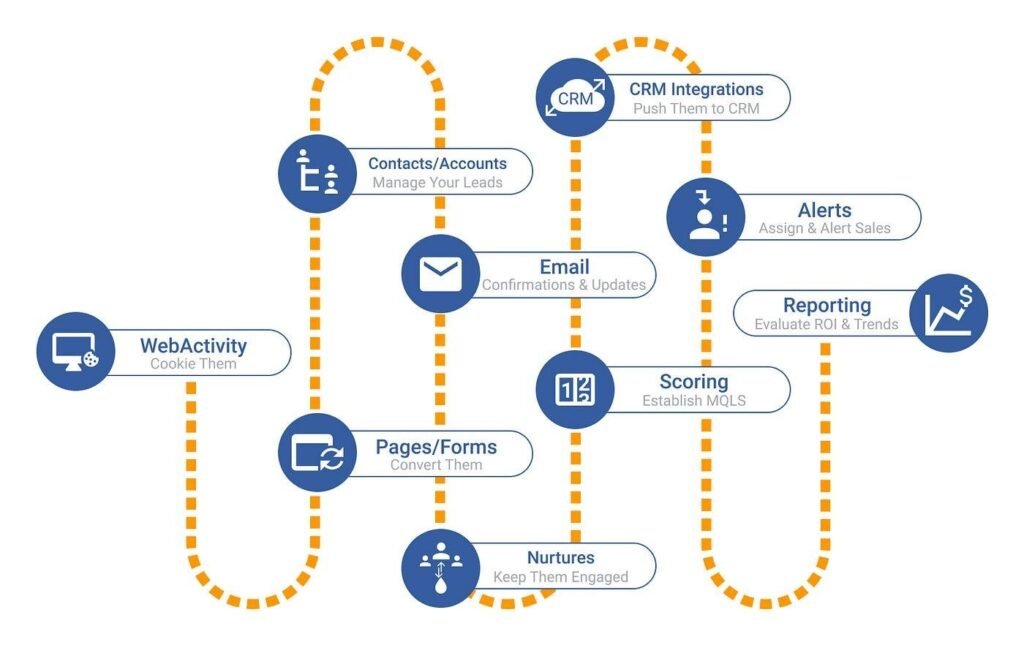
Advertisement → Landing Page → Lead Capture → CRM Solution → Sales Follow-Up → Conversion
This complete journey can provide valuable information about marketing performance.
Businesses offering SEO, social media marketing, paid advertising, website development, and automation services can therefore use CRM integration to create a connected digital marketing ecosystem.
12. CRM Solution for Lead Nurturing
Not every prospect is ready to purchase immediately. Some customers may require additional information, comparison, consultation, or time before making a decision.
A CRM Solution can help businesses nurture these prospects instead of losing them.
Lead nurturing can involve educational emails, WhatsApp communication, reminders, useful content, special offers, or sales follow-ups depending on the customer journey.
For example, someone enquiring about website development may not make an immediate decision. Instead of considering the enquiry closed, a business can use a CRM Solution to schedule future communication.
This creates a systematic follow-up process.
Effective lead nurturing can be particularly useful for businesses with longer sales cycles, high-value services, professional consulting, B2B solutions, and customized products.
13. CRM Solution for E-Commerce Businesses
E-commerce businesses generate large amounts of customer and transaction data. Managing this information effectively can help brands create better customer experiences.
A CRM Solution can help e-commerce businesses organize customer profiles, purchase history, enquiries, communication, and marketing activities.
Businesses can use customer data to create relevant communication campaigns. For example, previous purchases may help determine what type of product information or promotional communication is relevant to a particular customer.
CRM integration can also support customer retention strategies such as repeat-purchase reminders, abandoned-cart communication, loyalty campaigns, and re-engagement campaigns, depending on the available integrations.
The key advantage of a CRM Solution is that it gives businesses a structured view of customer relationships rather than treating every customer interaction as an isolated event.
14. CRM Solution for Small and Growing Businesses
A common misconception is that a CRM Solution is only useful for large companies. In reality, small businesses can also benefit from organized customer management.
Small businesses often depend heavily on personal relationships and manual processes. As the number of customers increases, these processes can become difficult to manage.
A CRM Solution allows a growing company to create standardized processes early.
For example, a small agency can use CRM workflows to manage enquiries, proposals, follow-ups, client onboarding, project communication, and renewal reminders.
This can help the business scale without increasing administrative workload at the same rate as customer volume.
The right CRM Solution should match the company’s size, budget, workflow, and future requirements. Businesses should avoid paying for unnecessary features that their teams will not use.
15. CRM Solution for Custom Business Requirements
Every business operates differently. A generic CRM Solution may work well for standard processes, but some organizations require customized workflows.
Custom CRM development can be useful when a business has unique lead management processes, specialized sales stages, complex approval systems, multiple communication channels, or industry-specific requirements.
A customized CRM Solution may include:
- Custom dashboards
- Customized lead forms
- Sales pipeline configuration
- API integrations
- WhatsApp integration
- Email integration
- Website integration
- Payment integration
- Custom reports
- Automated workflows
- Role-based access
- Customer portals
The purpose of customization is to make the CRM Solution fit the business instead of forcing the business to completely change its workflow.
16. CRM Solution and Website Integration
A business website is often one of the first points of contact between a company and a potential customer. Website forms can generate valuable enquiries, but those enquiries need to be managed properly.
A CRM Solution can be integrated with website forms so that submitted information reaches the appropriate sales system.
For example:
Visitor → Website Form → CRM Solution → Lead Assignment → Follow-Up → Conversion
This reduces the possibility of losing website enquiries.
Website integration can also help businesses track the source of enquiries and connect website marketing activities with sales outcomes.
Businesses that invest in website development should therefore consider CRM integration as part of their broader digital infrastructure.
17. CRM Solution for Analytics and Performance Tracking
Analytics provides businesses with a better understanding of customer and sales performance. A CRM Solution can bring together important information and turn raw customer data into useful reports.
When CRM data is connected with analytics platforms and advertising systems, businesses can better understand the relationship between marketing expenditure and revenue.
For example, a business can evaluate which campaigns generate leads and which campaigns generate actual customers.
This distinction is important.
A campaign that generates 500 enquiries may appear successful, but if only a small percentage become customers, the business may need to investigate lead quality or sales follow-up.
A CRM Solution can provide the data required to investigate these patterns.
18. CRM Solution for Online Reputation and Customer Feedback
Customer feedback can influence purchasing decisions and brand reputation. Businesses need to monitor customer experiences and respond appropriately.
A CRM Solution can help businesses maintain records of customer interactions and feedback. When integrated with appropriate reputation management processes, it can support review requests, customer follow-ups, and service recovery workflows.
For example, after completing a service, a business may send a customer a feedback request. Positive experiences can encourage customers to leave genuine reviews, while negative feedback can be directed to an internal support process.
The objective should always be authentic customer satisfaction rather than artificial review generation.
A CRM Solution can make these processes more organized and consistent.
19. How to Choose the Right CRM Solution
Selecting a CRM Solution should begin with business requirements rather than simply choosing the platform with the largest number of features.
Businesses should evaluate:
1. Business objectives:
Identify what the CRM needs to accomplish.
2. Lead sources:
Determine whether leads come from websites, Google Ads, social media, WhatsApp, calls, email, or other channels.
3. Team size:
Consider how many people will use the CRM and what permissions they require.
4. Automation requirements:
Identify repetitive tasks that could benefit from automation.
5. Integrations:
Check whether the CRM can connect with existing websites, communication platforms, marketing systems, payment tools, and analytics platforms.
6. Reporting:
Determine which reports and dashboards management needs.
7. Scalability:
Choose a CRM Solution that can support future growth.
8. Security:
Customer information should be managed with appropriate access controls and security practices.
Choosing a CRM Solution based on actual business requirements can improve adoption and reduce unnecessary complexity.
20. Common Mistakes Businesses Make With CRM Solution Implementation
Simply purchasing a CRM Solution does not automatically improve business performance. Implementation and team adoption are equally important.
One common mistake is adding too many unnecessary fields. If employees have to enter excessive information for every lead, they may avoid updating the system.
Another mistake is failing to establish clear sales stages. Without defined processes, different employees may use the CRM differently.
Businesses may also overlook employee training. Teams need to understand why the CRM is being introduced and how it will make their work easier.
Poor data quality is another issue. Duplicate records, outdated information, and incomplete lead details can reduce the usefulness of a CRM Solution.
Finally, businesses should regularly review their CRM workflows and improve them as their requirements change.
21. Benefits of a CRM Solution for Long-Term Growth
A well-planned CRM Solution can contribute to several areas of long-term business development.
It can help businesses:
- Organize customer information
- Improve lead follow-up
- Reduce missed opportunities
- Automate repetitive tasks
- Improve sales visibility
- Strengthen customer relationships
- Support marketing campaigns
- Improve reporting
- Track customer journeys
- Increase team accountability
- Improve operational efficiency
- Support business scalability
The real value of a CRM Solution comes from how effectively it is integrated into everyday business operations.
A CRM should not become another disconnected software platform. It should become part of the organization’s sales, marketing, communication, and customer service ecosystem.
22. Why CRM Solution Should Be Part of Your Digital Strategy
Digital marketing generates attention and enquiries, but businesses need a system to convert those opportunities into relationships and revenue.
A CRM Solution can connect multiple parts of a digital strategy. SEO can bring visitors to a website. Paid advertising can generate leads. Social media can build awareness. Landing pages can capture enquiries. WhatsApp and email can support communication. CRM automation can organize follow-ups. Analytics can measure results.
This creates a connected digital ecosystem.
For businesses investing in digital marketing, CRM integration can therefore help bridge the gap between lead generation and customer conversion.
A strong digital strategy should not only ask, “How many leads did we generate?” It should also ask, “What happened to those leads?”
A CRM Solution helps businesses answer that question.
Digital Marketing and CRM Services by Saurabh Kumar
Businesses looking to combine digital marketing with technology, automation, and customer management can work with Saurabh Kumar, a digital marketing professional with 15+ years of experience in digital marketing.
Digital Marketing India provides a range of digital and technology services designed to help businesses establish, promote, automate, and measure their online presence.
Website & App Development
Services include:
- Business Website Development
- E-Commerce Website Development
- Custom Web Applications
- Mobile App Development for Android & iOS
- Landing Page Development
- Website Maintenance & Support
SEO Services
Services include:
- Local SEO
- On-Page SEO
- Off-Page SEO
- Technical SEO
- E-Commerce SEO
- Google Business Profile Optimization
- SEO Audit & Competitor Analysis
Social Media Marketing
Services include:
- Facebook Marketing
- Instagram Marketing
- LinkedIn Marketing
- YouTube Marketing
- Social Media Management
- Content Creation & Strategy
Paid Advertising
Services include:
- Meta Ads
- Google Ads
- YouTube Ads
- LinkedIn Ads
- Remarketing Campaigns
- Lead Generation Campaigns
Automation & Communication Solutions
Businesses can also explore:
- WhatsApp Marketing
- Bulk SMS Marketing
- Voice Call Marketing
- IVR & Promotional Calls
- WhatsApp Chatbot Development
- AI Chatbot Development
- Website Live Chat Integration
- Marketing Automation
- CRM Integration
- Email Marketing Automation
- Lead Nurturing Automation
Creative and Video Services
Creative services include graphic designing, social media creatives, logo design, banners, brochures, brand identity design, video editing, reels editing, YouTube video editing, corporate videos, motion graphics, and promotional videos.
Content Marketing
Content services include content writing, blog writing, website content writing, SEO content writing, and ad copywriting.
Analytics & Reporting
Businesses can also use services such as Google Analytics setup, conversion tracking, performance reporting, and ROI analysis to understand digital marketing performance.
Online Reputation Management
Online reputation services include Google review management, brand monitoring, and online reputation building.
Final Thoughts
A CRM Solution can become an important part of a modern business’s digital infrastructure. From capturing leads and managing sales pipelines to automating communication and analyzing customer data, CRM technology can help businesses create more organized and measurable processes.
However, the best CRM Solution is not necessarily the one with the most features. It is the one that fits the company’s workflow, integrates with its existing digital ecosystem, and is simple enough for the team to use consistently.
When combined with SEO, website development, social media marketing, paid advertising, WhatsApp marketing, automation, analytics, and reputation management, a CRM Solution can support a complete digital growth strategy.
For businesses looking for CRM integration, digital marketing, automation, website development, SEO, paid advertising, or related services, Saurabh Kumar brings more than 15 years of digital marketing experience and offers a broad range of solutions through Digital Marketing India.
Contact Details
Name: Saurabh Kumar
Experience: 15+ Years in Digital Marketing
Address: S15-00709, Vaidehi Niwas, Bhairomunna Link Road, Sahnewal, Ludhiana, Punjab – 141120
Contact: +91 76966 77728
Build a smarter customer management process with the right CRM Solution and a complete digital marketing strategy.