Introduction
In today’s highly competitive digital market, businesses need more than just a website, advertisements, or social media presence to generate consistent growth. They need an organized system to manage leads, customers, conversations, follow-ups, sales activities, and marketing campaigns. This is where CRM Software becomes an important business solution. A properly implemented CRM system can bring customer information, sales processes, communication, marketing automation, and reporting together in one centralized platform.
For businesses investing in digital marketing, generating leads is only one part of the process. The bigger challenge is managing those leads effectively and converting them into paying customers. Without a structured process, potential customers can be forgotten, follow-ups can be delayed, and valuable opportunities can be lost. CRM Software helps businesses create a systematic approach to handling every stage of the customer journey.
From small businesses and startups to established companies, a CRM platform can improve productivity and provide better visibility into customer interactions. When combined with SEO, Google Ads, social media marketing, WhatsApp marketing, email automation, chatbots, and analytics, CRM Software can become an important part of a complete digital marketing ecosystem.
With more than 15 years of experience in digital marketing, Saurabh Kumar provides businesses with digital solutions that can support lead generation, automation, communication, online visibility, website development, advertising, and customer relationship management.
What Is CRM Software and Why Does It Matter?
CRM Software, or Customer Relationship Management Software, is a digital system designed to help businesses organize and manage relationships with current and potential customers.
Instead of maintaining customer details across spreadsheets, notebooks, emails, WhatsApp conversations, and different applications, businesses can use CRM Software to bring important information into one organized environment.
A CRM platform may allow businesses to store:
- Customer names and contact information
- Lead sources
- Sales opportunities
- Follow-up schedules
- Previous conversations
- Purchase information
- Customer requirements
- Sales pipeline stages
- Marketing interactions
- Support requests
- Communication history
The major benefit of CRM Software is visibility. A sales or marketing team can understand where a lead came from, what communication has already taken place, what the customer needs, and what action should happen next.
For example, suppose a company receives 100 leads through Google Ads in one month. Simply receiving those leads does not guarantee sales. The company needs to contact them, qualify them, follow up, answer questions, and move interested prospects through the sales funnel. CRM Software can help organize this process and reduce the possibility of missed opportunities.
How CRM Software Helps Manage Leads
Lead management is one of the most valuable applications of CRM Software.
Businesses often receive leads from multiple sources, including websites, Google Business Profiles, social media platforms, landing pages, Google Ads, Meta Ads, WhatsApp, phone calls, and online forms. When these leads are managed manually, it can become difficult to track every enquiry.
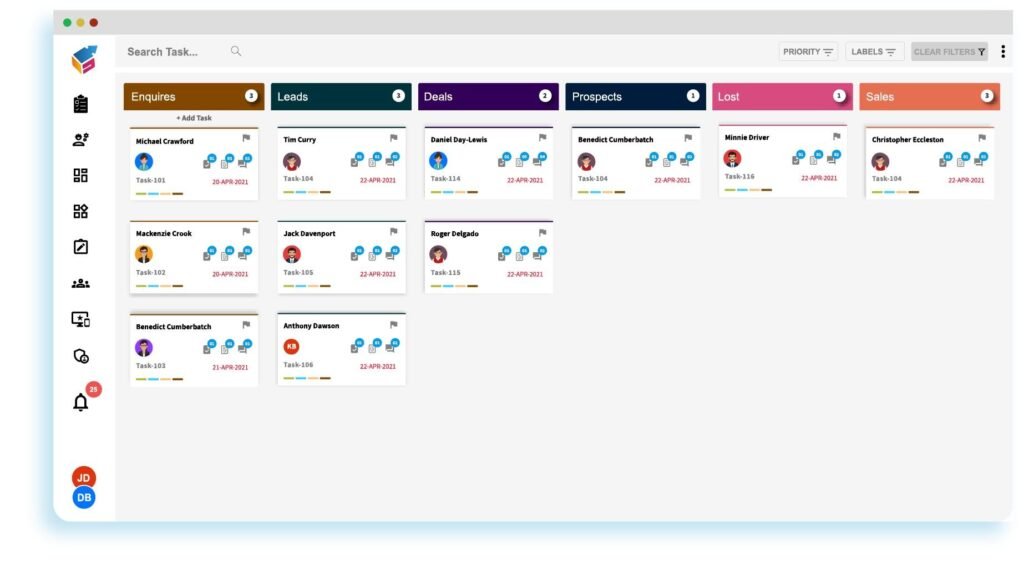
A CRM system can help organize leads according to different stages.
For example:
New Lead → Contacted → Qualified → Proposal Sent → Negotiation → Converted
This simple structure gives businesses a clearer understanding of their sales pipeline.
CRM Software can also help teams identify which leads require immediate attention. A salesperson can see pending follow-ups and prioritize prospects based on their interest level.
Lead management becomes particularly useful when a business is running paid advertising campaigns. If advertisements are generating enquiries but the sales team does not follow up consistently, advertising expenses may not produce the expected return.
By connecting lead generation campaigns with CRM Software, businesses can create a smoother journey from advertisement to enquiry and eventually to conversion.
CRM Software for Sales Pipeline Management
A sales pipeline represents the journey a potential customer takes before making a purchase. Managing this journey manually can become complicated when the number of leads increases.
CRM Software can provide a visual representation of the sales pipeline, allowing businesses to see how many prospects are currently at each stage.
For example, a business may have:
- 50 new enquiries
- 30 contacted prospects
- 15 qualified leads
- 8 proposals
- 5 negotiations
- 3 expected conversions
This information can help managers understand the health of their sales process.
Another advantage of CRM Software is that it can help identify bottlenecks. If a large number of leads remain stuck at the proposal stage, the business may need to improve pricing communication, sales presentations, follow-up processes, or customer education.
Sales teams can also use CRM platforms to schedule reminders and document interactions. Instead of relying entirely on memory, employees have access to a centralized record of customer activity.
This improves consistency and makes the sales process easier to monitor.
CRM Software and Marketing Automation
Modern marketing involves multiple communication channels. A potential customer may discover a company through Google, visit its website, follow its Instagram account, receive a WhatsApp message, and later respond to an email.
Managing these interactions manually can consume significant time.
CRM Software can help connect marketing activities with customer information. When integrated with marketing automation tools, it can support processes such as:
- Email campaigns
- Lead nurturing
- Follow-up reminders
- WhatsApp communication
- Customer segmentation
- Automated notifications
- Promotional campaigns
- Lead scoring
- Re-engagement campaigns
For example, a person who submits a form through a landing page can be added to the CRM system. The business can then initiate a structured follow-up process.
This does not mean every customer should receive identical messages. Effective CRM Software implementation allows businesses to segment audiences based on their interests, interactions, purchase history, or position in the sales funnel.
Marketing automation can therefore make communication more organized while reducing repetitive manual work.
CRM Software for WhatsApp and Communication Automation
WhatsApp has become an important communication channel for many businesses in India. Customers often prefer WhatsApp because it is quick, familiar, and convenient.
However, managing hundreds of customer conversations manually can become challenging.
CRM Software can be integrated with WhatsApp marketing solutions, chatbots, and communication automation systems to improve the customer experience.
Businesses can use automated communication for activities such as:
- Enquiry acknowledgements
- Appointment reminders
- Follow-up messages
- Product updates
- Service notifications
- Promotional campaigns
- Lead nurturing
- Customer support
A WhatsApp chatbot can also answer common questions before transferring complex enquiries to a human representative.
For example, a customer visiting a service website may ask about pricing, availability, location, or service details. An automated chatbot can provide basic information immediately.
When combined with CRM Software, these conversations can become part of the customer’s overall interaction history.
This creates a more connected communication process rather than keeping WhatsApp conversations completely separate from sales and marketing activities.
CRM Software and Website Integration
A website is often one of the first places where potential customers interact with a business. Contact forms, enquiry forms, booking forms, chat widgets, and landing pages can generate valuable customer information.
However, collecting information is not enough. Businesses need to organize and act on it.
Integrating a website with CRM Software can help transfer incoming enquiries into a centralized system.
For example, when a visitor fills out a form requesting a consultation, their information can be recorded in the CRM. The sales team can then receive a notification, contact the prospect, and update the lead status.
Website integration can also connect live chat systems, chatbot tools, analytics platforms, and marketing automation.
This creates a stronger connection between website activity and business operations.
Businesses looking for website development can combine CRM integration with business websites, e-commerce websites, custom web applications, mobile applications, landing pages, and ongoing website maintenance.
A well-connected website and CRM Software setup can make the entire lead management process more efficient.
CRM Software for Customer Retention
Getting a new customer is important, but retaining existing customers can be equally valuable.
A customer who has already purchased from a business may require future services, upgrades, maintenance, additional products, or support.
CRM Software helps businesses maintain customer records after the initial sale.
Businesses can use customer data to schedule:
- Follow-up calls
- Renewal reminders
- Service reminders
- Feedback requests
- Review requests
- Cross-selling campaigns
- Upselling opportunities
- Loyalty communication
For example, a company providing annual services can use CRM reminders to contact customers before their renewal date.
Similarly, an e-commerce business can analyze previous purchases and create relevant communication campaigns.
The goal is not simply to send more messages. The objective is to provide useful communication at the right stage of the customer relationship.
When businesses use CRM Software responsibly, they can create a more personalized customer experience while improving long-term retention.
CRM Software for Small Businesses
Many small businesses assume that CRM systems are only suitable for large organizations. That is not necessarily true.
Small businesses can also benefit from CRM Software, especially when their customer and lead volume starts increasing.
A small business may initially manage enquiries through a spreadsheet or messaging application. However, as the business grows, this approach can become difficult to maintain.
A CRM platform can provide structure without requiring a large administrative team.
For small businesses, useful CRM features may include:
- Contact management
- Lead tracking
- Follow-up reminders
- Sales pipeline management
- Customer communication
- Task management
- Reporting
- Marketing automation
The right CRM Software should match the size, goals, workflow, and budget of the business.
Instead of choosing a complicated platform simply because it offers many features, businesses should identify the processes they actually need to improve.
CRM Software for Digital Marketing Campaigns
Digital marketing produces data from multiple channels. SEO generates organic traffic, Google Ads generates paid visitors, social media generates engagement, and landing pages generate enquiries.
CRM Software can help connect these marketing activities with actual business outcomes.
For example, a business can track where a lead originated:
Google Ads → Website → Enquiry → CRM → Sales Follow-Up → Customer
Another customer might follow:
Instagram → WhatsApp → CRM → Consultation → Conversion
This information helps businesses understand which marketing channels are contributing to qualified leads and customers.
CRM integration can therefore support better decision-making.
For businesses investing in SEO, local SEO, Google Business Profile optimization, Meta Ads, Google Ads, LinkedIn marketing, YouTube marketing, content marketing, and remarketing, connecting marketing data with CRM Software can provide a more complete view of performance.
Instead of measuring success only through clicks, impressions, or traffic, businesses can focus more closely on leads, opportunities, conversions, and revenue.
CRM Software and Analytics
Data is one of the most valuable resources available to modern businesses.
However, raw data is useful only when it can support better decisions.
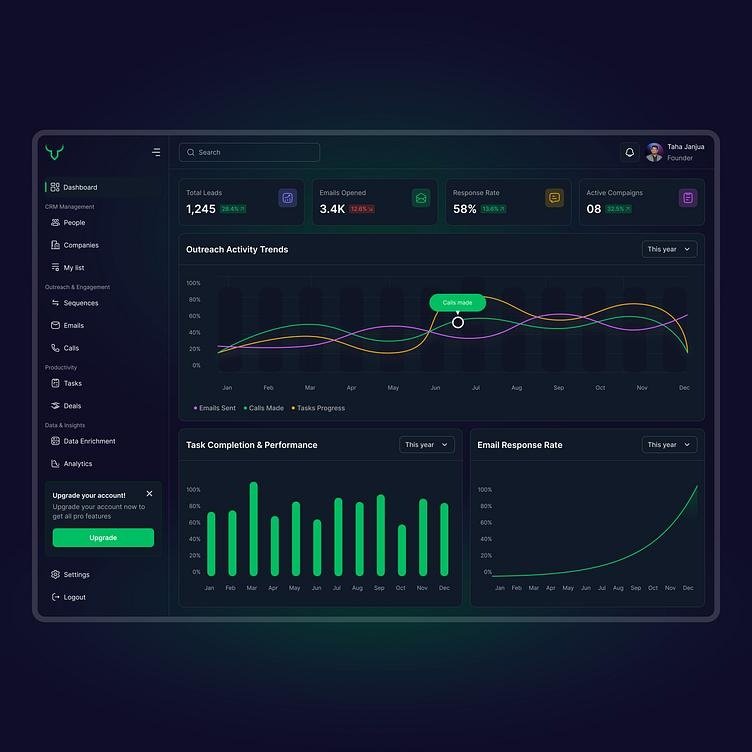
CRM Software can provide reports related to leads, sales, customers, conversions, follow-ups, and team performance.
Businesses can analyze metrics such as:
- Number of new leads
- Lead source
- Conversion rate
- Sales pipeline value
- Follow-up performance
- Customer acquisition
- Revenue generated
- Campaign performance
- Customer retention
When CRM information is combined with tools such as Google Analytics and conversion tracking, businesses can develop a stronger understanding of their marketing performance.
For example, if Google Ads produces 200 enquiries but only five sales, the business may need to examine lead quality, sales follow-up, pricing, landing page performance, or the targeting strategy.
This type of analysis helps companies improve their marketing decisions.
With effective CRM Software, reporting can become more systematic rather than relying on scattered spreadsheets and manually collected information.
CRM Software for Lead Nurturing
Not every potential customer is ready to purchase immediately.
Some prospects need more information before making a decision. Others may require several conversations, demonstrations, quotations, or follow-ups.
This is where lead nurturing becomes important.
CRM Software can help businesses create structured nurturing processes based on lead status and customer interests.
For example:
Day 1: Enquiry confirmation
Day 3: Helpful information
Day 7: Follow-up communication
Day 14: Offer or consultation reminder
Day 30: Re-engagement message
The exact process depends on the industry and buying cycle.
Lead nurturing should always focus on providing relevant information rather than overwhelming customers with repetitive promotional messages.
With email automation, WhatsApp communication, remarketing, and customer segmentation, CRM Software can help businesses maintain relationships with prospects who are not yet ready to buy.
Over time, this can improve the chances of converting qualified leads.
CRM Software and Artificial Intelligence
Artificial intelligence is changing how businesses manage customer communication and automation.
AI-powered features can be integrated with CRM Software to support activities such as customer query handling, lead qualification, automated responses, data analysis, and personalized communication.
AI chatbots can handle frequently asked questions and provide initial assistance at any time.
For example, an AI chatbot on a website can ask a visitor what service they are looking for, collect basic information, and route the enquiry to the appropriate team.
AI can also help businesses identify patterns within customer data.
However, automation should not completely replace human interaction. Complex customer requirements often need personal communication and professional judgment.
The best approach is to combine automation with human support.
A digital marketing setup that includes CRM Software, AI chatbots, website live chat, WhatsApp automation, email marketing, and lead nurturing can create a more connected customer journey.
How CRM Software Improves Business Productivity
One of the biggest advantages of CRM Software is improved organization.
Employees often spend significant time searching for customer information, checking previous conversations, preparing follow-up lists, and updating spreadsheets.
A centralized CRM system can reduce this administrative workload.
Sales representatives can see their tasks and follow-ups in one place. Managers can monitor pipeline activity. Marketing teams can understand lead sources. Customer support teams can access interaction histories.
This improves collaboration between departments.
For example, when a salesperson speaks with a customer, the details can be recorded in the CRM. If another employee needs to handle the same customer later, they can review the available information instead of asking the customer to repeat everything.
This creates continuity.
The objective of CRM Software is not simply to store customer data. Its real value comes from using that information to improve processes, communication, productivity, and customer experience.
Choosing the Right CRM Software for Your Business
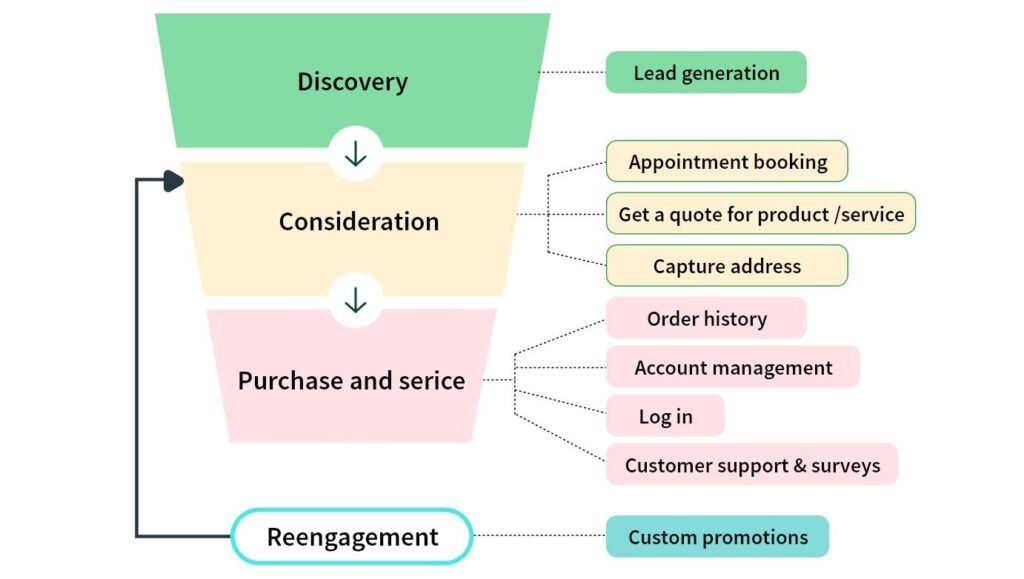
Every business has different requirements, so there is no single CRM platform that is perfect for everyone.
Before implementing CRM Software, businesses should evaluate their existing workflow and identify their primary challenges.
Important considerations include:
1. Business Size
A small company may require simple contact and lead management, while a larger organization may need advanced automation and reporting.
2. Sales Process
Businesses should select a CRM that supports their actual sales pipeline and customer journey.
3. Integration Requirements
The CRM may need to connect with websites, email platforms, WhatsApp, chatbots, advertising systems, analytics tools, or other applications.
4. Automation
If the business relies heavily on follow-ups, lead nurturing, or communication, automation capabilities become important.
5. Reporting
The system should provide reports that help management understand leads, conversions, revenue, and campaign performance.
6. Scalability
The selected CRM Software should be capable of supporting business growth.
7. Ease of Use
A powerful system is not useful if employees find it too complicated to use consistently.
Before making a decision, businesses should clearly define their goals and processes.
CRM Software Integration with Complete Digital Marketing Services
CRM integration becomes even more powerful when it works alongside a complete digital marketing strategy.
Businesses may combine CRM Software with:
- Website development
- Mobile app development
- SEO
- Local SEO
- Google Business Profile optimization
- Google Ads
- Meta Ads
- Social media marketing
- Content marketing
- Email marketing
- WhatsApp marketing
- Chatbot development
- Landing page development
- Conversion tracking
- Analytics
- Reputation management
For example, SEO can attract organic visitors, a landing page can capture their enquiries, CRM can organize those leads, WhatsApp automation can support follow-ups, and analytics can measure conversions.
This creates a connected digital marketing ecosystem.
Instead of treating every marketing service as a separate activity, businesses can connect different systems around their customer journey.
That is where CRM Software becomes particularly valuable.
Why Businesses Should Invest in CRM Software
Business growth requires organized customer management.
If a company generates hundreds of enquiries but does not have a proper system to manage them, many opportunities may remain unconverted.
CRM Software can help businesses build a structured process for managing leads, communication, sales, customer retention, automation, and reporting.
The benefits can include:
- Better lead organization
- Faster follow-ups
- Improved sales visibility
- Better customer communication
- Reduced manual work
- More organized marketing
- Improved reporting
- Stronger customer retention
- Better collaboration
- Greater process efficiency
However, successful implementation depends on more than simply purchasing software. Businesses need proper configuration, integrations, workflow planning, employee training, and ongoing optimization.
A CRM system should be designed around the business rather than forcing the business to completely change its processes without understanding its requirements.
Digital Marketing India – Helping Businesses Build Better Digital Systems
Businesses looking to strengthen their online presence need a combination of technology, marketing, automation, and creative communication.
Saurabh Kumar, with more than 15 years of digital marketing experience, provides a broad range of digital services designed to help businesses establish and improve their online presence.
Services include website and app development, SEO, social media marketing, paid advertising, automation and communication solutions, creative designing, video production, content marketing, analytics, and online reputation management.
Automation solutions include WhatsApp marketing, bulk SMS marketing, IVR and promotional calls, WhatsApp chatbot development, AI chatbot development, website live chat integration, marketing automation, CRM integration, email marketing automation, and lead nurturing automation.
The objective is to help businesses create more connected digital processes.
A business can use SEO to attract potential customers, paid advertising to generate targeted traffic, social media to build engagement, content marketing to educate audiences, and CRM Software integration to organize and nurture incoming leads.
This approach can help businesses move from fragmented marketing activities toward a more structured digital ecosystem.

Conclusion: Build a Smarter Customer Journey with CRM Software
Customer relationships are at the center of sustainable business growth. As companies generate more enquiries through websites, Google, social media, advertising, WhatsApp, and other digital channels, managing customer information manually becomes increasingly difficult.
CRM Software provides businesses with a structured way to manage leads, organize sales pipelines, automate communication, nurture prospects, retain customers, and analyze performance.
The real advantage comes when CRM Software is connected with other digital marketing systems. Website development, SEO, Google Business Profile optimization, paid advertising, social media marketing, WhatsApp automation, chatbots, email marketing, analytics, and CRM integration can work together to create a complete customer journey.
For businesses that want to improve lead management and build stronger digital processes, investing in the right CRM Software can be an important step toward better organization and sustainable growth.
If your business needs help with CRM integration, digital marketing, automation, website development, SEO, paid advertising, social media marketing, or online reputation management, professional guidance can help you identify the right strategy based on your business goals.
About Saurabh Kumar
Saurabh Kumar has 15+ years of experience in digital marketing and provides comprehensive digital solutions for businesses.
Digital Marketing India – Services:
- Website & App Development
- SEO Services
- Social Media Marketing
- Paid Advertising
- Automation & Communication Solutions
- Creative Services
- Video Production
- Content Marketing
- Analytics & Reporting
- Online Reputation Management
- CRM Integration
- Marketing Automation
Official Address:
S15-00709, Vaidehi Niwas, Bhairomunna Link Road
Sahnewal, Ludhiana, Punjab – 141120
Contact: +91 76966 77728