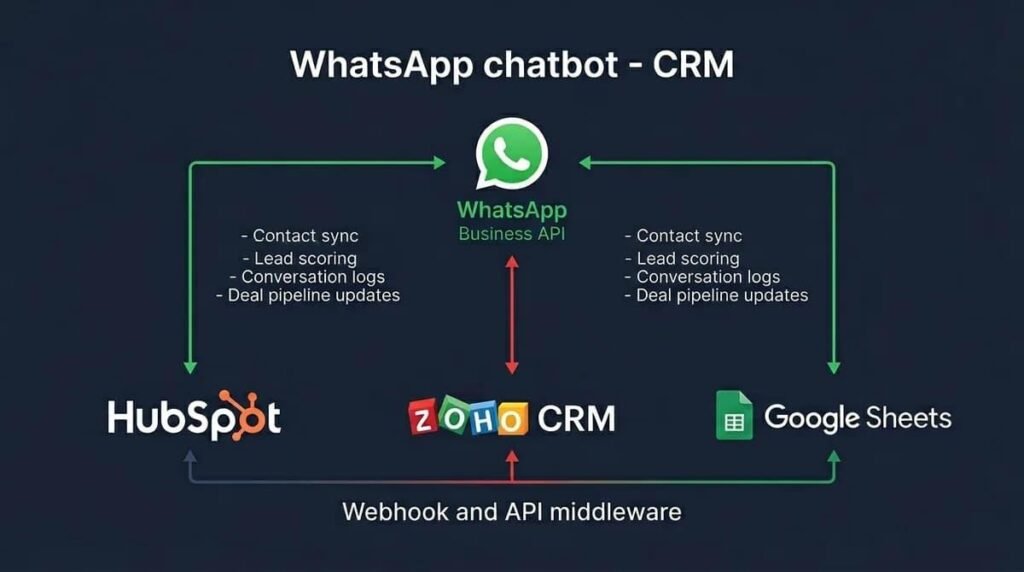
In today’s highly connected business environment, customers expect quick, convenient, and personalised communication. Businesses that take too long to respond to enquiries can easily lose potential customers to competitors. This is where WhatsApp CRM Integration becomes an important business solution. By connecting WhatsApp communication with a Customer Relationship Management (CRM) system, businesses can organise conversations, manage leads, automate follow-ups, and create smoother customer journeys from a single workflow.
For businesses handling a large number of enquiries every day, WhatsApp CRM Integration can reduce repetitive manual work while helping sales and support teams maintain better communication. Instead of switching between different platforms to check messages, customer information, leads, and follow-ups, teams can bring these activities into a connected system.
With more than 15 years of experience in digital marketing, Saurabh Kumar provides digital marketing, automation, CRM integration, WhatsApp marketing, chatbot, SEO, website development, and communication solutions for businesses looking to improve their online customer journey.
What Is WhatsApp CRM Integration?
WhatsApp CRM Integration is the process of connecting WhatsApp communication with a CRM platform so that customer conversations and relevant customer information can be managed through a unified workflow.
Normally, a customer may contact a business through WhatsApp after seeing an advertisement, visiting a website, finding the business through Google, or receiving a referral. Without proper integration, the sales team may have to manually record the customer’s name, phone number, enquiry, requirements, and follow-up status in another system.
With WhatsApp CRM Integration, these activities can become part of an organised process. Depending on the tools and configuration being used, businesses can capture enquiries, assign leads, track conversations, automate notifications, create follow-up tasks, and maintain customer records.
The result is a more organised approach to customer communication.
For example, imagine a person submits a lead form after clicking a Meta advertisement. Instead of waiting for a salesperson to manually transfer the information into a CRM, an integrated workflow can capture the lead, create a customer record, notify the appropriate team member, and trigger a WhatsApp communication.
This makes WhatsApp CRM Integration particularly useful for businesses that depend heavily on leads and quick responses.
Why WhatsApp CRM Integration Matters for Modern Businesses
WhatsApp has become an important communication channel for businesses because customers are already comfortable using it for everyday conversations. However, managing hundreds or thousands of customer messages manually can become difficult.
WhatsApp CRM Integration helps businesses create structure around those conversations.
A connected system can help companies:
- Organise customer information
- Track leads more effectively
- Automate repetitive communication
- Schedule follow-ups
- Reduce response delays
- Improve sales team productivity
- Maintain customer histories
- Segment customers
- Monitor lead stages
- Build automated customer journeys
The biggest advantage is not simply sending WhatsApp messages. The real value comes from connecting conversations with business processes.
For example, a customer who asks about a product today may require a follow-up after three days. A CRM-connected workflow can help the sales team remember that follow-up rather than depending entirely on individual employees to remember every conversation.
This is one reason WhatsApp CRM Integration is becoming increasingly relevant for businesses focused on sales, customer support, lead generation, and retention.
1. WhatsApp CRM Integration Improves Lead Management
Lead management becomes complicated when enquiries come from multiple sources.
A business might receive leads from:
- Google Ads
- Meta Ads
- Website forms
- Landing pages
- Social media
- Google Business Profile
- Phone calls
- Referrals
When these leads are handled separately, important information can become scattered.
WhatsApp CRM Integration can connect WhatsApp conversations with CRM records and help businesses create a more organised lead-management process.
When a new prospect contacts a business, the CRM can potentially record relevant information and help the team understand where that lead came from. Sales representatives can then view the lead’s status, previous interactions, requirements, and follow-up activities.
This makes it easier to distinguish between new enquiries, contacted leads, qualified prospects, customers, and inactive leads.
A structured lead-management system can also reduce the possibility of losing enquiries simply because someone forgot to respond.
For businesses investing heavily in digital advertising, this becomes particularly valuable. Generating leads is only one part of marketing. Converting those leads requires timely communication and consistent follow-up.
WhatsApp CRM Integration helps connect marketing activity with sales communication.
2. WhatsApp CRM Integration Enables Faster Customer Responses
Response time can have a significant impact on customer experience.
When a prospect sends a message, they generally expect an answer within a reasonable period. If the business responds after several hours or days, the customer may already have contacted another company.
WhatsApp CRM Integration can support faster communication by connecting incoming enquiries with automated workflows and team notifications.
For example, a business could configure an automated response acknowledging a customer’s enquiry. The message can inform the customer that their request has been received while simultaneously notifying the relevant sales representative.
This does not mean every customer conversation needs to be fully automated.
Instead, businesses can combine automation with human support.
Simple questions can potentially be handled through automated responses or chatbots, while complicated enquiries can be transferred to a sales or support executive.
This hybrid model can improve efficiency without making customer communication feel completely robotic.
For companies handling high enquiry volumes, WhatsApp CRM Integration can therefore become an important part of customer-response management.
3. WhatsApp CRM Integration Automates Follow-Ups
Follow-ups are one of the most important parts of sales, yet they are frequently missed.
A customer may ask for a quotation and say they will respond later. Another prospect may request product information but need additional time before making a decision. A third customer might need a reminder about an appointment.
Without an organised system, salespeople have to remember all these conversations manually.
WhatsApp CRM Integration can help businesses create follow-up workflows based on customer activity.
For example:
Day 1: Customer receives product information.
Day 3: Follow-up reminder is triggered.
Day 7: A second communication can be scheduled.
Day 14: The lead can be moved into a different nurturing segment.
Such workflows can be customised according to the business model.
A real estate company may require longer lead nurturing, while an educational institute might follow up according to admission deadlines. An e-commerce company may use different workflows for abandoned enquiries and existing customers.
The objective is to make follow-ups consistent and relevant.
With WhatsApp CRM Integration, businesses can reduce their dependence on manual reminders and create repeatable customer journeys.
4. WhatsApp CRM Integration Strengthens Customer Segmentation
Not every customer should receive the same message.
A new lead, existing customer, inactive customer, repeat buyer, and high-value client may have completely different requirements.
CRM data can help businesses segment customers based on factors such as:
- Purchase history
- Lead stage
- Location
- Product interest
- Enquiry type
- Customer behaviour
- Previous interactions
- Service requirements
When this information is connected with WhatsApp communication, businesses can create more relevant communication strategies.
For example, a customer interested in website development should not necessarily receive the same communication as someone interested in SEO services.
Similarly, an existing customer may need service updates rather than promotional messages designed for new leads.
WhatsApp CRM Integration can help businesses make communication more targeted by connecting customer data with messaging workflows.
Better segmentation can also reduce irrelevant communication and improve the overall customer experience.
5. WhatsApp CRM Integration Supports Sales Automation
Sales teams often spend a considerable amount of time on repetitive activities.
These activities can include:
- Sending enquiry acknowledgements
- Sharing basic information
- Updating lead statuses
- Setting reminders
- Sending appointment confirmations
- Sharing payment instructions
- Following up with prospects
- Notifying customers about updates
Some of these processes can be automated.
WhatsApp CRM Integration allows businesses to connect customer communication with sales workflows. Depending on the CRM and integration setup, specific actions can trigger predefined processes.
For example, when a lead moves from “New” to “Qualified,” the system can notify the sales executive or initiate an approved communication workflow.
When a customer schedules an appointment, an automated confirmation can be sent.
When a sales opportunity reaches a particular stage, the team can receive a reminder for the next action.
The purpose of WhatsApp CRM Integration is not to eliminate salespeople. Instead, it helps salespeople spend more time on meaningful conversations and less time performing repetitive administrative tasks.
6. WhatsApp CRM Integration Makes Customer Support More Organised
Customer support teams often deal with repeated questions, service requests, complaints, and updates.
If these conversations are handled only through individual WhatsApp accounts, maintaining a consistent customer history can become difficult.
WhatsApp CRM Integration can help centralise customer information and communication, allowing businesses to create more organised support workflows.
For example, when a customer contacts a company about an existing order or service, the support team can potentially access relevant customer information and previous interaction history through the connected CRM.
This can reduce the need for customers to repeatedly explain their situation.
Businesses can also create automated responses for frequently asked questions, while complex issues can be routed to human support staff.
A well-designed WhatsApp CRM Integration strategy can therefore help businesses create a more structured customer-service experience.
It can also support internal accountability because teams can track enquiries, follow-ups, and service requests more systematically.
7. WhatsApp CRM Integration Improves Lead Nurturing
Not every lead is ready to buy immediately.
Some customers need more information. Others may compare different options before making a decision. Some may simply need time.
Instead of abandoning these prospects, businesses can use lead nurturing to maintain communication over time.
WhatsApp CRM Integration can support this process by connecting customer information with automated nurturing workflows.
A lead can be placed into an appropriate segment based on interest or stage. Relevant communication can then be planned according to the customer’s journey.
For example, a website development company could create separate nurturing journeys for:
- New website enquiries
- E-commerce website prospects
- App development prospects
- SEO enquiries
- Existing customers
Each group can receive different communication according to its needs.
This approach is much more effective than sending identical messages to every contact.
When combined with CRM data, WhatsApp CRM Integration can make lead nurturing more personalised, structured, and measurable.
How Does WhatsApp CRM Integration Work?
The exact process depends on the CRM, WhatsApp solution, business requirements, and available APIs or integration tools.
However, a typical WhatsApp CRM Integration workflow may include the following stages:
1. Customer sends a message
A prospect contacts the business through WhatsApp.
2. Customer information is captured
Relevant information can be recorded in the CRM.
3. Lead is created or updated
The system can create a new customer record or associate the conversation with an existing record.
4. Team receives notification
The relevant salesperson or support executive can be notified.
5. Automated workflow begins
Depending on the configuration, an approved automated response or workflow may be triggered.
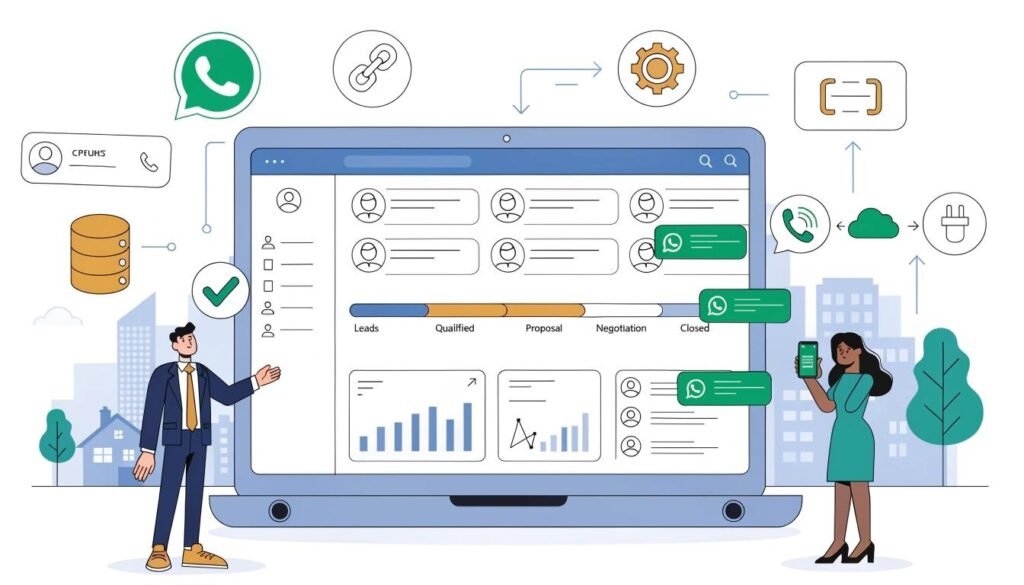
6. Lead moves through the sales pipeline
The customer can be assigned a status such as new, contacted, qualified, proposal, converted, or closed.
7. Follow-up is scheduled
The CRM can help the team manage the next action.
8. Customer history remains available
Future conversations can be managed with better context.
This creates a connected customer journey instead of isolated WhatsApp conversations.
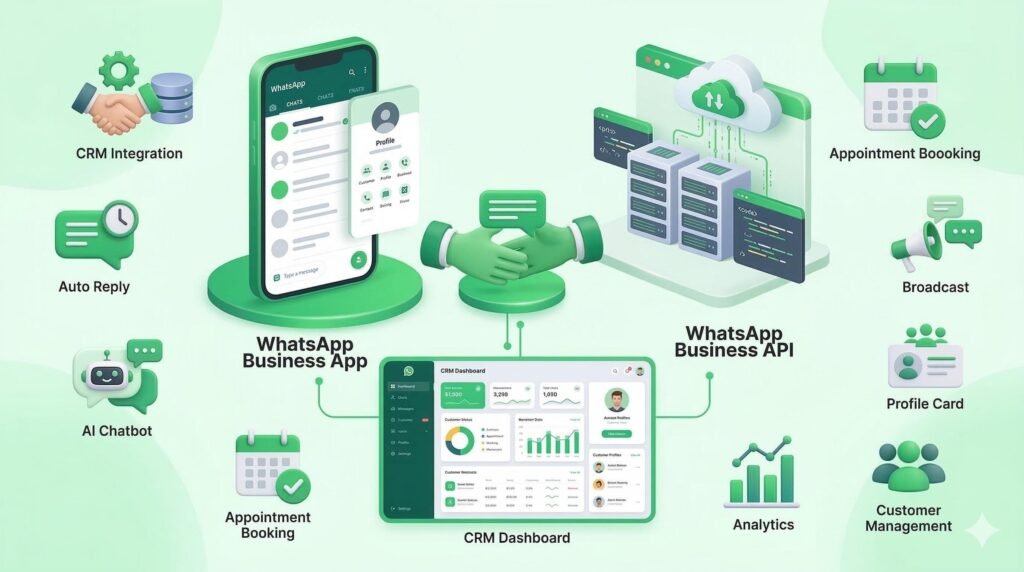
WhatsApp CRM Integration With Chatbots and AI
Chatbots can make WhatsApp communication even more efficient.
A WhatsApp chatbot can answer frequently asked questions, collect basic customer information, provide product or service options, and route conversations to the appropriate team.
AI-powered chatbots can potentially handle more complex conversational interactions, depending on the technology and business use case.
When chatbot functionality is combined with WhatsApp CRM Integration, businesses can create automated customer journeys.
For example, a customer could start a conversation and select:
1 — Product Information
2 — Pricing
3 — Book an Appointment
4 — Talk to an Executive
Based on the customer’s selection, the workflow can collect relevant information and pass the conversation to the correct department.
The CRM can then maintain the customer’s information and interaction history.
This combination of WhatsApp CRM Integration, chatbots, and automation can be particularly useful for businesses receiving enquiries outside regular working hours.
WhatsApp CRM Integration for Different Industries
WhatsApp CRM Integration is not limited to one specific industry.
Real Estate
Real estate companies can manage property enquiries, schedule follow-ups, share property information, and nurture potential buyers.
Healthcare
Clinics and healthcare businesses can use structured communication for appointment requests, reminders, and customer support, subject to applicable privacy and healthcare requirements.
Education
Schools, coaching institutes, universities, and training companies can manage admission enquiries, course information, counselling follow-ups, and application-related communication.
E-Commerce
Online businesses can connect customer conversations with order-related support, product enquiries, customer service, and retention workflows.
Travel
Travel agencies can manage enquiries related to packages, bookings, itineraries, and customer follow-ups.
Professional Services
Consultants, agencies, financial service providers, and other professional businesses can use CRM-connected communication to manage enquiries, appointments, proposals, and lead nurturing.
The key is to design WhatsApp CRM Integration according to the specific customer journey rather than using a generic workflow for every business.
Key Features to Consider Before WhatsApp CRM Integration
Businesses should evaluate their requirements before implementing an integration.
Important features may include:
CRM Synchronisation: Customer and lead information should move between systems efficiently.
Lead Assignment: New enquiries should reach the right salesperson or department.
Automation: Repetitive communication and internal processes should be automated where appropriate.
Follow-Up Management: Teams should be able to schedule and monitor follow-ups.
Chatbot Support: Automated conversations can help manage frequently asked questions.
Analytics: Businesses should be able to understand response rates, lead stages, conversions, and campaign performance.
Customer History: Previous conversations and important customer information should remain accessible.
Scalability: The system should support increasing communication volumes as the business grows.
Security: Businesses should carefully evaluate data protection, access controls, platform policies, and applicable regulations.
A successful WhatsApp CRM Integration is not simply about connecting two platforms. It is about creating a reliable communication workflow around the customer’s journey.
WhatsApp CRM Integration vs Manual WhatsApp Management
Manual WhatsApp management can work for very small businesses with a limited number of enquiries.
However, as the business grows, challenges can appear.
| Manual WhatsApp Management | WhatsApp CRM Integration |
|---|---|
| Customer data may remain scattered | Customer information can be structured |
| Follow-ups depend heavily on memory | Follow-ups can be systemised |
| Difficult to track lead stages | Lead stages can be managed |
| Limited automation | Automated workflows can be created |
| Reporting can be difficult | CRM-based reporting can improve visibility |
| Team coordination can be challenging | Leads can be assigned systematically |
| Customer history may be fragmented | Customer records can be centralised |
The right choice depends on the business size, communication volume, sales process, and automation requirements.
For businesses managing a growing number of enquiries, WhatsApp CRM Integration can provide significantly greater operational structure.
Common Mistakes to Avoid During WhatsApp CRM Integration
Businesses should avoid implementing automation simply because it is available.
One common mistake is creating too many automated messages. Customers may become frustrated if every interaction feels robotic.
Another mistake is failing to define clear lead stages before connecting the CRM.
Businesses should first understand their sales process and then build automation around it.
Other common issues include:
- Poor lead segmentation
- No clear follow-up process
- Excessive promotional messaging
- Inadequate team training
- Weak reporting
- Poor data management
- Ignoring customer preferences
- Not monitoring automation performance
A successful WhatsApp CRM Integration should make communication easier, not more complicated.
Businesses should also follow WhatsApp’s applicable business messaging requirements, consent expectations, template rules, privacy obligations, and other relevant policies.
How to Choose the Right WhatsApp CRM Integration Strategy
There is no single solution that works for every business.
Before selecting an integration strategy, consider:
Business Size: A small business may need a simpler setup, while a large organisation may require multiple workflows.
Lead Volume: Higher lead volumes generally create a stronger need for automation.
CRM Platform: The CRM being used will influence the available integration options.
Sales Process: Complex sales cycles may require advanced lead nurturing and workflow automation.
Customer Support Requirements: Businesses handling frequent support queries may benefit from chatbot and ticketing workflows.
Reporting Requirements: Businesses should determine which metrics matter before implementing the system.
Scalability: The selected system should be capable of supporting future growth.
The right WhatsApp CRM Integration strategy should fit the business rather than forcing the business to change its entire workflow around a technology.

Why Businesses Should Invest in WhatsApp CRM Integration
Customer communication is becoming increasingly important in digital marketing and sales.
Businesses spend money on SEO, Google Ads, Meta Ads, social media, websites, content marketing, and lead-generation campaigns to attract potential customers.
But generating a lead is only the beginning.
If the lead is not contacted quickly, nurtured properly, and followed up consistently, marketing investment can produce lower returns.
WhatsApp CRM Integration helps connect acquisition with communication and conversion.
A customer may discover a company through Google, visit its website, submit an enquiry, receive a WhatsApp response, speak with a salesperson, receive a quotation, and eventually become a customer.
When these steps are connected through a CRM-driven workflow, businesses can gain better visibility into the entire customer journey.
This can help teams identify where leads are being lost and which communication processes are generating better outcomes.
WhatsApp CRM Integration With Digital Marketing
WhatsApp CRM Integration becomes even more powerful when combined with a complete digital marketing strategy.
A business can generate traffic through SEO, attract customers through Google Ads, build awareness through social media, and capture leads through landing pages.
The next challenge is managing those leads effectively.
This is where CRM and communication automation can become an important part of the marketing ecosystem.
For example:
SEO → Website → Enquiry → CRM → WhatsApp → Follow-Up → Conversion
Or:
Meta Ads → Lead Form → CRM → WhatsApp → Sales Team → Follow-Up → Customer
Connecting these stages can help businesses create a more measurable marketing funnel.
Instead of looking only at impressions, clicks, or leads, businesses can move toward understanding the complete journey from acquisition to conversion.
This is particularly useful for businesses that want to improve their marketing ROI.
Get WhatsApp CRM Integration and Digital Marketing Solutions
Businesses looking to improve customer communication can combine WhatsApp CRM Integration with digital marketing, automation, website development, SEO, paid advertising, social media marketing, chatbot development, and lead nurturing.
Saurabh Kumar, with 15+ years of experience in digital marketing, provides solutions designed to help businesses strengthen their online presence and customer journey.
Services include:
- Website & App Development
- Business Website Development
- E-Commerce Website Development
- Custom Web Applications
- Mobile App Development
- SEO Services
- Local SEO
- Google Business Profile Optimisation
- Social Media Marketing
- Meta Ads
- Google Ads
- YouTube Ads
- Lead Generation Campaigns
- WhatsApp Marketing
- Bulk SMS Marketing
- IVR & Voice Call Marketing
- WhatsApp Chatbot Development
- AI Chatbot Development
- Marketing Automation
- CRM Integration
- Email Marketing Automation
- Lead Nurturing Automation
- Graphic Designing
- Video Production
- Content Marketing
- Analytics & Reporting
- Online Reputation Management

With the right strategy, WhatsApp CRM Integration can help businesses organise their leads, improve follow-ups, automate repetitive communication, and build stronger customer relationships.
For businesses that are serious about improving their digital customer journey, connecting WhatsApp with CRM systems can be a valuable step toward creating a more efficient and scalable communication process.
Final Thoughts on WhatsApp CRM Integration
Modern customers expect businesses to communicate quickly and conveniently. WhatsApp provides an easy communication channel, while CRM systems provide structure for managing customer relationships.
When these technologies work together, businesses can create a more connected customer journey.
WhatsApp CRM Integration can support lead management, automated follow-ups, customer segmentation, sales automation, chatbot communication, customer support, and lead nurturing.
However, technology alone does not guarantee results. Businesses need a clearly planned workflow, appropriate automation, relevant communication, proper CRM configuration, and regular performance monitoring.
For companies generating leads through SEO, Google Ads, Meta Ads, websites, social media, or other digital marketing channels, WhatsApp CRM Integration can help turn scattered conversations into a more organised sales and customer-service process.
If your business receives a growing number of enquiries and you want to improve how those leads are captured, managed, followed up, and converted, a professionally planned WhatsApp CRM Integration strategy can help build a stronger foundation for long-term digital growth.
Saurabh Kumar
15+ Years of Experience in Digital Marketing
Official Address:
S15-00709, Vaidehi Niwas, Bhairomunna Link Road
Sahnewal, Ludhiana, Punjab – 141120
Contact: +91 76966 77728