
Businesses today need more than just good products and services to succeed. Customers expect fast responses, personalized communication, easy access to information, and convenient support. This is where WhatsApp Automation can make a major difference.
WhatsApp has become an important communication channel for businesses because customers are already comfortable using it for everyday conversations. Instead of manually responding to every inquiry, businesses can use automation to handle repetitive conversations, organize leads, send timely updates, and improve customer engagement.
For businesses looking to build a stronger digital presence, WhatsApp Automation can work alongside SEO, social media marketing, paid advertising, CRM systems, websites, and other digital marketing solutions.
With more than 15 years of experience in digital marketing, Saurabh Kumar provides digital marketing and automation solutions designed to help businesses create efficient and connected customer journeys.
What Is WhatsApp Automation?
WhatsApp Automation is the process of using technology, workflows, chatbots, APIs, CRM systems, and predefined communication processes to automate business conversations on WhatsApp.
Instead of having a team manually answer the same questions repeatedly, automation can handle specific customer interactions based on predefined rules or intelligent chatbot systems.
For example, when someone sends a message asking about your services, an automated workflow can immediately acknowledge the inquiry, provide relevant information, ask qualifying questions, and potentially send the conversation to a salesperson.
A typical automated customer journey may look like:
Customer Message → Automated Response → Qualification → CRM Entry → Follow-Up → Sales Team
This can reduce repetitive work while helping businesses respond more consistently.
Why WhatsApp Automation Is Important for Businesses
Customers generally don’t want to wait hours or days for basic information. A delayed response can result in lost opportunities, particularly when customers are comparing several businesses.
WhatsApp Automation helps businesses create faster and more organized communication processes.
Some major benefits include:
- Faster customer responses
- Automated lead qualification
- Instant answers to frequently asked questions
- Automated follow-ups
- Better lead management
- Reduced repetitive work
- Improved customer experience
- More organized sales processes
- Better communication tracking
- Integration with CRM systems
The objective isn’t simply to automate every conversation. Instead, businesses should automate repetitive tasks while allowing employees to handle conversations that require human attention.
1. WhatsApp Automation for Instant Customer Responses
One of the biggest advantages of WhatsApp Automation is the ability to respond quickly when a customer initiates a conversation.
Imagine a customer visiting your website at 11 PM and sending a WhatsApp message asking about your services. If nobody is available, a manual response may have to wait until the next working day.
An automated workflow can instantly acknowledge the message.
For example:
Customer:
“Hi, I want information about your SEO services.”
Automated Response:
“Hi! Thanks for contacting us. Please select an option below:
- SEO Services
- Website Development
- Google Ads
- Social Media Marketing”
The customer can then select an option and continue through the relevant flow.
This makes the communication process faster and provides customers with an immediate next step.
2. WhatsApp Automation for Lead Generation
Generating leads is only one part of marketing. Businesses also need a system to capture, organize, qualify, and follow up with those leads.
WhatsApp Automation can connect lead generation campaigns with automated conversations.
For example, a business running Meta Ads or Google Ads could direct potential customers toward WhatsApp. Once the customer starts a conversation, automation can ask questions such as:
- What service are you interested in?
- What is your budget range?
- When do you need the service?
- Which location are you based in?
- How can we contact you?
The answers can help businesses identify high-intent prospects.
Instead of receiving hundreds of unstructured messages, the sales team can receive better-organized information about each potential customer.
This is particularly useful for:
- Real estate companies
- Educational institutions
- Healthcare businesses
- Digital marketing agencies
- E-commerce companies
- Financial service providers
- Local service businesses
- Travel companies
3. WhatsApp Automation for Customer Support
Customer support teams often receive the same questions repeatedly.
“What are your working hours?”
“Where are you located?”
“How can I book an appointment?”
“What services do you offer?”
“Do you provide home delivery?”
Answering these questions manually consumes valuable employee time.
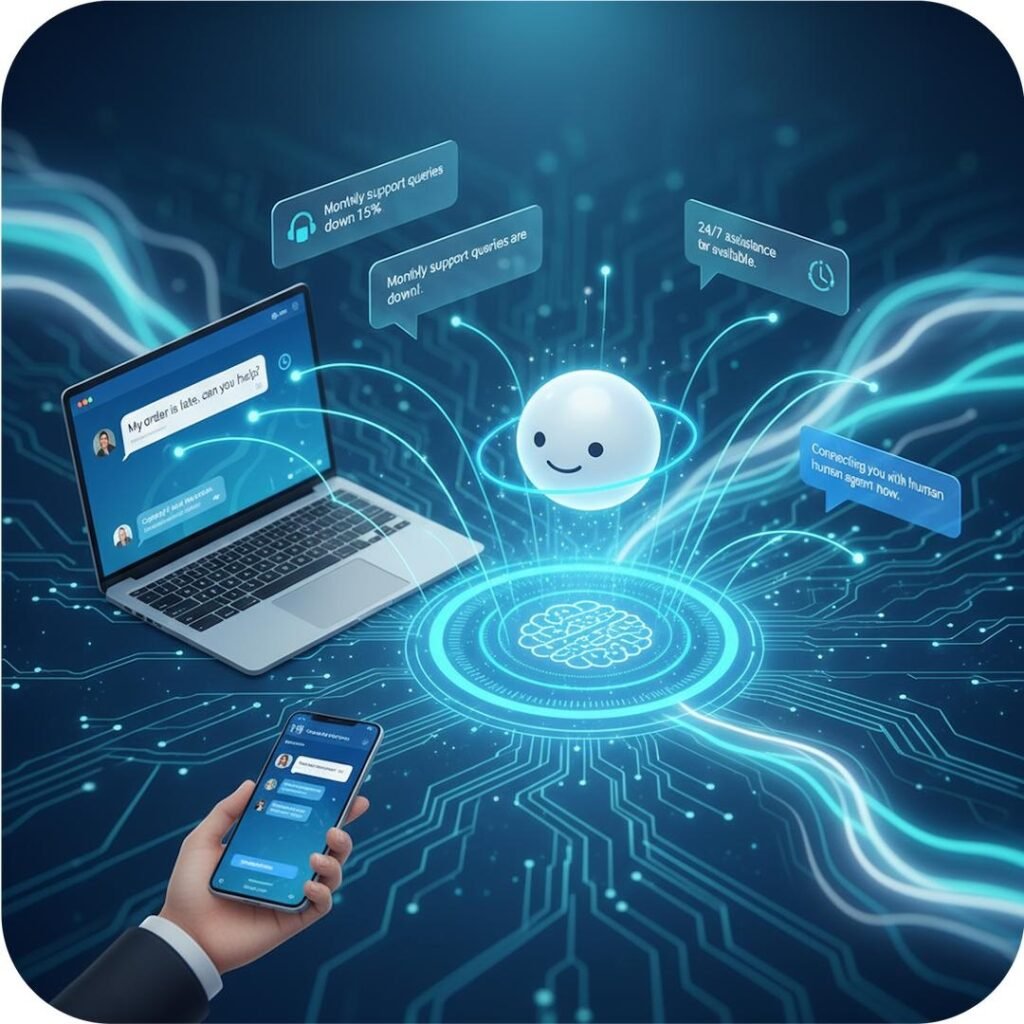
With WhatsApp Automation, frequently asked questions can be handled automatically through structured conversation flows or chatbots.
A customer could simply select:
Customer Support
→ Order Information
→ Service Information
→ Appointment
→ Pricing
→ Speak to an Executive
If the customer’s issue requires human intervention, the system can transfer the conversation to an appropriate team member.
This creates a combination of automation + human support, which can be more practical than relying exclusively on either method.
4. WhatsApp Automation for Automated Follow-Ups
One of the most common problems businesses face is inconsistent follow-up.
A customer may ask for a quotation today but forget to respond tomorrow. Another customer may show interest but need additional time before making a purchase.
Sales representatives can manually follow up with every prospect, but as the number of leads increases, maintaining consistency becomes difficult.
WhatsApp Automation can help businesses build structured follow-up workflows.
For example:
Day 1:
“Hi, just checking if you had a chance to review our quotation.”
Day 3:
“Do you have any questions about the service?”
Day 7:
“We’d be happy to help whenever you’re ready. Feel free to message us.”
The exact timing and message should depend on the customer’s journey and applicable messaging policies.
Automated follow-ups can help businesses stay connected without requiring employees to remember every individual prospect.
5. WhatsApp Automation for Marketing Campaigns
WhatsApp can also become part of a broader digital marketing strategy.
A business can combine WhatsApp Automation with SEO, social media, Google Ads, Meta Ads, email marketing, landing pages, and CRM systems.
For example, suppose a company runs a Facebook campaign promoting a new service.
The customer clicks the advertisement and starts a WhatsApp conversation.
The automated workflow can then:
Ad → WhatsApp → Service Selection → Lead Qualification → CRM → Sales Follow-Up
This creates a more connected customer journey.
Businesses can also use WhatsApp communication for appropriate promotional and transactional use cases while following applicable consent, template, and messaging requirements.
The important point is that WhatsApp should not operate separately from the overall marketing strategy.
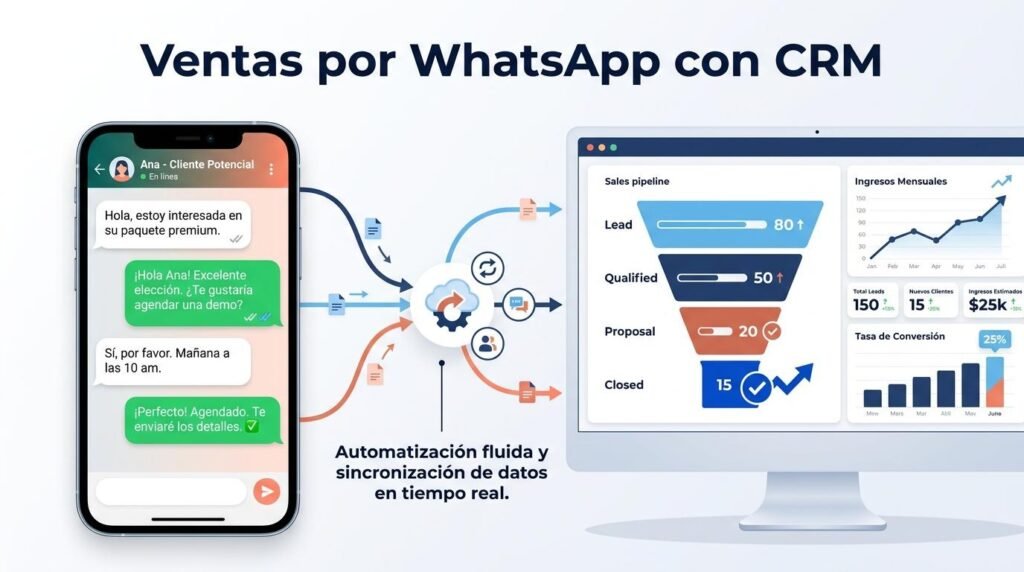
6. WhatsApp Automation for CRM Integration
A CRM helps businesses organize information about prospects and customers. However, manually transferring WhatsApp conversations into a CRM can be time-consuming.
With WhatsApp Automation, businesses can create workflows that connect customer conversations with CRM systems.
For example:
New WhatsApp Lead
↓
Customer Information Captured
↓
Lead Created in CRM
↓
Salesperson Assigned
↓
Follow-Up Scheduled
↓
Lead Status Updated
This can improve visibility across the sales pipeline.
Sales managers can potentially see how many leads are new, contacted, qualified, converted, or awaiting follow-up.
CRM integration is particularly valuable for businesses that handle large volumes of inquiries.
7. WhatsApp Automation for Appointment Booking
Appointment-based businesses can use WhatsApp Automation to simplify scheduling.
Businesses such as clinics, salons, consultants, educational institutes, fitness centers, and professional service providers often receive appointment-related questions throughout the day.
An automated flow can guide the customer through:
Choose Service → Select Date → Select Time → Confirm Details
The customer can receive confirmation and, where supported by the connected systems, reminders before the appointment.
This can reduce unnecessary back-and-forth communication.
For example:
“Your appointment is confirmed for Tuesday at 4:00 PM. Reply RESCHEDULE if you need another time.”
The exact workflow can be customized according to the business’s booking system.
How WhatsApp Automation Improves Sales Conversion
Getting a lead is not the same as converting a lead.
A customer might be interested in a service but still have questions about pricing, features, timelines, availability, or the next step.
A well-designed WhatsApp Automation workflow can help move the prospect through the sales funnel.
A simple funnel could be:
Awareness
↓
WhatsApp Inquiry
↓
Automated Qualification
↓
Product/Service Information
↓
Human Sales Conversation
↓
Quotation
↓
Follow-Up
↓
Conversion
Automation can help remove unnecessary delays between these stages.
However, businesses should avoid assuming that automation alone guarantees conversions. The quality of the offer, customer experience, sales process, pricing, trust, and follow-up strategy all influence the final outcome.
WhatsApp Automation and AI Chatbots
Traditional automated workflows generally work according to predefined rules.
AI-powered chatbots can take automation further by understanding customer questions and generating more contextual responses.
For example, instead of forcing every customer to select from a menu, an AI chatbot may understand:
“I want to know how much your website development package costs.”
It can identify that the customer is asking about website development and provide the relevant information or guide them toward a sales representative.
AI chatbot development can therefore become an extension of WhatsApp Automation.
However, businesses should establish clear boundaries for AI systems. Sensitive, complex, or high-value conversations may still require human involvement.
WhatsApp Automation for E-Commerce Businesses
E-commerce businesses handle a large number of customer interactions, including product inquiries, order questions, delivery updates, and support requests.
WhatsApp Automation can help organize these conversations.
Potential workflows can include:
Product Inquiry
→ Product Details
→ Availability
→ Purchase Assistance
Or:
Order Query
→ Order Number
→ Order Status
→ Support
Businesses can also connect their communication systems with other digital platforms to create a smoother customer journey.
For an e-commerce business, the goal is to make it easy for customers to move from interest to purchase to post-purchase support.
WhatsApp Automation and Lead Nurturing
Not every lead is ready to purchase immediately.
Some customers need additional information. Others may be comparing competitors or waiting for the right time to buy.
This is where lead nurturing becomes important.
A WhatsApp Automation strategy can help businesses create appropriate follow-up sequences based on customer actions.
For example:
New Lead
→ Welcome Message
→ Service Information
→ FAQ
→ Case Study
→ Sales Conversation
The communication should be relevant rather than excessive.
Businesses should also ensure that customers have appropriate ways to manage or stop marketing communications when required.
Good automation should feel helpful—not like spam.
WhatsApp Automation for Small Businesses
Automation isn’t limited to large companies.
Small businesses can benefit significantly because they often have limited staff and resources.
A small business owner may personally manage:
- Customer inquiries
- Sales
- Follow-ups
- Appointments
- Support
- Marketing
- Payments
- Reviews
Handling all these tasks manually can become difficult.
WhatsApp Automation can take care of repetitive communication, allowing business owners and employees to spend more time on activities that require human decision-making.
For example, a local service provider can use automation to answer common questions, capture customer details, and notify a salesperson when a high-intent lead arrives.
WhatsApp Automation for Digital Marketing Agencies
Digital marketing agencies can use WhatsApp Automation as part of their communication and lead management solutions.
For agencies offering services such as SEO, Google Ads, social media marketing, website development, and lead generation, WhatsApp can become a central communication channel.
A campaign might work like this:
Google/Meta Advertisement
↓
Landing Page or WhatsApp
↓
Automated Qualification
↓
CRM Integration
↓
Lead Assignment
↓
Sales Follow-Up
↓
Reporting
This allows marketing and sales activities to become more connected.
For businesses looking for broader digital marketing solutions, Saurabh Kumar provides services covering website development, SEO, social media marketing, paid advertising, automation, creative services, video production, content marketing, analytics, and online reputation management.
How to Choose the Right WhatsApp Automation Strategy
Every business has different requirements.
A local clinic may need appointment booking, while an e-commerce company may need order support. A real estate company may need lead qualification, whereas an agency may require CRM integration.
Before implementing WhatsApp Automation, businesses should identify:
1. Main communication problem
What repetitive process is consuming the most time?
2. Customer journey
What happens after someone sends a WhatsApp message?
3. Automation requirements
Which tasks can be automated safely?
4. Human handover
When should the conversation move to a team member?
5. CRM requirements
Where should customer and lead information be stored?
6. Reporting requirements
Which metrics should be measured?
A strategy built around actual business requirements is generally more useful than implementing automation simply because it is trending.
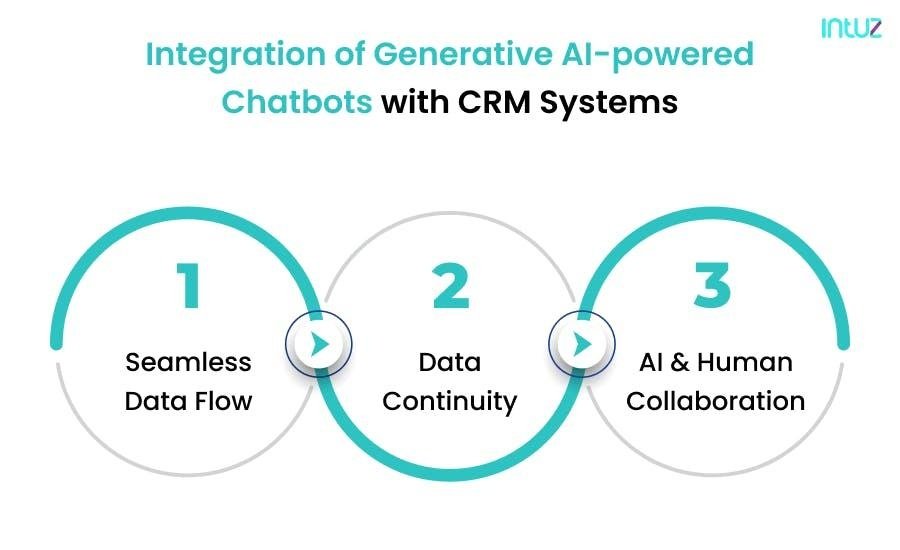
WhatsApp Automation vs Manual Communication
Manual communication offers personalization and flexibility, but it becomes increasingly difficult to manage as message volume grows.
Automation offers speed, consistency, and scalability but should be carefully designed to avoid frustrating customers.
The strongest approach is often a hybrid model.
Automation handles:
- FAQs
- Lead capture
- Initial qualification
- Basic information
- Appointment requests
- Notifications
- Follow-up workflows
Human teams handle:
- Complex questions
- Negotiations
- Complaints
- High-value prospects
- Personalized recommendations
- Sensitive conversations
This balance can create an efficient customer communication system.
Common Mistakes Businesses Should Avoid
Although WhatsApp Automation can be powerful, poor implementation can negatively affect customer experience.
Some common mistakes include:
Automating Everything
Not every conversation should be handled by a bot. Customers should have a clear way to reach a human when necessary.
Sending Too Many Messages
Excessive communication can irritate customers and may result in users disengaging from the business.
Creating Complicated Chatbots
Customers should not have to navigate ten different menus just to speak with someone.
Ignoring Customer Intent
Automation should respond according to what the customer needs rather than simply pushing promotional messages.
Not Tracking Performance
Businesses should measure results instead of assuming that automation is working.
Forgetting Integration
Disconnected tools can create unnecessary manual work. Connecting WhatsApp with CRM, website, lead generation, and analytics systems can create a more efficient workflow.
Key Benefits of WhatsApp Automation
When implemented correctly, WhatsApp Automation can provide businesses with several operational and marketing benefits.
Faster Responses
Customers receive immediate responses to common questions and requests.
Better Lead Management
Lead details can be captured and organized more systematically.
Reduced Manual Work
Teams spend less time responding to repetitive questions.
Consistent Communication
Predefined workflows help maintain consistent messaging.
Improved Follow-Up
Automated workflows can reduce the possibility of leads being forgotten.
Scalable Customer Support
Businesses can manage larger communication volumes without increasing manual workload at the same rate.
Better Customer Experience
A well-designed system makes it easier for customers to get information and complete common actions.
Why Choose Saurabh Kumar for WhatsApp Automation?
Businesses looking for WhatsApp Automation often need more than a chatbot.
They may require CRM integration, lead generation, website development, marketing automation, WhatsApp marketing, AI chatbot development, analytics, and digital marketing support.
Saurabh Kumar, with 15+ years of experience in digital marketing, provides solutions designed around business communication and customer acquisition requirements.

His services include:
- WhatsApp Marketing
- WhatsApp Chatbot Development
- AI Chatbot Development
- Marketing Automation
- CRM Integration
- Email Marketing Automation
- Lead Nurturing Automation
- Website Live Chat Integration
- Bulk SMS Marketing
- Voice Call Marketing
- SEO
- Google Business Profile Optimization
- Social Media Marketing
- Google Ads
- Meta Ads
- Website & App Development
- Content Marketing
- Creative Services
- Video Production
- Analytics & Reporting
- Online Reputation Management
This broader service ecosystem can help businesses connect their marketing, communication, sales, and customer support processes.
Get Started With WhatsApp Automation
Digital communication is becoming increasingly important for businesses that want to respond quickly and build better customer relationships.
WhatsApp Automation can help businesses capture leads, automate repetitive conversations, qualify prospects, manage follow-ups, provide customer support, integrate CRM systems, and create more organized customer journeys.
But successful automation isn’t about sending more messages. It is about delivering the right information, at the right time, through the right workflow.
Whether your business needs WhatsApp chatbot development, CRM integration, lead nurturing, marketing automation, or a complete digital marketing strategy, the right system can make communication more efficient and scalable.
If you are planning to automate your business communication, Saurabh Kumar can help you build a solution aligned with your marketing and customer journey requirements.
Contact: +91 76966 77728
Address: S15-00709, Vaidehi Niwas, Bhairomunna Link Road, Sahnewal, Ludhiana, Punjab – 141120
Start building a smarter customer communication system with WhatsApp Automation and turn repetitive conversations into a more structured, scalable business process.