

The way customers shop online has changed dramatically over the last few years. Today, buyers expect instant replies, personalized recommendations, seamless order tracking, and quick customer support. This is where WhatsApp API for E-commerce has become one of the most valuable tools for online businesses. Whether you own a small online store or manage a large e-commerce brand, implementing WhatsApp API for E-commerce can transform the way you communicate with your customers and significantly improve your conversion rates.
Unlike traditional communication channels such as email or SMS, WhatsApp offers faster engagement, higher open rates, and real-time conversations. Customers already spend hours on WhatsApp every day, making it the perfect platform for businesses to connect with them naturally. With the right automation, your business can send order updates, recover abandoned carts, answer FAQs instantly, recommend products, and even close sales automatically.
In today’s competitive online marketplace, providing an exceptional customer experience is just as important as offering quality products. Businesses that fail to communicate quickly often lose customers to competitors. By using WhatsApp API for E-commerce, brands can build trust, improve customer satisfaction, and create long-term relationships that lead to repeat purchases.
If you’re looking to scale your online business in 2026, adopting WhatsApp API for E-commerce isn’t just an option—it has become a necessity.
What is WhatsApp API for E-commerce?
WhatsApp API for E-commerce is a business communication solution that allows online stores to automate customer conversations, send transactional messages, manage customer support, and integrate WhatsApp directly with their website, CRM, ERP, or e-commerce platform.
Unlike the regular WhatsApp Business App, the API version is built for growing businesses that need automation, multiple agents, chatbot integration, and advanced customer engagement features.
With WhatsApp API for E-commerce, businesses can:
- Automate customer conversations
- Send order confirmations
- Share shipping updates
- Recover abandoned carts
- Send payment reminders
- Recommend products
- Offer customer support
- Run marketing campaigns
- Collect customer feedback
- Increase repeat purchases
Instead of manually replying to every customer, businesses can automate repetitive conversations while still providing a personalized shopping experience.
Why Every Online Store Needs WhatsApp API for E-commerce
The biggest challenge in e-commerce isn’t attracting visitors—it’s converting them into paying customers.
Many customers:
- Leave products in their cart
- Have payment-related questions
- Want faster delivery information
- Need product recommendations
- Compare prices before buying
If these customers don’t receive immediate responses, they often leave your website.
This is where WhatsApp API for E-commerce makes a significant difference.
Customers receive instant replies, personalized assistance, and timely updates without waiting for emails or phone calls.
This improves:
- Customer trust
- Purchase confidence
- Conversion rates
- Customer retention
- Brand loyalty
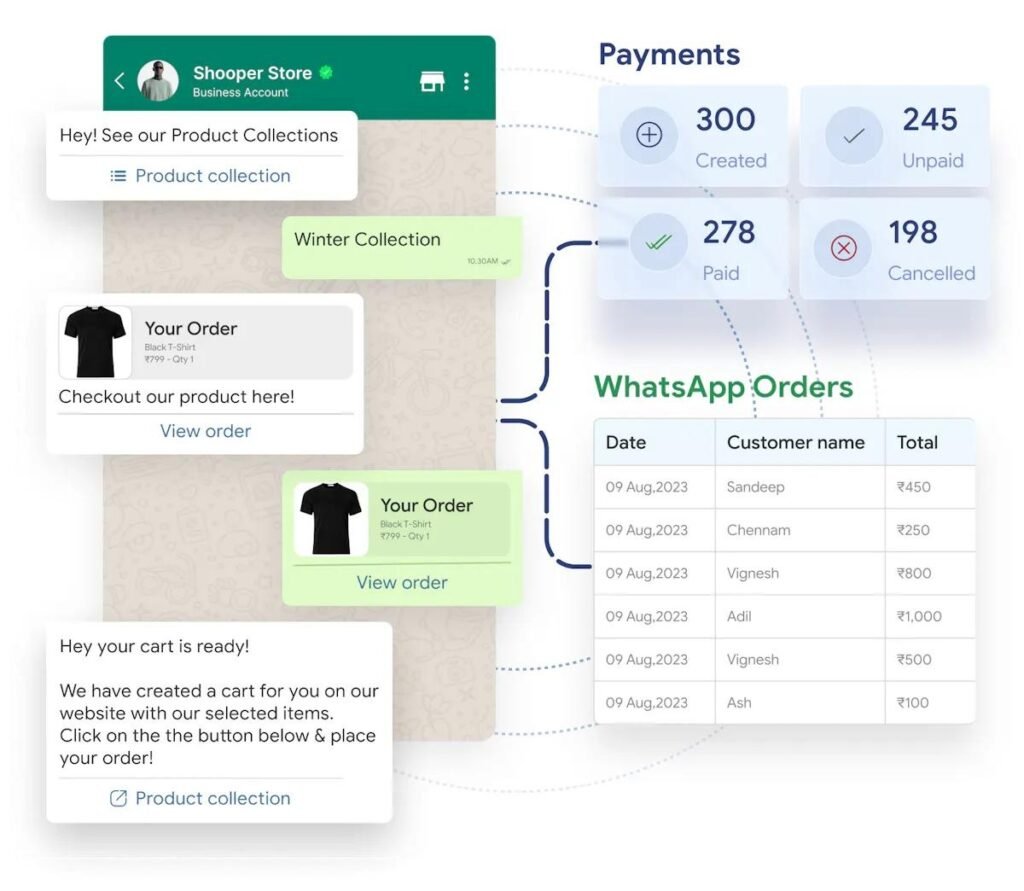
1. Instant Customer Support 24×7 with WhatsApp API for E-commerce
Modern customers expect instant responses regardless of the time of day.
Instead of hiring a large support team, businesses can deploy AI-powered chatbots integrated with WhatsApp API for E-commerce to answer common customer queries instantly.
These include:
- Product availability
- Delivery charges
- Return policy
- Refund status
- Order tracking
- Payment issues
- Shipping timelines
Customers receive immediate assistance, improving their overall shopping experience while reducing operational costs.
2. Recover Abandoned Carts Automatically
Cart abandonment is one of the biggest challenges for e-commerce businesses.
Studies consistently show that many shoppers add products to their carts but never complete the purchase.
Using WhatsApp API for E-commerce, businesses can automatically send personalized reminders such as:
“Hi Rahul, you left your favorite sneakers in your cart. Complete your order today and enjoy free shipping!”
These reminders can include:
- Product images
- Discount coupons
- Checkout links
- Limited-time offers
- Payment buttons
This simple automation can recover a significant percentage of lost sales.
3. Send Order Confirmation Instantly
Customers appreciate knowing that their order has been successfully placed.
With WhatsApp API for E-commerce, automated confirmation messages can include:
- Order ID
- Product details
- Invoice
- Payment confirmation
- Estimated delivery date
- Customer support contact
This immediate communication builds trust and reduces unnecessary support inquiries.
4. Real-Time Order Tracking
One of the most common customer questions is:
“Where is my order?”
Instead of contacting customer support repeatedly, businesses using WhatsApp API for E-commerce can automatically send:
- Order packed notifications
- Shipment updates
- Out for delivery alerts
- Delivered confirmations
- Tracking links
Customers stay informed throughout the delivery journey, leading to a better shopping experience and fewer support tickets.
5. Personalized Product Recommendations
Every customer has unique preferences.
By integrating purchase history and browsing behavior, WhatsApp API for E-commerce can send personalized product suggestions based on previous purchases.
For example:
- Customers who bought smartphones can receive recommendations for accessories.
- Fashion buyers can receive matching clothing suggestions.
- Beauty shoppers can receive skincare bundles.
- Grocery customers can receive refill reminders.
Personalized recommendations increase average order value and encourage repeat purchases.
Why Choose Saurabh Kumar for WhatsApp API Integration?
Implementing WhatsApp API for E-commerce requires more than just technical setup—it requires a strategy that aligns with your business goals. With 15+ years of experience in Digital Marketing, Saurabh Kumar helps businesses leverage WhatsApp automation to improve customer engagement, streamline communication, and increase online sales.
Digital Marketing India – Services
🌐 Website & App Development
- Business Website Development
- E-Commerce Website Development
- Custom Web Applications
- Mobile App Development (Android & iOS)
- Landing Page Development
- Website Maintenance & Support
🔍 SEO Services
- Local SEO
- On-Page SEO
- Off-Page SEO
- Technical SEO
- E-Commerce SEO
- Google Business Profile Optimization
- SEO Audit & Competitor Analysis
📱 Social Media Marketing
- Facebook Marketing
- Instagram Marketing
- LinkedIn Marketing
- YouTube Marketing
- Social Media Management
- Content Creation & Strategy
🎯 Paid Advertising
- Meta Ads
- Google Ads
- YouTube Ads
- LinkedIn Ads
- Remarketing Campaigns
- Lead Generation Campaigns
🤖 Automation & Communication Solutions
- WhatsApp Marketing
- Bulk SMS Marketing
- Voice Call Marketing
- WhatsApp Chatbot Development
- AI Chatbot Development
- Website Live Chat Integration
- Marketing Automation
- CRM Integration
- Email Marketing Automation
- Lead Nurturing Automation
6. Improve Customer Engagement with Personalized Conversations
One of the biggest advantages of WhatsApp API for E-commerce is its ability to create meaningful, one-to-one conversations with customers. Unlike emails that often remain unopened, WhatsApp messages are usually read within minutes.
Businesses can use WhatsApp API for E-commerce to engage customers by sending:
- Personalized welcome messages
- Exclusive product launches
- Birthday and anniversary offers
- Festival discounts
- Loyalty rewards
- Back-in-stock notifications
- Price drop alerts
Personalized communication makes customers feel valued and encourages them to return for future purchases. The more relevant your messages are, the higher your engagement and conversion rates.
7. Boost Sales Through Automated Marketing Campaigns
Marketing automation has become essential for every online business. With WhatsApp API for E-commerce, businesses can run targeted campaigns without manually contacting every customer.
Examples include:
- Flash sale announcements
- New collection launches
- Limited-time discount offers
- Seasonal campaigns
- Festival promotions
- Membership renewal reminders
- Coupon distribution
Since WhatsApp messages have significantly higher open and response rates than traditional email marketing, businesses often experience better campaign performance and higher ROI.
8. Reduce Customer Support Costs
Hiring a large customer support team can be expensive, especially for growing businesses. By implementing WhatsApp API for E-commerce, companies can automate repetitive customer queries and allow support agents to focus on complex issues.
Frequently automated queries include:
- Order status
- Shipping information
- Return policy
- Refund process
- Product availability
- Store timings
- Payment confirmation
This automation reduces operational costs while maintaining excellent customer service.
9. Multi-Agent Customer Support
The standard WhatsApp Business App is suitable for small businesses, but as your business grows, managing thousands of customer conversations becomes difficult.
WhatsApp API for E-commerce allows multiple support executives to access and manage customer chats from a single dashboard.
Benefits include:
- Faster response times
- Better customer management
- Team collaboration
- Chat assignment
- Conversation history
- Performance tracking
This ensures no customer inquiry is missed, even during peak sales periods.
10. Seamless CRM Integration
One of the most powerful features of WhatsApp API for E-commerce is its ability to integrate with Customer Relationship Management (CRM) systems.
Integration allows businesses to:
- Store customer information
- Track purchase history
- Monitor customer behavior
- Automate follow-ups
- Segment audiences
- Improve lead management
By connecting WhatsApp with your CRM, every customer interaction becomes more personalized and data-driven.

11. Secure Payment Reminders
Many customers abandon purchases simply because they forget to complete payment.
Using WhatsApp API for E-commerce, businesses can automatically send secure payment reminders with direct payment links.
These reminders may include:
- Pending payment notifications
- EMI reminders
- Subscription renewal alerts
- Invoice links
- Payment confirmation requests
This increases completed transactions while reducing revenue loss.
12. Collect Customer Feedback Automatically
Customer feedback is essential for improving products and services.
With WhatsApp API for E-commerce, businesses can automatically send feedback requests after successful delivery.
Examples include:
- Product rating requests
- Service feedback
- Delivery experience
- Return experience
- Customer satisfaction surveys
Positive reviews can be redirected to Google Reviews, while negative feedback can be addressed privately, helping improve your online reputation.
13. Increase Repeat Purchases
Acquiring new customers is more expensive than retaining existing ones.
WhatsApp API for E-commerce helps businesses encourage repeat purchases through:
- Reorder reminders
- Membership benefits
- Personalized discounts
- Loyalty programs
- Reward points updates
- Exclusive member offers
Customers who feel connected to a brand are more likely to shop again.
14. Run AI-Powered Chatbots
Artificial Intelligence is changing customer service.
Businesses can integrate AI chatbots with WhatsApp API for E-commerce to provide instant support around the clock.
Chatbots can:
- Answer FAQs
- Recommend products
- Track orders
- Capture leads
- Schedule appointments
- Share catalogs
- Escalate complex issues to human agents
This ensures customers receive immediate assistance, even outside business hours.
15. Scale Your E-commerce Business Efficiently
As your business grows, manual communication becomes impossible.
Whether you’re handling 100 or 100,000 customers, WhatsApp API for E-commerce scales effortlessly.
It supports:
- High message volumes
- Bulk notifications
- Marketing automation
- Customer segmentation
- Team collaboration
- CRM integration
- Analytics and reporting
This makes it an ideal solution for startups, SMEs, and enterprise-level e-commerce businesses.
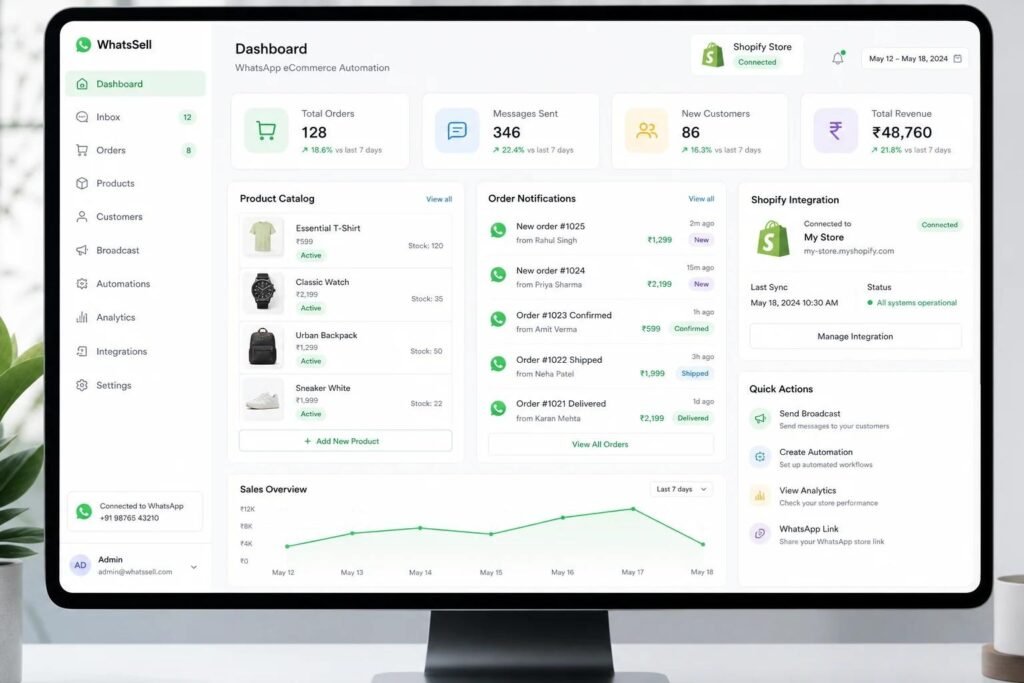
WhatsApp API vs WhatsApp Business App
| Feature | WhatsApp Business App | WhatsApp API for E-commerce |
|---|---|---|
| Suitable for | Small Businesses | Medium & Large Businesses |
| Automation | Limited | Advanced |
| Chatbot Support | No | Yes |
| CRM Integration | No | Yes |
| Multiple Users | Limited | Yes |
| Bulk Notifications | No | Yes |
| Order Tracking | Basic | Advanced |
| Marketing Campaigns | Limited | Yes |
| AI Automation | No | Yes |
| Analytics | Basic | Advanced |
If your business is growing rapidly, WhatsApp API for E-commerce provides the flexibility and automation needed to manage customer interactions at scale.
Industries That Can Benefit from WhatsApp API for E-commerce
Almost every online business can leverage WhatsApp API for E-commerce, including:
- Fashion & Apparel
- Electronics
- Grocery Stores
- Beauty & Cosmetics
- Furniture
- Jewellery
- Healthcare Products
- Fitness Equipment
- Books & Stationery
- Pet Supplies
- Home Décor
- Mobile Accessories
- Automotive Parts
- Online Pharmacies
- Educational Products
Regardless of the industry, WhatsApp enables businesses to provide instant support and personalized shopping experiences.
Why Choose Saurabh Kumar for WhatsApp API for E-commerce?
With 15+ years of experience in Digital Marketing, Saurabh Kumar specializes in helping businesses implement automation solutions that drive measurable results.

Why Work with Saurabh Kumar?
- 15+ Years of Industry Experience
- Customized WhatsApp API Integration
- End-to-End E-commerce Automation
- CRM & Marketing Automation Expertise
- SEO-Friendly Digital Growth Strategies
- Dedicated Technical Support
- Scalable Solutions for Growing Businesses
- Proven Digital Marketing Experience
Contact Details
Saurabh Kumar
Digital Marketing India
Office Address:
S15-00709, Vaidehi Niwas,
Bhairomunna Link Road,
Sahnewal, Ludhiana, Punjab – 141120
Contact: +91 76966 77728
The Future of WhatsApp API for E-commerce
The future of online shopping is becoming more conversational. Instead of filling out long forms or waiting for email replies, customers now prefer messaging businesses directly. This shift has made WhatsApp API for E-commerce one of the most important technologies for modern online stores.
As artificial intelligence, automation, and personalized marketing continue to evolve, WhatsApp API for E-commerce will become even more powerful. Businesses will be able to offer instant product recommendations, automate customer journeys, process orders, collect payments, and provide real-time support—all within a single WhatsApp conversation.
In the coming years, customers will increasingly expect brands to communicate on platforms they already use daily. Businesses that adopt WhatsApp API for E-commerce today will be better positioned to build stronger customer relationships, improve retention, and stay ahead of competitors.
How to Implement WhatsApp API for E-commerce
Implementing WhatsApp API for E-commerce is a strategic process. A proper setup ensures that your business delivers a smooth and professional customer experience.
Step 1: Understand Your Business Goals
Before implementation, identify what you want to achieve. Your objectives may include:
- Increasing online sales
- Automating customer support
- Recovering abandoned carts
- Improving customer engagement
- Sending order notifications
- Running promotional campaigns
Clear goals help you choose the right automation workflows.
Step 2: Get WhatsApp API Access
The next step is obtaining access to the official WhatsApp Business API through an approved provider. This allows your business to send secure, verified, and scalable messages to customers.
Step 3: Verify Your Business
Business verification increases customer trust and helps establish your brand as authentic. Verified businesses also unlock additional messaging capabilities.
Step 4: Integrate with Your E-commerce Platform
Connect WhatsApp API for E-commerce with platforms such as:
- Shopify
- WooCommerce
- Magento
- OpenCart
- Custom-built websites
Integration enables automated order updates, customer communication, and marketing workflows.
Step 5: Connect Your CRM
A CRM integration ensures that customer information, purchase history, and communication records remain synchronized. This enables highly personalized conversations and more effective lead nurturing.
Step 6: Build Automated Workflows
Create automation for:
- Welcome messages
- Product inquiries
- Order confirmations
- Shipping notifications
- Delivery updates
- Payment reminders
- Review requests
- Reorder reminders
- Festival offers
- Customer support
These workflows save time while improving the customer experience.
Step 7: Monitor and Optimize
Track key performance metrics such as:
- Message delivery rate
- Open rate
- Response time
- Click-through rate
- Conversion rate
- Customer satisfaction
- Sales generated through WhatsApp
Regular analysis helps you improve campaigns and maximize ROI.
Common Mistakes to Avoid
Many businesses invest in automation but fail to achieve the desired results because of avoidable mistakes.
❌ Sending Too Many Promotional Messages
Customers dislike spam. Focus on sending valuable, relevant, and timely messages instead of constant promotions.
❌ Ignoring Customer Queries
Automation is helpful, but some situations require human support. Ensure complex queries are transferred to a live agent when needed.
❌ Not Personalizing Messages
Generic messages often fail to engage customers. Use customer names, purchase history, and preferences to create personalized communication.
❌ Poor Integration
If your website, CRM, and WhatsApp system are not properly connected, customers may receive inaccurate or delayed updates.
❌ Not Tracking Performance
Without analytics, it’s impossible to know which campaigns are working. Monitor results and continuously optimize your messaging strategy.
Why Businesses Trust Saurabh Kumar
Choosing the right digital marketing expert is just as important as choosing the right technology. Saurabh Kumar, with 15+ years of experience in Digital Marketing, has helped businesses strengthen their online presence through automation, SEO, paid advertising, and website development.
By combining technical expertise with practical marketing strategies, he helps businesses implement WhatsApp API for E-commerce in a way that drives measurable business growth.
Digital Marketing India – Complete Services
🌐 Website & App Development
- Business Website Development
- E-Commerce Website Development
- Custom Web Applications
- Mobile App Development (Android & iOS)
- Landing Page Development
- Website Maintenance & Support
🔍 SEO Services
- Local SEO
- On-Page SEO
- Off-Page SEO
- Technical SEO
- E-Commerce SEO
- Google Business Profile Optimization
- SEO Audit & Competitor Analysis
📱 Social Media Marketing
- Facebook Marketing
- Instagram Marketing
- LinkedIn Marketing
- YouTube Marketing
- Social Media Management
- Content Creation & Strategy
🎯 Paid Advertising
- Meta Ads
- Google Ads
- YouTube Ads
- LinkedIn Ads
- Remarketing Campaigns
- Lead Generation Campaigns
🤖 Automation & Communication Solutions
- WhatsApp Marketing
- Bulk SMS Marketing
- Voice Call Marketing
- WhatsApp Chatbot Development
- AI Chatbot Development
- Website Live Chat Integration
- Marketing Automation
- CRM Integration
- Email Marketing Automation
- Lead Nurturing Automation
🎨 Creative Services
- Graphic Designing
- Social Media Creatives
- Logo Design
- Banner & Brochure Design
- Brand Identity Design
🎬 Video Production
- Video Editing
- Reels Editing
- YouTube Video Editing
- Corporate Videos
- Motion Graphics
- Promotional Videos
✍️ Content Marketing
- Content Writing
- Blog Writing
- Website Content Writing
- SEO Content Writing
- Ad Copywriting
📊 Analytics & Reporting
- Google Analytics Setup
- Conversion Tracking
- Performance Reports
- ROI Analysis
⭐ Online Reputation Management
- Google Review Management
- Brand Monitoring
- Online Reputation Building
Frequently Asked Questions (FAQs)
1. What is WhatsApp API for E-commerce?
WhatsApp API for E-commerce is an advanced business messaging solution that helps online stores automate customer communication, send order updates, recover abandoned carts, and provide instant support.
2. Is WhatsApp API better than the WhatsApp Business App?
Yes. The API supports automation, CRM integration, chatbots, multiple users, advanced analytics, and scalable communication, making it ideal for growing e-commerce businesses.
3. Can WhatsApp API help increase online sales?
Absolutely. It helps improve customer engagement, recover abandoned carts, provide personalized recommendations, and streamline the buying journey, all of which can lead to higher conversions.
4. Can WhatsApp API be integrated with Shopify or WooCommerce?
Yes. It can be integrated with major e-commerce platforms such as Shopify, WooCommerce, Magento, OpenCart, and custom websites.
5. Is WhatsApp API suitable for small businesses?
Yes. Even small businesses can benefit by automating customer support, sending order notifications, and improving communication as they grow.
Final Thoughts
The digital commerce landscape is evolving rapidly, and customers expect fast, convenient, and personalized communication. WhatsApp API for E-commerce empowers businesses to meet these expectations by automating conversations, enhancing customer support, improving order management, and increasing sales.
Whether you’re running a startup, a mid-sized online store, or a large e-commerce brand, implementing WhatsApp API for E-commerce can streamline operations and create a better customer experience.
If you’re looking for a trusted expert to implement WhatsApp automation, integrate CRM systems, optimize your marketing, and help your business grow, Saurabh Kumar and Digital Marketing India offer end-to-end solutions tailored to your business needs.