Introduction
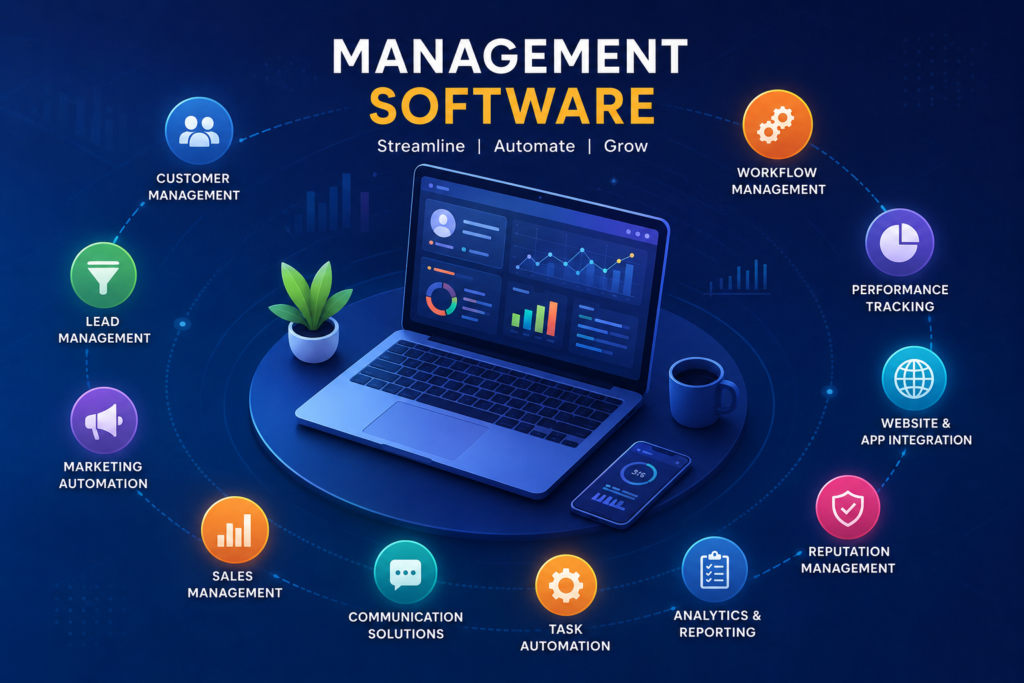
In today’s competitive digital environment, businesses need more than good products and services to succeed. They need efficient processes, accurate data, effective communication, organized customer management, and consistent marketing. Management Software can bring these essential functions together and help businesses operate in a more structured and productive way. Whether you run a startup, local business, e-commerce company, professional service firm, or growing enterprise, the right Management Software can reduce repetitive work and give your team better control over everyday operations.
As businesses grow, managing customers, leads, employees, marketing campaigns, sales activities, communication, and reporting manually becomes increasingly difficult. Spreadsheets, scattered messages, multiple applications, and disconnected systems can create confusion and consume valuable time. Modern Management Software provides a centralized environment where important business information and processes can be organized.
For businesses looking to improve their digital presence and operational efficiency, Management Software can work alongside website development, SEO, social media marketing, paid advertising, automation, CRM integration, analytics, and reputation management. With the right strategy, technology becomes more than an expense; it becomes an important growth asset.
With over 15 years of experience in digital marketing, Saurabh Kumar helps businesses explore digital solutions designed around their marketing, communication, technology, and growth requirements.
What Is Management Software?
Management Software is a digital solution designed to help businesses organize, monitor, automate, and manage different operational activities from a structured system. Depending on the business requirement, it may include customer relationship management, lead tracking, task management, communication, marketing automation, analytics, reporting, employee coordination, or workflow management.
Instead of maintaining information across different spreadsheets and applications, a business can use Management Software to bring important activities into a connected workflow.
For example, when a customer submits a form on a website, the information can be captured automatically. The lead can then be assigned to a salesperson, followed up through email or WhatsApp, and tracked until conversion. Management Software can make this process more organized and measurable.
1. Management Software Improves Business Organization
One of the biggest advantages of Management Software is improved organization. Businesses generate large amounts of information every day, including customer details, enquiries, sales records, marketing data, communication histories, documents, and performance information.
Without a proper system, finding the right information can take unnecessary time. Management Software creates a structured environment where important information can be categorized and accessed more efficiently.
A centralized system also reduces dependency on individual employees. If an employee is unavailable, another authorized team member can access the relevant information and continue the workflow.
Better organization can lead to:
- Faster access to business information
- Improved internal communication
- Reduced duplication of work
- Better customer follow-up
- Easier monitoring of tasks
- More consistent business processes
2. Management Software Makes Customer Management Easier
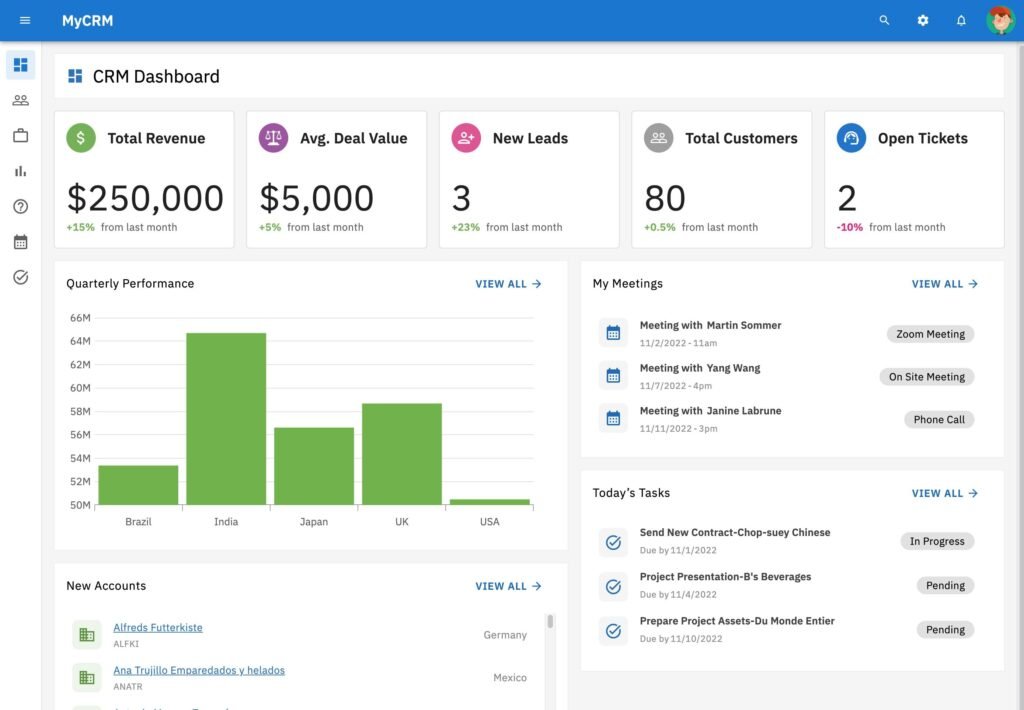
Customers are at the center of every successful business. Managing customer relationships effectively is therefore essential. Management Software can help businesses maintain customer records, communication histories, enquiries, requirements, purchase information, and follow-up schedules in one place.
A structured customer management system allows teams to understand where each customer is in the buying journey.
For example, a potential customer may initially enquire through a website. Management Software can record the enquiry and notify the relevant salesperson. The salesperson can then contact the customer, update the lead status, schedule a follow-up, and eventually mark the lead as converted or lost.
This creates a clear customer journey and reduces the possibility of missed opportunities.
3. Management Software Helps Businesses Manage Leads
Lead generation is only one part of digital marketing. Converting those leads into customers is equally important. Management Software can help businesses track leads generated through websites, social media campaigns, Google Ads, Meta Ads, landing pages, WhatsApp, and other channels.
A lead management system can categorize prospects according to their stage, such as:
New Lead → Contacted → Qualified → Follow-Up → Proposal → Converted
This simple structure gives sales teams a better understanding of their pipeline.
Management Software can also help identify leads that require immediate attention. Automated reminders can prevent sales representatives from forgetting follow-ups.
For businesses investing in paid advertising, this is particularly useful because the company can track what happens after a lead submits a form instead of simply counting the number of enquiries.
4. Management Software Supports Marketing Automation
Digital marketing often involves repetitive activities. Sending follow-up emails, updating customer records, notifying sales teams, distributing messages, and nurturing leads can consume significant time when performed manually.
Management Software can integrate automation into these processes.
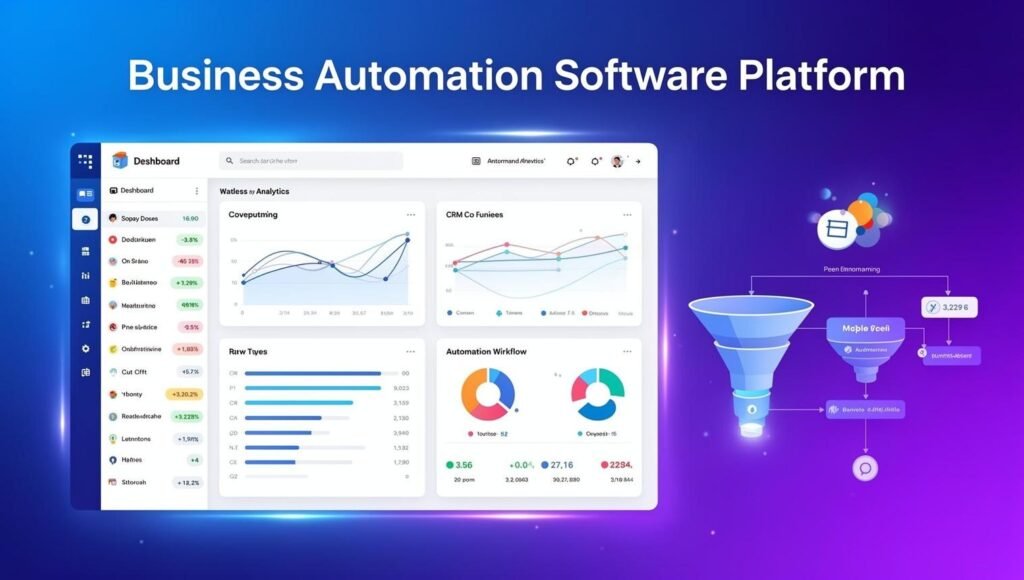
For instance, after a potential customer submits an online enquiry, an automated workflow could send a confirmation message, notify the sales team, add the prospect to a CRM, and schedule a follow-up.
Marketing automation can help businesses maintain communication consistency while allowing employees to focus on higher-value activities.
Depending on the system, businesses may connect Management Software with:
- WhatsApp marketing
- Email marketing
- SMS campaigns
- CRM platforms
- Website forms
- Chatbots
- Lead generation campaigns
- Customer databases
5. Management Software Enhances Team Productivity
Employee productivity is closely connected to how efficiently information and responsibilities are managed. When employees spend too much time searching for information, updating multiple spreadsheets, or performing repetitive administrative tasks, less time remains for productive work.
Management Software can simplify workflows by clearly defining responsibilities and processes.
Team members can know:
- What task needs to be completed
- Who is responsible
- When it needs to be completed
- What information is required
- Whether the task has been completed
- What action should happen next
This visibility can reduce confusion and improve accountability.
Automation can further reduce repetitive administrative work, allowing employees to spend more time on sales, customer service, strategy, creative work, and business development.
6. Management Software Improves Communication
Poor communication can create delays, misunderstandings, and missed opportunities. Management Software can help businesses centralize important communication and make customer information available to authorized team members.
Communication solutions can include email automation, WhatsApp communication, SMS, website live chat, chatbots, and CRM-based notifications.
For example, a customer service representative may be able to view previous interactions before responding to a customer. This can create a more personalized experience because the customer does not have to repeatedly explain the same issue.
For growing companies, organized communication becomes increasingly important because multiple employees may interact with the same customer.
7. Management Software Strengthens Sales Management
Sales teams need accurate information to understand their pipeline and prioritize opportunities. Management Software can provide a structured overview of leads, prospects, follow-ups, proposals, and conversions.
Sales managers can use dashboards and reports to monitor:
- Number of new leads
- Follow-up activity
- Conversion rates
- Sales pipeline
- Revenue opportunities
- Lead sources
- Team performance
This information can help management identify bottlenecks.
For example, if a business receives many enquiries but has a low conversion rate, the issue may not be marketing. The problem could be delayed follow-up, weak sales communication, poor qualification, or an ineffective sales process.
Management Software can help make these patterns visible.
8. Management Software Provides Better Analytics
Data-driven decision-making is one of the most important advantages of digital technology. Management Software can collect information from different business activities and present it through dashboards and reports.
Analytics can help answer questions such as:
- Which marketing channel generates the most leads?
- How many leads become customers?
- Which campaigns provide better returns?
- How quickly are leads being contacted?
- Which services generate the highest demand?
- Where are customers dropping out of the sales process?
When businesses have reliable data, decisions can be based on evidence rather than assumptions.
This is particularly valuable for companies investing in SEO, social media marketing, Google Ads, Meta Ads, content marketing, and lead generation.
9. Management Software Can Integrate With Websites and Apps
A website is often the first digital interaction between a business and its potential customer. Management Software can connect website forms, landing pages, applications, customer databases, and communication systems.
For example, a website enquiry form can automatically transfer customer information into a CRM system. This eliminates the need for employees to manually copy information from emails or spreadsheets.
Businesses can also develop custom web applications and mobile applications around specific operational requirements.
Website and app development services may include:
- Business website development
- E-commerce website development
- Custom web applications
- Android and iOS mobile applications
- Landing page development
- Website maintenance and support
When technology systems are properly connected, businesses can create a smoother digital workflow.

10. Management Software Supports Digital Marketing
Digital marketing involves multiple channels, and managing them independently can become complicated. Management Software can support the coordination of SEO, social media, paid advertising, content marketing, email communication, and customer follow-up.
A comprehensive digital marketing strategy may include:
SEO Services
Businesses can use local SEO, on-page SEO, off-page SEO, technical SEO, e-commerce SEO, Google Business Profile optimization, SEO audits, and competitor analysis to improve organic visibility.
Social Media Marketing
Facebook, Instagram, LinkedIn, and YouTube marketing can help businesses reach potential customers and build brand awareness.
Paid Advertising
Google Ads, Meta Ads, YouTube Ads, LinkedIn Ads, remarketing, and lead generation campaigns can generate targeted traffic and enquiries.
Management Software can help connect these marketing activities with lead management and reporting.
11. Management Software Enables WhatsApp and Communication Automation
Customers increasingly expect quick communication. Businesses therefore need communication systems that are fast, organized, and scalable.
Management Software can support WhatsApp marketing, bulk SMS, IVR, promotional voice calls, chatbots, email automation, and lead nurturing.
A WhatsApp chatbot, for example, can answer frequently asked questions, collect basic customer information, provide service details, and direct customers toward the appropriate team.
AI chatbot integration can take this further by enabling automated responses to common customer queries.
Automation does not necessarily replace human interaction. Instead, it can handle repetitive communication while allowing employees to focus on conversations that require personal attention.
12. Management Software Helps With Customer Retention
Acquiring a new customer can require significant marketing and sales effort. Retaining existing customers is therefore an important part of sustainable business growth.
Management Software can help businesses maintain customer histories and schedule follow-ups after purchases or services.
Businesses can use customer data to create relevant communication campaigns, such as:
- Service reminders
- Renewal reminders
- Product recommendations
- Feedback requests
- Review requests
- Special offers
- Customer appreciation campaigns
A structured follow-up process can improve customer experience and create opportunities for repeat business.
13. Management Software Supports Online Reputation Management
Online reputation can significantly influence customer decisions. Before choosing a company, many customers check Google reviews, social media profiles, websites, and online information.
Management Software can support reputation-related processes by helping businesses monitor customer feedback and organize review management workflows.
Online reputation services may include:
- Google review management
- Brand monitoring
- Online reputation building
- Customer feedback management
Businesses can use these systems to identify customer concerns and respond appropriately.
A strong reputation is not created through reviews alone. It is built through consistent service quality, customer communication, transparency, and timely resolution of problems.
14. Management Software Improves Reporting and ROI Tracking
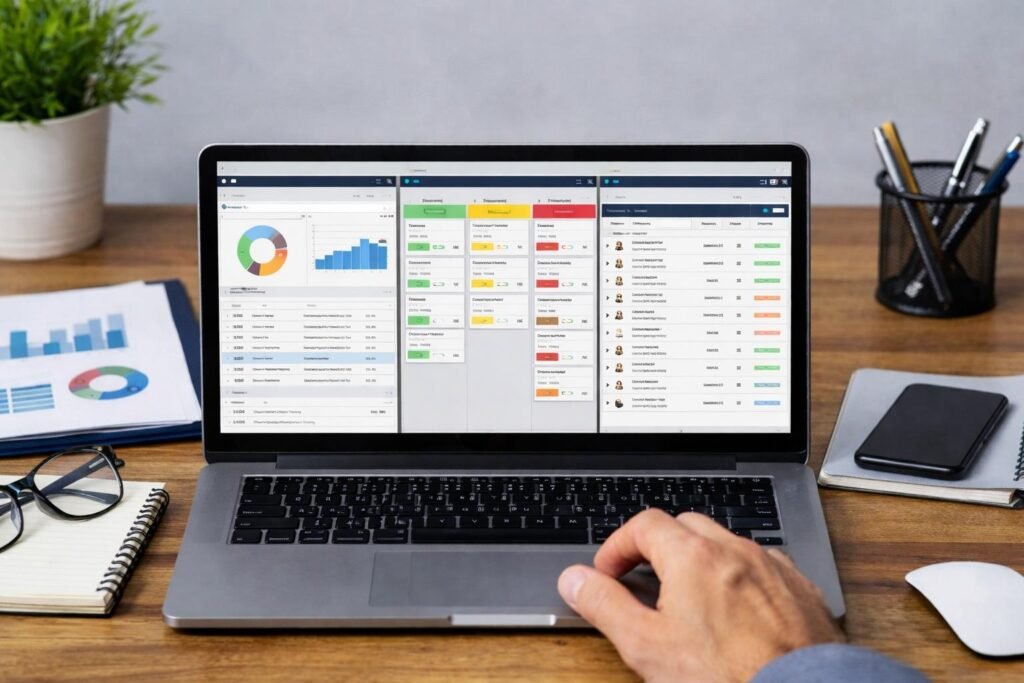
Business owners need to know whether their investments are producing results. Management Software can help connect marketing activities with measurable outcomes.
For example, a business may spend money on Google Ads and generate 200 leads. However, the more important questions are:
How many leads were qualified? How many became customers? How much revenue was generated? What was the actual return on investment?
Management Software combined with analytics and conversion tracking can provide better visibility into these numbers.
Reporting solutions may include:
- Google Analytics setup
- Conversion tracking
- Performance reports
- ROI analysis
- Campaign reporting
- Lead source analysis
These insights allow businesses to optimize marketing budgets and improve future campaigns.
15. Management Software Creates a Scalable Business System
A system that works for a small business with ten customers may not work efficiently when the company has thousands of customers. Scalability is therefore an important consideration when choosing Management Software.
A scalable system should allow a business to add users, customers, workflows, communication channels, integrations, and reporting requirements as the company grows.
The objective is not simply to purchase technology. The objective is to create a business infrastructure that can support future growth.
Businesses should evaluate their current requirements as well as their long-term plans before selecting or developing Management Software.
Key Features to Look for in Management Software
Every business has different requirements, so there is no universal solution. However, businesses should consider several important features before selecting Management Software.
CRM Integration
A CRM can centralize customer information and improve sales tracking.
Automation
Automation can reduce repetitive tasks and improve workflow consistency.
Communication Integration
WhatsApp, email, SMS, chat, and other communication channels can make customer engagement more efficient.
Analytics
Reporting and dashboards help management understand performance.
Lead Management
Lead tracking allows businesses to monitor prospects from enquiry to conversion.
Security
Business and customer information should be protected through appropriate access controls and security practices.
Scalability
The platform should be capable of supporting future business growth.
How Management Software Works With SEO
SEO brings organic traffic to a website, but traffic alone does not guarantee business growth. Businesses must capture, organize, and follow up with visitors who become leads.
Management Software can connect SEO-generated enquiries with CRM and sales workflows.
For example:
Google Search → Website → Enquiry Form → CRM → Sales Follow-Up → Customer → Review
This creates a complete journey instead of treating SEO as an isolated marketing activity.
Local businesses can also combine local SEO and Google Business Profile optimization with lead management to improve the effectiveness of their digital presence.
How Management Software Works With Paid Advertising
Paid advertising can generate immediate traffic and leads, but poor lead handling can reduce campaign profitability.
Management Software can help businesses track leads generated from Google Ads, Meta Ads, YouTube Ads, LinkedIn Ads, and remarketing campaigns.
Businesses can compare lead sources and identify which campaigns generate actual customers rather than simply clicks.
This can improve advertising decisions and help businesses allocate budgets more strategically.
How to Choose the Right Management Software
Before investing in Management Software, businesses should clearly identify their operational problems.
Start by asking:
- What processes currently consume the most time?
- Where are customer details stored?
- Are leads being followed up consistently?
- Which tasks can be automated?
- Which marketing channels generate enquiries?
- What reports does management need?
- Which systems need integration?
- How many employees will use the platform?
- What future growth should the system support?
The answers can help define the required functionality.
A business should avoid choosing software simply because it has many features. The better approach is to select a system that solves genuine operational problems and is easy for employees to adopt.
Why Businesses Need Customized Management Software
Off-the-shelf software can work well for standard requirements, but some businesses have unique processes. In such situations, customized Management Software can be developed around specific workflows.
Custom solutions may include specialized dashboards, CRM integrations, customer portals, automated communication, lead routing, reporting systems, and industry-specific workflows.
Custom development can be particularly useful when a business needs several systems to communicate with each other.
The goal should always be usability, efficiency, security, and measurable business value.
Digital Marketing India: Complete Digital Solutions
Digital Marketing India, led by Saurabh Kumar with 15+ years of digital marketing experience, provides a broad range of digital solutions for businesses looking to strengthen their online presence and operational systems.

Website & App Development
- Business Website Development
- E-Commerce Website Development
- Custom Web Applications
- Mobile App Development for Android & iOS
- Landing Page Development
- Website Maintenance & Support
SEO Services
- Local SEO
- On-Page SEO
- Off-Page SEO
- Technical SEO
- E-Commerce SEO
- Google Business Profile Optimization
- SEO Audit & Competitor Analysis
Social Media Marketing
- Facebook Marketing
- Instagram Marketing
- LinkedIn Marketing
- YouTube Marketing
- Social Media Management
- Content Creation & Strategy
Paid Advertising
- Meta Ads
- Google Ads
- YouTube Ads
- LinkedIn Ads
- Remarketing Campaigns
- Lead Generation Campaigns
Automation & Communication
- WhatsApp Marketing
- Bulk SMS Marketing
- IVR & Promotional Voice Calls
- WhatsApp Chatbot Development
- AI Chatbot Development
- Website Live Chat Integration
- Marketing Automation
- CRM Integration
- Email Marketing Automation
- Lead Nurturing Automation
Creative Services
- Graphic Designing
- Social Media Creatives
- Logo Design
- Banner & Brochure Design
- Brand Identity Design
Video Production
- Video Editing
- Reels Editing
- YouTube Video Editing
- Corporate Videos
- Motion Graphics
- Promotional Videos
Content Marketing
- Content Writing
- Blog Writing
- Website Content Writing
- SEO Content Writing
- Ad Copywriting
Analytics & Reporting
- Google Analytics Setup
- Conversion Tracking
- Performance Reports
- ROI Analysis
Online Reputation Management
- Google Review Management
- Brand Monitoring
- Online Reputation Building
Management Software and the Future of Business
Technology is continuously changing how businesses operate. Artificial intelligence, automation, cloud platforms, chatbots, CRM systems, analytics, and integrated communication tools are becoming increasingly important.
Future-ready businesses will need systems that allow them to respond quickly to customers, analyze data, automate repetitive activities, and make informed decisions.
Management Software can become the central layer connecting these different technologies.
The real value comes from creating an ecosystem where website visitors can become leads, leads can become customers, customers can receive timely communication, and business owners can measure the results.
Conclusion
Effective business management requires more than hard work. It requires organized systems, accurate information, efficient communication, measurable processes, and the ability to adapt as the business grows. Management Software can help bring these elements together and create a more structured digital environment.
From CRM and lead management to marketing automation, analytics, communication, website integration, customer retention, and reputation management, the right Management Software can help businesses save time and improve operational visibility.
However, technology should always be selected according to business objectives. A solution that works for one company may not be suitable for another. Businesses should identify their challenges, understand their workflows, and select or develop a system that provides practical value.
With 15+ years of digital marketing experience, Saurabh Kumar and Digital Marketing India provide integrated digital services covering website and app development, SEO, social media marketing, paid advertising, automation and communication, creative services, video production, content marketing, analytics, and online reputation management.
Businesses looking to build a stronger digital foundation can explore how Management Software, automation, digital marketing, and customized technology solutions can work together to create a more efficient and scalable growth system.
Contact Digital Marketing India
Name: Saurabh Kumar
Experience: 15+ Years in Digital Marketing
Address: S15-00709, Vaidehi Niwas, Bhairomunna Link Road, Sahnewal, Ludhiana, Punjab – 141120
Contact: +91 76966 77728