
Introduction: Why Modern Businesses Need Better Customer Management
In today’s competitive digital environment, businesses need more than spreadsheets, scattered customer information, and disconnected communication tools to manage their operations effectively. CRM Application Development provides businesses with customized technology solutions that bring customer data, sales activities, communication, marketing processes, and business workflows together in one centralized system. Instead of adapting business processes to a rigid, ready-made platform, companies can develop CRM applications according to their specific requirements, industry needs, and growth objectives.
A well-designed CRM application can help organizations understand their customers better, organize leads, automate repetitive tasks, monitor sales pipelines, improve team collaboration, and create more meaningful customer relationships. From startups and small businesses to established enterprises, customized CRM solutions can make everyday operations more organized and measurable.
For businesses looking to build a CRM solution, choosing an experienced technology and digital marketing professional can make a significant difference. Saurabh Kumar, with 15+ years of experience in Digital Marketing, provides solutions covering website and app development, SEO, social media marketing, paid advertising, automation, CRM integration, creative services, video production, content marketing, analytics, and online reputation management.
What Is CRM Application Development?
CRM Application Development is the process of designing, developing, testing, deploying, and maintaining a Customer Relationship Management application that is customized for a particular business. A CRM application is designed to help organizations manage relationships with prospects, customers, employees, sales teams, and other important business contacts.
A CRM application can contain multiple modules depending on business requirements. These may include lead management, customer profiles, sales pipeline management, task management, communication tracking, reporting dashboards, marketing automation, appointment scheduling, quotation management, customer support, and payment-related information.
The major advantage of customized CRM Application Development is flexibility. Businesses can decide what information should be collected, which processes should be automated, which employees should access specific information, and what reports management needs.
For example, a real estate company may require property listings, site-visit scheduling, lead distribution, broker management, and follow-up reminders. A healthcare organization may need appointment management, patient communication, and service tracking. An education company may require student leads, counselling follow-ups, admissions tracking, and automated communication.
Therefore, CRM Application Development is not simply about creating software. It is about building a digital system around the actual workflow of a business.
1. CRM Application Development for Centralized Customer Data
One of the biggest challenges businesses face is scattered customer information. Customer details may exist in Excel sheets, email inboxes, WhatsApp conversations, mobile phones, social media platforms, and different software systems.
CRM Application Development can bring important customer information into one centralized platform.
A customized CRM can store information such as:
- Customer name and contact details
- Lead source
- Previous interactions
- Purchase history
- Sales stage
- Follow-up dates
- Customer requirements
- Assigned sales representative
- Communication history
- Notes and documents
- Support requests
Centralizing information gives teams a clearer understanding of every customer. Employees no longer need to search through multiple platforms to find basic information.
Management can also get a complete overview of customer activity, making it easier to identify valuable prospects and understand business performance.
2. CRM Application Development for Lead Management
Leads are extremely important for businesses, but generating leads is only the beginning. Businesses also need an organized process for tracking, qualifying, assigning, and converting those leads.
With CRM Application Development, businesses can create customized lead-management workflows.
Leads can automatically enter the CRM from different sources, including:
- Website enquiry forms
- Landing pages
- Google Ads
- Meta Ads
- Social media campaigns
- Email campaigns
- Phone calls
- Referral programs
- Offline marketing activities
Once a lead enters the system, it can be assigned to the appropriate salesperson. The CRM can then track the lead from initial enquiry to conversion.
This helps businesses reduce the possibility of leads being forgotten or ignored. Sales managers can monitor how quickly teams respond to enquiries and identify bottlenecks in the sales process.
A customized lead-management system can also classify prospects according to priority, location, product interest, budget, source, or other business-specific factors.
3. CRM Application Development for Sales Pipeline Management
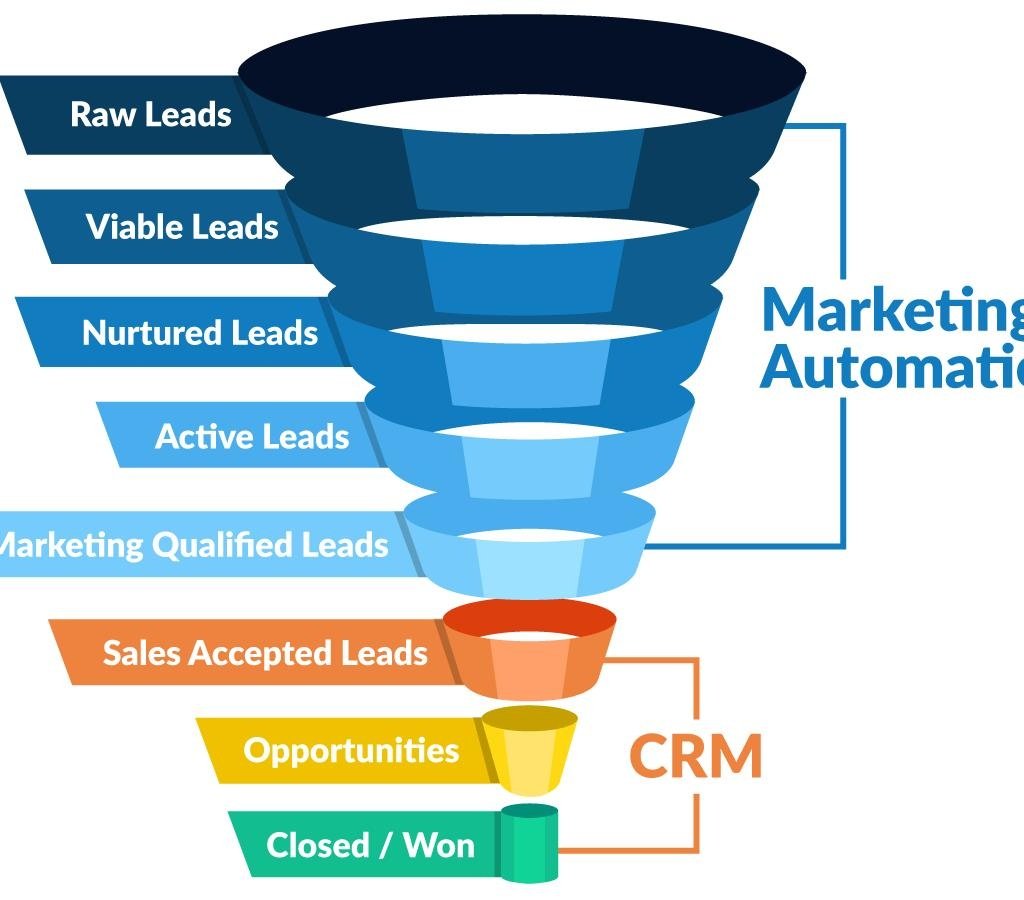
Sales teams need visibility into the status of their opportunities. Without a structured pipeline, businesses may struggle to understand how many leads are active, how many are close to conversion, and where potential customers are dropping out.
CRM Application Development can create a sales pipeline that reflects the actual sales process of an organization.
A typical pipeline could include:
New Lead → Contacted → Qualified → Proposal Sent → Negotiation → Won/Lost
However, businesses can create completely different stages based on their industry.
Sales representatives can update opportunities as they move through different stages. Managers can then view the complete pipeline through dashboards and reports.
This creates greater transparency and makes forecasting easier. Management can identify high-value opportunities, monitor salesperson performance, and determine where additional attention is required.
A customized pipeline can also include automatic reminders when an opportunity remains inactive for a specific period.
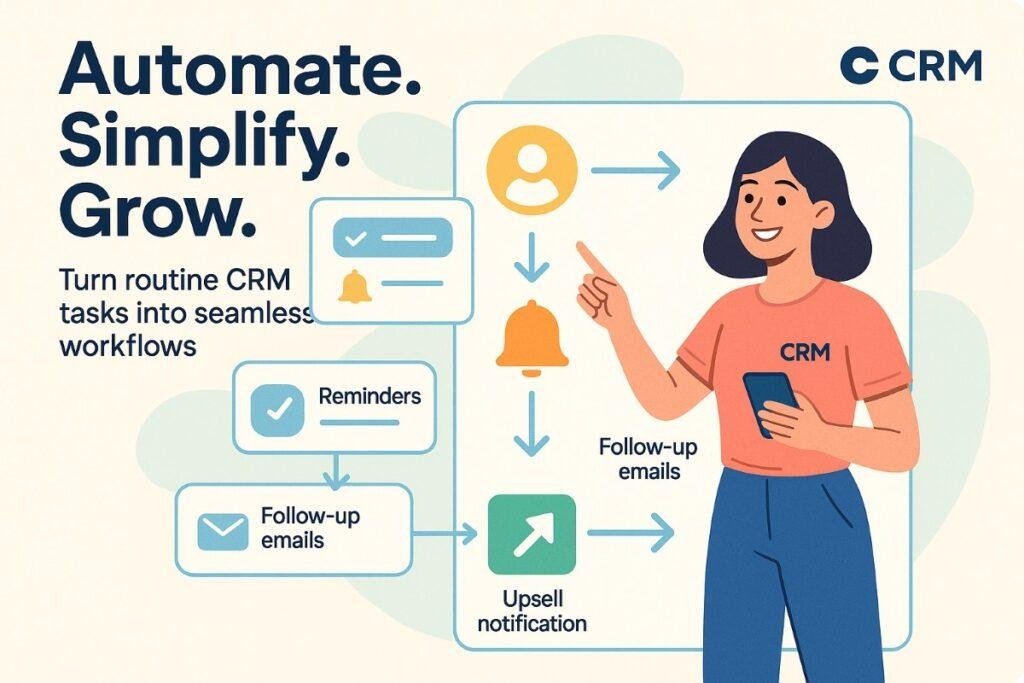
4. CRM Application Development for Workflow Automation
Repetitive administrative tasks consume valuable employee time. Sending reminders, assigning leads, updating records, creating notifications, and following up with prospects can become difficult when performed manually.
CRM Application Development can automate many of these activities.
For example, when a new lead is received, the system can automatically:
- Create a customer record.
- Assign the lead to a sales representative.
- Send a notification to the employee.
- Schedule a follow-up reminder.
- Send an acknowledgement message to the prospect.
- Update the lead status.
- Record communication activity.
Automation can also be applied to marketing campaigns and customer retention activities.
Businesses can integrate CRM systems with WhatsApp marketing, email automation, bulk SMS, IVR, chatbots, website live chat, and other communication channels.
The objective is to reduce manual work while ensuring that important customer interactions happen on time.
5. CRM Application Development for Better Customer Communication
Customers expect businesses to respond quickly and communicate through convenient channels. A CRM application can help organizations manage communication more efficiently.
Through CRM Application Development, businesses can connect multiple communication channels with customer records.
For example, an organization may integrate:
- SMS
- Phone calls
- Website chat
- AI chatbots
- Social media enquiries
Instead of keeping communication histories in separate systems, important interactions can be connected to a customer’s profile.
This gives employees better context before communicating with a customer. A salesperson can understand previous conversations, requests, complaints, and follow-ups without repeatedly asking the customer for the same information.
Integrated communication can also improve customer experience and help businesses maintain consistent communication.
6. CRM Application Development for Marketing Automation
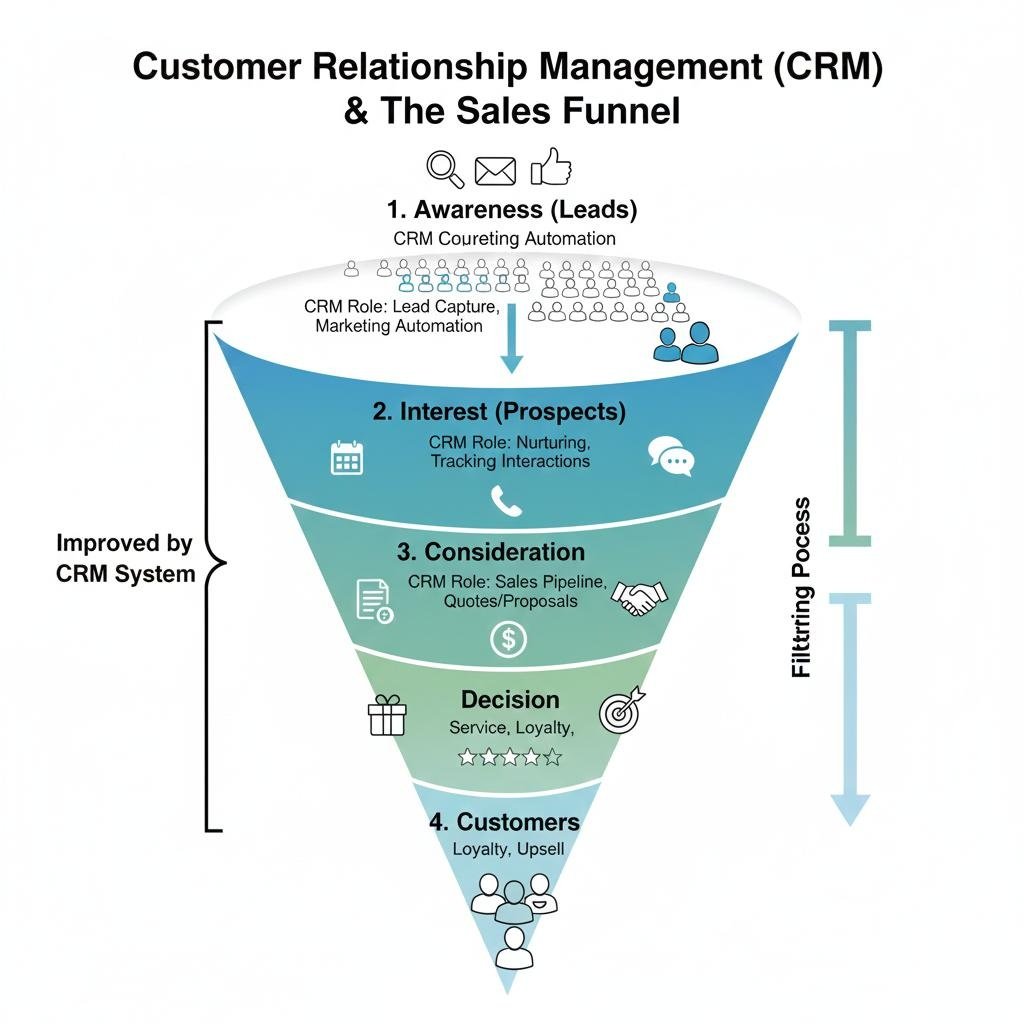
Marketing and sales teams need to work together to convert prospects into customers. A CRM can connect marketing activities with sales operations.
With CRM Application Development, businesses can develop automated marketing workflows based on customer actions.
For example, if a prospect downloads a brochure but does not contact the company, the CRM can trigger an email sequence or follow-up task.
Similarly, businesses can create different communication journeys for:
- New leads
- Existing customers
- Repeat customers
- Inactive customers
- High-value customers
- Prospects who requested quotations
- Customers interested in specific services
CRM-based marketing automation helps businesses deliver relevant communication at the appropriate stage of the customer journey.
It can also provide valuable information about which marketing sources are generating quality leads.
7. CRM Application Development for WhatsApp and Chatbot Integration
WhatsApp has become an important communication channel for businesses. Customers often prefer messaging because it is quick and convenient.
CRM Application Development can integrate WhatsApp communication with customer-management workflows.
Businesses can use WhatsApp integrations for:
- Lead notifications
- Appointment reminders
- Order updates
- Follow-up messages
- Promotional communication
- Customer support
- Feedback requests
- Payment reminders
AI chatbots and website chat can also be connected to CRM systems.
For example, a chatbot can collect a visitor’s name, phone number, requirements, and preferred service. This information can automatically create a lead inside the CRM.
The sales team can then continue the conversation with the prospect without manually entering all the information.
This combination of CRM, WhatsApp, chatbots, and automation can create a more connected customer journey.
8. CRM Application Development for Customized Business Workflows
Every organization operates differently. A generic CRM may provide many features, but some businesses may need specialized workflows that standard software cannot easily support.
This is where CRM Application Development becomes particularly valuable.
A customized application can be designed around the organization’s existing processes.
For example, a service company may require:
Enquiry → Site Visit → Estimate → Approval → Service Assignment → Completion → Feedback
An education business may need:
Enquiry → Counselling → Course Selection → Application → Documentation → Admission
A real estate company may require:
Lead → Property Matching → Site Visit → Negotiation → Booking → Documentation
Instead of forcing employees to change their workflow, customized CRM software can be built to support the workflow they already understand.
9. CRM Application Development for Business Reporting and Analytics
Data becomes useful when businesses can understand it. A CRM application can transform customer and sales information into meaningful reports.
CRM Application Development can include customized dashboards that show important business metrics.
Possible reports include:
- Total leads
- Qualified leads
- Conversion rate
- Lead sources
- Sales revenue
- Salesperson performance
- Follow-up performance
- Customer acquisition trends
- Marketing campaign performance
- Lost-lead analysis
- Customer retention
- ROI-related information
Management can use these insights to make informed decisions.
For example, if a company receives 1,000 leads but only a small percentage converts, management can investigate whether the issue is lead quality, response time, pricing, sales performance, or follow-up.
Analytics therefore turns CRM data into actionable business intelligence.
10. CRM Application Development for Mobile Accessibility
Business teams are not always sitting at a desk. Sales representatives, field employees, consultants, and managers may need customer information while travelling.
A mobile-friendly CRM application can provide access to important information from smartphones and tablets.
CRM Application Development can include mobile applications for Android and iOS depending on business requirements.
Employees can potentially:
- View customer profiles
- Add new leads
- Update lead status
- Schedule appointments
- Add notes
- Check tasks
- Receive notifications
- Update sales opportunities
- Communicate with customers
Mobile accessibility can make CRM systems more practical for businesses with field-based teams.
11. CRM Application Development for Customer Retention
Acquiring new customers is important, but retaining existing customers can also contribute significantly to sustainable growth.
CRM Application Development can help businesses maintain long-term customer relationships by organizing customer information and follow-up activities.
Businesses can create reminders for:
- Renewal dates
- Service appointments
- Subscription expiry
- Product maintenance
- Customer birthdays
- Feedback requests
- Repeat purchases
- Loyalty campaigns
A CRM can also identify customers who have not interacted with the company for a long period.
Businesses can then create targeted re-engagement campaigns instead of allowing those customers to disappear from their database.

12. CRM Application Development for Customer Support
Customer support becomes easier when employees can quickly access customer history.
With CRM Application Development, businesses can create support modules that record complaints, requests, tickets, conversations, and resolutions.
A support workflow may include:
Ticket Created → Assigned → In Progress → Resolved → Customer Confirmation → Closed
Managers can monitor unresolved tickets and identify recurring issues.
Businesses can also create priority levels so urgent customer requests receive faster attention.
When support history is connected with customer profiles, employees have greater context while solving problems.
This can contribute to improved service quality and customer satisfaction.
13. CRM Application Development with Third-Party Integrations
Modern businesses use multiple digital tools. A CRM should ideally work with the existing technology ecosystem instead of functioning as an isolated application.
CRM Application Development can include integrations with various third-party platforms and services.
Depending on requirements, businesses may connect their CRM with:
- Website forms
- E-commerce platforms
- Payment gateways
- Email platforms
- WhatsApp solutions
- SMS services
- Google Analytics
- Advertising platforms
- Accounting software
- Customer support tools
- Calendar systems
- Marketing automation platforms
Integrations reduce duplicate data entry and create smoother information flow between different business functions.
A properly planned integration strategy can also make the CRM more scalable as the business grows.
14. CRM Application Development for Data Security and Access Control
Customer data is valuable business information and should be managed responsibly.
A professionally planned CRM Application Development project should consider authentication, authorization, access controls, secure data storage, backups, monitoring, and other appropriate security practices.
Different employees may require different levels of access.
For example:
Sales Executive: Access assigned leads and customers.
Sales Manager: Access team performance and sales pipeline.
Marketing Manager: Access campaign-related information.
Administrator: Manage users, settings, permissions, and system configuration.
Role-based access can help ensure employees only access the information necessary for their responsibilities.
Security requirements should be evaluated according to the organization’s industry, data sensitivity, infrastructure, and applicable regulations.
15. CRM Application Development for Scalable Business Growth
A CRM should not only solve today’s problems. It should also be capable of supporting future business requirements.
CRM Application Development allows organizations to build systems with scalability in mind.
As a company grows, it may need:
- More users
- More customer records
- Additional sales teams
- New branches
- More automation
- Additional integrations
- Advanced analytics
- Mobile applications
- New communication channels
A scalable architecture can make it easier to introduce new capabilities without completely replacing the system.
Businesses should therefore consider future requirements during the planning stage rather than developing software only around immediate needs.
Benefits of Professional CRM Application Development
Investing in professional CRM Application Development can offer several business advantages.
Improved Productivity
Automation reduces repetitive administrative work and allows employees to focus on higher-value activities.
Better Lead Conversion
Structured lead tracking and timely follow-ups can help businesses manage prospects more effectively.
Centralized Information
Employees can access relevant customer information from one platform instead of searching multiple systems.
Improved Customer Experience
Faster responses and better communication history can create smoother customer interactions.
Better Decision-Making
Real-time dashboards and reports can help management understand business performance.
Process Automation
Routine activities can be automated based on specific triggers and conditions.
Better Team Collaboration
Sales, marketing, support, and management teams can work with shared customer information.
Greater Customization
The system can be developed around specific business processes instead of forcing the company to follow a generic workflow.
How to Choose the Right CRM Application Development Partner
Choosing the right development partner is an important decision. Businesses should evaluate technical capability as well as understanding of business objectives.
Before starting CRM Application Development, consider the following factors:
1. Understand Your Requirements
Clearly identify your business challenges, existing workflow, users, integrations, and expected outcomes.
2. Check Development Expertise
Evaluate whether the development partner has experience with websites, applications, APIs, databases, automation, and integrations.
3. Consider Scalability
The CRM should be capable of supporting future business growth.
4. Focus on User Experience
A powerful CRM is not useful if employees find it complicated. The interface should be simple, logical, and easy to navigate.
5. Discuss Security
Ask how customer information, user access, authentication, backups, and data security will be handled.
6. Plan Integrations
Identify the tools your business currently uses and determine which ones need CRM integration.
7. Evaluate Support
CRM systems require maintenance, updates, troubleshooting, and potential feature improvements.
CRM Application Development vs Ready-Made CRM Software
Businesses often face a choice between buying ready-made CRM software and developing a customized CRM.
Ready-made CRM platforms can be useful when a company requires standard features and wants to start quickly.
Customized CRM Application Development, on the other hand, can be more suitable when a company has unique processes, specialized requirements, complex integrations, or a need for complete workflow customization.
The right choice depends on factors such as:
- Business size
- Budget
- Number of users
- Required features
- Industry
- Integration requirements
- Security needs
- Scalability
- Internal processes
There is no universal solution for every business. A proper requirement analysis should be completed before choosing the development approach.
CRM Application Development for Digital Marketing Integration
CRM becomes even more powerful when connected with digital marketing activities.
A business running SEO, Google Ads, Meta Ads, social media campaigns, email marketing, and other promotional activities can connect customer acquisition data with CRM records.
This allows businesses to understand where enquiries originate.
For example, a CRM can help identify whether leads are coming from:
Google Search → Website → Enquiry
or
Instagram Ad → Landing Page → Lead Form
or
Facebook Campaign → WhatsApp → Sales Team
Combining marketing and CRM data can help businesses evaluate lead quality, campaign performance, and conversion outcomes.
This is especially valuable for organizations investing regularly in paid advertising and digital lead generation.
CRM Application Development Services by Digital Marketing India
Digital Marketing India, led by Saurabh Kumar with 15+ years of experience in Digital Marketing, provides a broad range of digital solutions for businesses looking to establish and strengthen their online presence.

The service portfolio includes:
Website & App Development
- Business Website Development
- E-Commerce Website Development
- Custom Web Applications
- Mobile App Development for Android & iOS
- Landing Page Development
- Website Maintenance & Support
SEO Services
- Local SEO
- On-Page SEO
- Off-Page SEO
- Technical SEO
- E-Commerce SEO
- Google Business Profile Optimization
- SEO Audit & Competitor Analysis
Social Media Marketing
- Facebook Marketing
- Instagram Marketing
- LinkedIn Marketing
- YouTube Marketing
- Social Media Management
- Content Creation & Strategy
Paid Advertising
- Meta Ads
- Google Ads
- YouTube Ads
- LinkedIn Ads
- Remarketing Campaigns
- Lead Generation Campaigns
Automation & Communication Solutions
- WhatsApp Marketing
- Bulk SMS Marketing
- Voice Call Marketing
- IVR & Promotional Calls
- WhatsApp Chatbot Development
- AI Chatbot Development
- Website Live Chat Integration
- Marketing Automation
- CRM Integration
- Email Marketing Automation
- Lead Nurturing Automation
Creative and Content Services
- Graphic Designing
- Logo Design
- Brand Identity Design
- Social Media Creatives
- Banner & Brochure Design
- Content Writing
- Blog Writing
- Website Content Writing
- SEO Content Writing
- Ad Copywriting
Video Production
- Video Editing
- Reels Editing
- YouTube Video Editing
- Corporate Videos
- Motion Graphics
- Promotional Videos
Analytics & Reputation Management
- Google Analytics Setup
- Conversion Tracking
- Performance Reports
- ROI Analysis
- Google Review Management
- Brand Monitoring
- Online Reputation Building
This combination of technology, marketing, automation, analytics, and creative services can help businesses create a connected digital ecosystem instead of managing every function separately.
Why Choose Saurabh Kumar for CRM Application Development?
With 15+ years of experience in Digital Marketing, Saurabh Kumar brings experience across digital marketing, website development, app development, SEO, advertising, automation, content, analytics, and online reputation management.
The broader understanding of digital marketing can be particularly useful when a CRM needs to connect with lead-generation and customer-acquisition systems.
Instead of treating CRM as an isolated software product, businesses can plan it as part of their larger digital infrastructure.
From lead generation and website forms to CRM integration, automation, communication, analytics, and remarketing, different parts of the customer journey can be connected through technology.
The Future of CRM Application Development
The future of CRM Application Development is moving toward greater automation, personalization, artificial intelligence, predictive analytics, conversational interfaces, and deeper integrations.
AI-powered CRM systems can potentially help businesses identify patterns in customer behaviour, summarize conversations, prioritize leads, automate responses, recommend follow-up actions, and generate useful business insights.
Chatbots and conversational AI can also handle common customer questions before transferring complex enquiries to human employees.
At the same time, businesses will continue to require secure, mobile-friendly, scalable, and easy-to-use CRM platforms.
The most successful CRM systems will not simply store customer information. They will actively help businesses understand customers, automate processes, support employees, and make better decisions.
Conclusion: Build a CRM Around Your Business, Not the Other Way Around
CRM Application Development can transform the way businesses manage customers, leads, sales, marketing, communication, support, and internal workflows. A customized CRM can bring scattered information into one centralized system, automate repetitive tasks, improve follow-up processes, provide actionable analytics, and create a more organized customer journey.
The right CRM solution should be designed around the company’s actual requirements. Whether the goal is lead management, sales automation, customer support, WhatsApp integration, marketing automation, analytics, or complete business workflow management, customized CRM technology can provide the flexibility required for long-term growth.
For businesses looking for CRM Application Development, website and app development, SEO, digital marketing, automation, paid advertising, creative services, content marketing, analytics, and reputation management, professional guidance can help turn technology investments into practical business solutions.
Saurabh Kumar – Digital Marketing India
15+ Years of Digital Marketing Experience
Official Address:
S15-00709, Vaidehi Niwas, Bhairomunna Link Road
Sahnewal, Ludhiana, Punjab – 141120
Contact: +91 76966 77728
SEO Details
Focus Keyphrase: CRM Application Development
SEO Title: 7 Powerful Ways CRM Application Development Can Transform Business Growth
Slug: crm-application-development-business-growth
Meta Description: Discover how CRM Application Development can improve customer management, automate sales, streamline workflows, boost productivity, and support business growth with customized CRM solutions.
Suggested Secondary Keywords:
Custom CRM Development, CRM Software Development, CRM Development Services, Custom CRM Application, CRM Integration Services, Business Automation, Customer Relationship Management Software, CRM Solutions, Sales Automation, Lead Management Software
20 Tags:
CRM Application Development, CRM Development, CRM Software, Custom CRM Development, CRM Application, CRM Development Services, Customer Relationship Management, CRM Solutions, Custom CRM Software, Business Automation, Sales Automation, Lead Management, CRM Integration, CRM Software Development Company, Customer Management Software, Marketing Automation, Lead Nurturing, Business CRM, CRM Application Development Services, Digital Marketing India