Introduction
In today’s competitive digital marketplace, businesses need more than spreadsheets and disconnected applications to manage their customers and sales processes. Cloud CRM Software provides a centralized platform where companies can manage leads, customer information, communication, sales activities, marketing campaigns, and follow-ups from virtually anywhere. Because the system is hosted in the cloud, teams can access important business information without depending on a single computer or physical office infrastructure.
For growing businesses, managing customer relationships efficiently can directly influence sales, retention, productivity, and profitability. A modern CRM solution brings different customer-facing activities together, making it easier for sales and marketing teams to understand prospects and provide timely communication.
From lead generation and automated follow-ups to analytics and customer support, cloud-based CRM solutions can become an important part of a company’s digital transformation strategy.
Businesses working with experienced digital marketing professionals can also integrate CRM technology with SEO, paid advertising, social media, WhatsApp marketing, email campaigns, websites, and other digital channels to create a more connected customer journey.
What Is Cloud CRM Software?
Cloud CRM Software is a customer relationship management system that is hosted on remote servers and accessed through the internet. Unlike traditional CRM applications that may require installation and maintenance on individual computers or company-owned servers, cloud CRM platforms allow authorized users to access customer and business information through internet-connected devices.
The software can store and organize information such as:
- Customer names and contact details
- Leads and prospects
- Sales opportunities
- Communication history
- Follow-up schedules
- Customer inquiries
- Marketing interactions
- Purchase information
- Support requests
- Sales performance data
The central purpose is to create a single source of customer information that different departments can use.
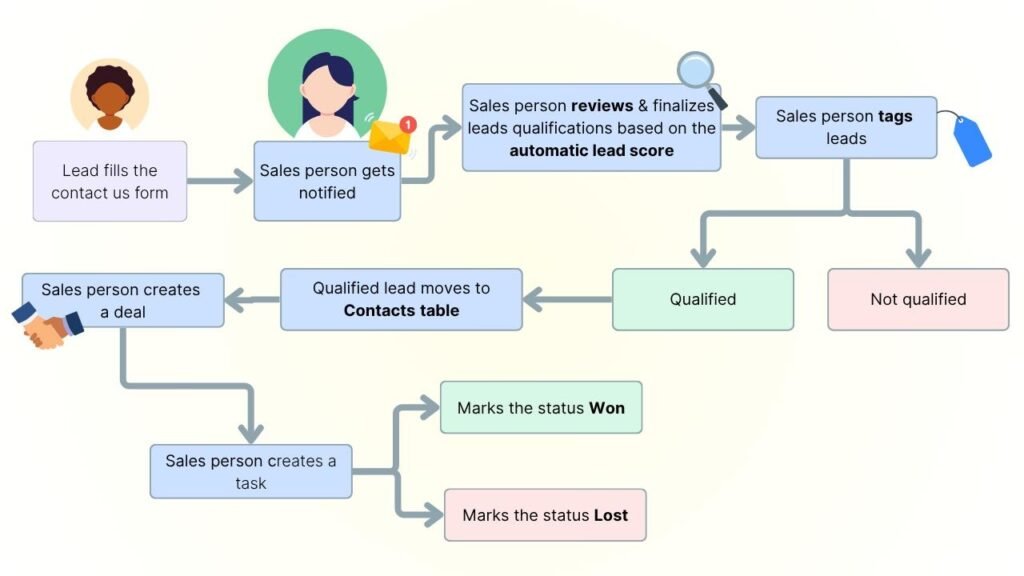
For example, when a person submits a form on a business website, the lead can potentially be captured in the CRM. A sales representative can then contact the prospect, record the conversation, schedule a follow-up, and move the lead through different stages of the sales pipeline.
This reduces dependency on scattered spreadsheets and manual records.
Why Cloud CRM Software Is Important for Modern Businesses
Customer expectations have changed significantly. People expect quick responses, personalized communication, convenient support, and relevant offers. Businesses that cannot organize customer information may struggle to deliver consistent experiences.
Cloud CRM Software helps businesses organize customer-related processes in one place. Sales teams can see where prospects are in the buying journey, while marketing teams can understand which campaigns are generating inquiries.
It can also help management identify bottlenecks.
For example, suppose a company generates 500 leads through Google Ads, Facebook Ads, its website, and WhatsApp campaigns. Without an organized system, some leads may receive delayed responses or no follow-up at all.
With a CRM workflow, these leads can be captured, assigned, categorized, tracked, and nurtured more systematically.
This can improve operational efficiency while helping businesses make better decisions based on actual customer data.
1. Cloud CRM Software Centralizes Customer Information
One of the biggest advantages of Cloud CRM Software is centralized data management.
Businesses often store customer information across spreadsheets, email accounts, messaging applications, notebooks, and different software platforms. This makes it difficult to understand the complete history of a customer.
A cloud CRM platform can bring relevant information together.
A sales executive may be able to see:
- Previous calls
- Emails
- Lead source
- Notes
- Follow-up dates
- Purchase history
- Sales stage
- Customer requirements
Having this information available can make conversations more relevant and professional.
Instead of asking customers to repeatedly explain their requirements, employees can review previous interactions and continue the conversation with greater context.
2. Cloud CRM Software Improves Lead Management
Lead management is critical for businesses that depend on enquiries.
A lead may arrive from a website, Google search, social media advertisement, landing page, WhatsApp campaign, phone call, or online form. Without an organized process, tracking every enquiry becomes challenging.
Cloud CRM Software can help businesses organize leads according to different stages.
For example:
New Lead → Contacted → Qualified → Proposal Sent → Negotiation → Won/Lost
This structure gives sales teams a clear view of their pipeline.
Leads can also be categorized according to source, location, industry, product interest, budget, or sales representative.
Better organization makes it easier to prioritize high-value opportunities and reduce the chances of leads being forgotten.
3. Cloud CRM Software Supports Sales Automation
Sales teams spend significant time performing repetitive administrative tasks.
CRM automation can reduce some of this manual workload.
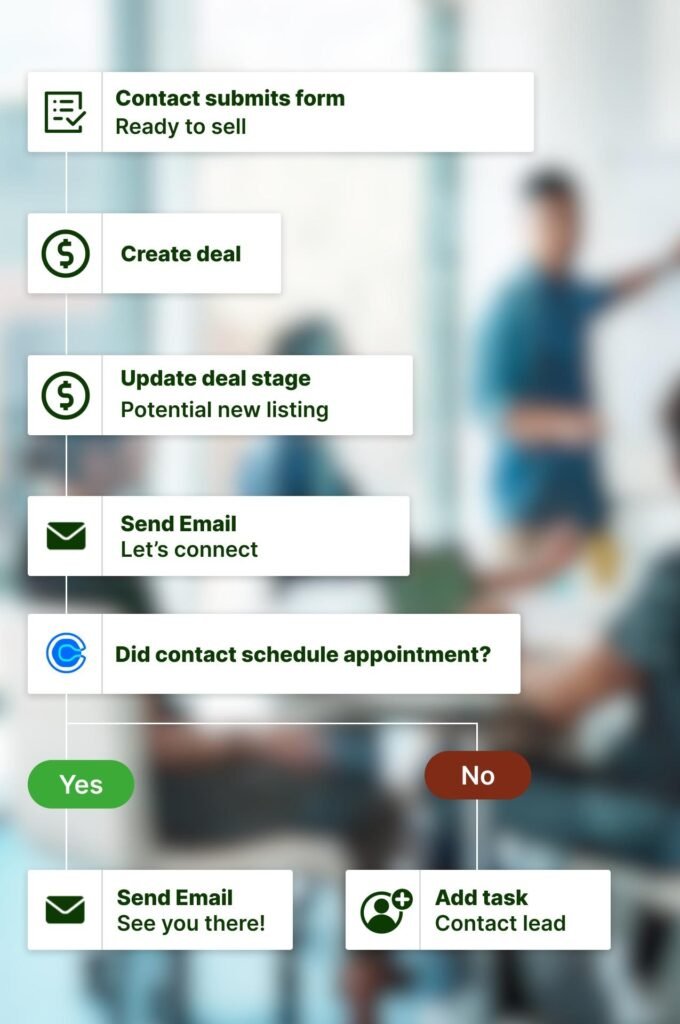
Depending on the platform and integrations, businesses can automate activities such as:
- Lead assignment
- Follow-up reminders
- Email notifications
- Lead status updates
- Task creation
- Customer notifications
- Sales pipeline updates
- Lead nurturing sequences
For example, if a new lead enters through a website form, an automated workflow can assign it to an appropriate salesperson and create a follow-up task.
Automation does not eliminate the need for human interaction. Instead, it helps employees spend more time on meaningful customer conversations.
4. Cloud CRM Software Helps Businesses Track Customer Journeys
A customer journey can involve several touchpoints before a purchase happens.
A prospect might first discover a company through Google, visit its website, see a social media advertisement, download an offer, communicate through WhatsApp, and eventually speak to a sales representative.
Cloud CRM Software can help businesses connect these interactions where appropriate integrations are available.
Understanding the journey can reveal useful insights.
Businesses can determine:
- Where customers first discovered them
- Which campaigns generated enquiries
- How many follow-ups were required
- Which products received interest
- Where prospects stopped responding
- Which channels generated better-quality leads
This information can help businesses improve both marketing and sales strategies.
5. Cloud CRM Software Integrates With Digital Marketing
Marketing and sales should not operate as completely separate departments.
Digital marketing generates attention and leads, while sales teams convert qualified prospects into customers.
Cloud CRM Software can connect these activities through integrations and automation.
A business may connect its CRM with:
- Website forms
- Landing pages
- Google Ads
- Meta Ads
- Email marketing
- WhatsApp communication
- Social media platforms
- Analytics systems
- Chatbots
For example, a paid advertising campaign can generate leads through a landing page. Those leads can enter the CRM and become part of an automated nurturing process.
This creates a more structured connection between advertising and sales.
6. Cloud CRM Software Makes Follow-Ups More Organized
Follow-up is one of the most important parts of sales.
A prospect may not purchase during the first conversation. They may need additional information, time to compare options, approval from management, or a reminder.
Without proper tracking, sales representatives can easily forget follow-up dates.
Cloud CRM Software allows businesses to schedule tasks and reminders.
Sales representatives can receive notifications about upcoming calls, emails, meetings, and other activities.
This creates accountability within the sales process.
Consistent follow-up can also improve customer experience because prospects receive communication at appropriate times rather than having to repeatedly contact the business themselves.

7. Cloud CRM Software Enables Better Team Collaboration
Modern businesses often have multiple employees working on customer accounts.
If customer information is available only with one salesperson, the business can become dependent on that individual.
A centralized CRM reduces this dependency.
Authorized team members can access relevant information based on their permissions.
For example, a sales manager can review pipeline activity, while a salesperson can manage assigned leads. A customer support employee may be able to view relevant customer history without needing access to unrelated business information.
This can improve collaboration and continuity.
It becomes particularly useful when employees work remotely or across multiple locations.
8. Cloud CRM Software Provides Useful Business Analytics
Data becomes valuable when businesses can turn it into actionable information.
Cloud CRM Software can provide reports and dashboards related to sales and customer activity.
Businesses may track metrics such as:
- Number of new leads
- Lead conversion rate
- Sales pipeline value
- Revenue generated
- Sales representative performance
- Lead sources
- Follow-up activity
- Customer retention
- Campaign performance
These insights can help management identify which areas require improvement.
For example, if one advertising channel generates many enquiries but very few conversions, the business may need to review lead quality, targeting, messaging, or the sales process.
Data-driven decision-making can be more reliable than relying only on assumptions.
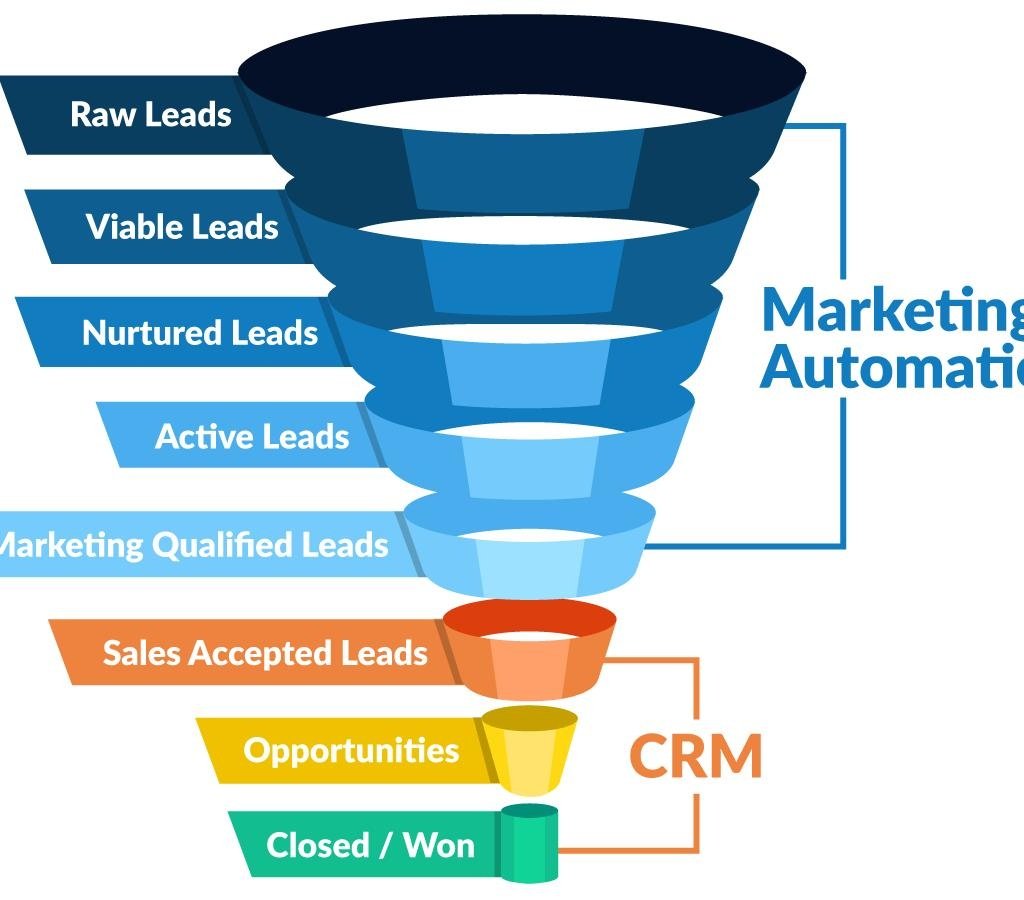
9. Cloud CRM Software Supports Marketing Automation
Marketing automation can help businesses communicate with prospects at different stages of the buying journey.
For example, a company can create nurturing workflows for people who have shown interest but have not yet purchased.
A possible sequence could be:
Lead Captured → Welcome Message → Educational Content → Product Information → Follow-Up → Sales Contact
With the right integrations, businesses can automate portions of this journey.
Email marketing automation, WhatsApp communication, lead scoring, and scheduled campaigns can help maintain engagement.
This is especially valuable for businesses handling a large number of leads.
10. Cloud CRM Software Improves Customer Retention
Customer acquisition is only one part of business growth. Retaining existing customers can also be extremely important.
A CRM can help companies maintain records of customer interactions and identify opportunities for continued engagement.
Businesses can use customer information for:
- Renewal reminders
- Service follow-ups
- Feedback requests
- Loyalty campaigns
- Product recommendations
- Customer support
- Review requests
- Re-engagement campaigns
When customers receive relevant communication instead of generic messages, businesses may be better positioned to build long-term relationships.
11. Cloud CRM Software Enhances Customer Support
Customer service teams need quick access to relevant information.
When a customer contacts a business, support employees may need to know the customer’s previous interactions, purchases, complaints, or open requests.
Cloud CRM Software can help organize this information.
When combined with live chat, WhatsApp, email, or chatbot systems, CRM platforms can create a more connected support experience.
For example, an enquiry received through website live chat can potentially be converted into a customer record, assigned to an employee, and tracked until resolution.
This makes customer support more structured.

12. Cloud CRM Software Enables Remote Access
One of the defining characteristics of cloud-based technology is accessibility.
Authorized employees can access the CRM from compatible devices and locations with an internet connection, depending on the platform’s security policies.
This is useful for businesses with:
- Remote teams
- Field sales employees
- Multiple offices
- Traveling executives
- Distributed customer service teams
A salesperson visiting a client can update lead information immediately instead of waiting until they return to the office.
Managers can also monitor important activities remotely.
13. Cloud CRM Software Can Reduce Operational Complexity
Businesses often use multiple applications for marketing, communication, sales, customer support, and reporting.
When these systems are completely disconnected, employees may have to enter the same information repeatedly.
Integrating Cloud CRM Software with other business applications can reduce unnecessary duplication.
For example, a business may connect its CRM with its website, email platform, WhatsApp system, chatbot, advertising platforms, and analytics tools.
The goal is to create a smoother information flow.
However, businesses should choose integrations carefully. Too many unnecessary tools can increase complexity rather than reduce it.
14. Cloud CRM Software Supports Business Scalability
A CRM system that works for 20 leads per month may not be sufficient when a business starts receiving thousands of enquiries.
Cloud-based CRM solutions can provide businesses with tools to manage increasing customer volumes without relying entirely on manual processes.
As a business grows, it may need:
- More users
- Additional automation
- Advanced reporting
- More integrations
- Multiple sales pipelines
- Customer segmentation
- Better permission controls
A scalable CRM can support these evolving requirements.
The exact capabilities depend on the software provider and selected plan.
15. Cloud CRM Software Improves Marketing ROI Analysis
Businesses invest money in advertising and marketing campaigns, but generating leads is not the final objective.
Companies need to understand which leads eventually become customers.
Cloud CRM Software can help connect marketing activities with sales outcomes when appropriate tracking and integrations are implemented.
For example:
Campaign → Lead → Sales Conversation → Opportunity → Customer → Revenue
This provides a more complete view of marketing performance.
A business can then evaluate whether its advertising investment is generating meaningful commercial results.
This information can help improve campaign budgets, targeting, messaging, and sales strategies.
How Cloud CRM Software Works With SEO
Search engine optimization helps businesses attract organic traffic and generate potential customers.
However, getting website visitors is only one stage of the process.
A strong digital marketing strategy should consider what happens after someone submits an enquiry.
For example:
Google Search → Website → Lead Form → CRM → Sales Follow-Up → Customer
This makes CRM an important component of a broader digital marketing ecosystem.
Businesses investing in local SEO, technical SEO, on-page optimization, Google Business Profile optimization, or content marketing can benefit from connecting lead-generation activities with CRM processes.
Cloud CRM Software and Google Ads
Paid search campaigns can generate highly targeted traffic.
However, businesses should monitor more than clicks and impressions.
Connecting Google Ads lead-generation activities with a CRM can help companies track what happens after a lead is generated.
This can provide better insight into:
- Lead quality
- Sales conversion
- Revenue
- Campaign performance
- Cost per customer
- Return on advertising investment
The objective is to move from simply measuring leads to understanding business outcomes.
Cloud CRM Software and Social Media Marketing
Social media platforms are major sources of brand awareness and enquiries.
Businesses can receive potential customers through Facebook, Instagram, LinkedIn, and other channels.
CRM integration can help organize these leads and connect them with sales processes.
A structured system may allow businesses to identify the source of leads and evaluate which social campaigns produce meaningful opportunities.
This can improve decision-making when planning future social media campaigns.
Cloud CRM Software and WhatsApp Marketing
WhatsApp has become an important communication channel for many businesses.
Customers often prefer messaging because it can be quicker and more convenient than traditional communication.
Integrating WhatsApp communication with Cloud CRM Software can help businesses organize conversations, leads, follow-ups, and customer records.
Businesses can potentially use automated messages, reminders, lead nurturing, and chatbot workflows while still maintaining human support for conversations that require personal attention.
Cloud CRM Software and AI Chatbots
Artificial intelligence is increasingly being used to automate initial customer interactions.
AI chatbots can answer common questions, collect basic information, qualify leads, and direct users toward relevant resources.
When connected with a CRM, chatbot-generated information can potentially become part of the customer record.
For example:
Website Visitor → AI Chatbot → Lead Qualification → CRM → Sales Team
This can reduce response time and help businesses capture enquiries outside traditional working hours.
Cloud CRM Software Security Considerations
Customer information is valuable and should be protected carefully.
Before selecting Cloud CRM Software, businesses should evaluate security features such as:
- User authentication
- Access permissions
- Data encryption
- Backup policies
- Activity monitoring
- Secure integrations
- Password policies
- Data privacy controls
Businesses should also train employees to follow appropriate security practices.
Not every CRM platform provides identical security capabilities, so companies should evaluate the provider and plan according to their requirements.
How to Choose Cloud CRM Software
Choosing the right CRM should begin with business requirements rather than simply selecting the platform with the largest feature list.
Consider the following questions:
What type of business do you operate?
A B2B company, e-commerce store, educational organization, healthcare business, and service provider may have very different CRM requirements.
How many users need access?
Consider your current team size as well as expected growth.
Which tools need integration?
Identify whether you need connections with websites, advertising platforms, email, WhatsApp, chatbots, analytics, or payment systems.
What level of automation is required?
Some businesses only need lead tracking, while others require complex workflows.
What reports are important?
Determine which sales and marketing metrics management needs to monitor.
What is the total cost?
Consider subscription fees, setup, customization, integrations, training, and ongoing support.
Common Mistakes Businesses Make With Cloud CRM Software
Implementing a CRM does not automatically guarantee better results.
Several mistakes can reduce its effectiveness.
Using Too Many Unnecessary Features
A complicated CRM can overwhelm employees. Start with essential workflows and expand gradually.
Failing to Train Employees
Employees need to understand why the CRM is important and how to use it correctly.
Entering Incomplete Data
Poor-quality information produces poor-quality reports. Businesses should establish clear data-entry standards.
Ignoring Follow-Up Processes
A CRM becomes more valuable when businesses use it consistently for sales activities.
Choosing Software Without Considering Integrations
A CRM that cannot connect with important business tools may create additional manual work.
Focusing Only on Technology
Technology should support a clearly defined sales and customer-management strategy. Software alone cannot fix an inefficient process.
Benefits of Cloud CRM Software for Small Businesses
Small businesses may assume that CRM technology is only suitable for large companies.
That is no longer necessarily true.
A small business can use a CRM to organize leads, automate reminders, manage customers, and monitor sales performance.
For businesses with limited staff, automation can be particularly useful because employees often perform multiple roles.
A structured CRM can help prevent customer information from becoming dependent on individual employees.
Benefits of Cloud CRM Software for Growing Companies
As organizations expand, the number of customers, employees, campaigns, and communication channels can increase rapidly.
This creates a need for better systems.
Cloud CRM Software can provide a centralized framework for managing growth.
Businesses can develop standardized processes for lead assignment, sales follow-up, customer communication, reporting, and retention.
This can make operations more predictable and measurable.
How Digital Marketing Services Can Support CRM Implementation
CRM works best when connected with a broader digital marketing strategy.
Digital Marketing India, led by Saurabh Kumar, brings 15+ years of digital marketing experience and provides a wide range of services designed to help businesses build and manage their online presence.
Services include website and app development, SEO, Google Business Profile optimization, social media marketing, Google Ads, Meta Ads, YouTube advertising, automation solutions, WhatsApp marketing, chatbot development, email automation, creative design, video production, content marketing, analytics, and online reputation management.
These services can work together with CRM systems to create a more connected digital ecosystem.
For example, a business may use SEO to generate organic traffic, Google Ads for paid traffic, social media for engagement, WhatsApp automation for communication, and CRM technology for lead management and nurturing.
The result can be a more structured customer acquisition and retention process.

Why Businesses Should Combine CRM With Digital Marketing
Marketing generates opportunities, but sales processes determine what happens to those opportunities.
Consider a simple customer acquisition journey:
SEO → Website → Lead Form → CRM → Automated Follow-Up → Sales Call → Customer
Another journey could be:
Instagram Ad → Landing Page → CRM → WhatsApp Message → Sales Team → Conversion
Connecting these stages can make marketing performance easier to understand.
Instead of simply asking, “How many leads did our campaign generate?”, businesses can ask, “How many qualified customers did the campaign generate?”
That difference can significantly improve strategic decision-making.
Future of Cloud CRM Software
The future of CRM technology is expected to become increasingly connected with artificial intelligence, automation, conversational interfaces, analytics, and predictive systems.
Businesses may increasingly use AI to:
- Summarize customer conversations
- Identify potential sales opportunities
- Recommend follow-up actions
- Predict customer behavior
- Automate routine communication
- Analyze large volumes of customer data
- Assist sales representatives
The combination of CRM, AI, automation, analytics, and digital marketing can create increasingly personalized customer experiences.
However, businesses should continue to balance automation with human communication. Customers may appreciate quick automated responses, but complex questions often require genuine human interaction.
Final Thoughts
Cloud CRM Software has evolved from being simply a digital customer database into an important business-management and marketing tool. It can help companies centralize customer information, organize leads, automate follow-ups, connect marketing channels, improve sales visibility, and build stronger customer relationships.
For businesses investing in SEO, Google Ads, social media marketing, WhatsApp marketing, email campaigns, website development, and other digital channels, integrating CRM into the overall strategy can make lead management more systematic.
The most effective approach is not to implement technology simply because it is popular. Businesses should first understand their customer journey, identify operational challenges, define measurable objectives, and then select a CRM solution that supports those goals.
With the right strategy, integrations, processes, and employee adoption, Cloud CRM Software can become a valuable foundation for modern customer relationship management and long-term digital growth.
About Saurabh Kumar – Digital Marketing India
Saurabh Kumar has 15+ years of experience in digital marketing and provides comprehensive digital marketing and technology solutions for businesses.
Digital Marketing India Services Include:
- Website & App Development
- Local, On-Page, Off-Page & Technical SEO
- Google Business Profile Optimization
- Facebook, Instagram, LinkedIn & YouTube Marketing
- Google, Meta, YouTube & LinkedIn Ads
- WhatsApp Marketing & Bulk SMS Marketing
- IVR & Promotional Voice Calls
- WhatsApp & AI Chatbot Development
- Marketing Automation
- CRM Integration
- Email & Lead Nurturing Automation
- Graphic Designing & Branding
- Video Production & Motion Graphics
- Content & SEO Writing
- Google Analytics & Conversion Tracking
- ROI Analysis & Performance Reporting
- Online Reputation Management
Official Address:
S15-00709, Vaidehi Niwas, Bhairomunna Link Road,
Sahnewal, Ludhiana, Punjab – 141120
Contact: +91 76966 77728
20 SEO Tags
Cloud CRM Software, cloud CRM, CRM software, CRM solutions, customer relationship management, cloud based CRM, CRM automation, sales CRM, CRM for business, lead management software, sales automation, marketing automation, customer management software, CRM integration, digital marketing automation, cloud business software, lead nurturing, customer relationship management software, digital marketing services, Digital Marketing India