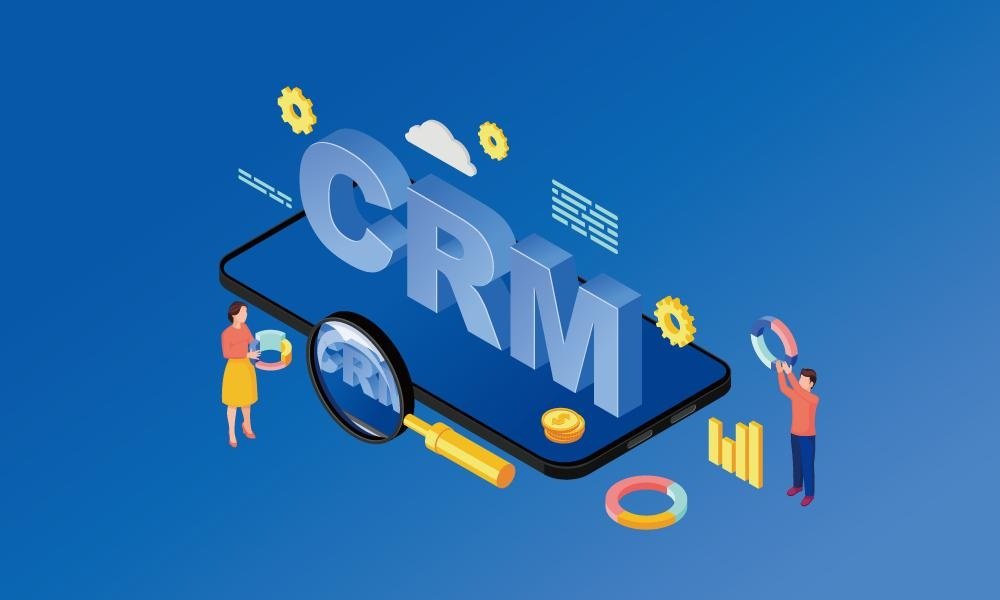
Introduction: Why Businesses Need Business CRM Software Today
Managing customers, leads, sales conversations, follow-ups, marketing campaigns, and business data manually can quickly become complicated. This is where Business CRM Software becomes an important technology for modern organizations. A well-implemented CRM system helps businesses organize customer information, monitor leads, automate repetitive activities, improve communication, and make better decisions.
For growing businesses, customer relationships are one of the most valuable assets. Losing track of a potential customer because a salesperson forgot a follow-up can directly affect revenue. Similarly, keeping customer details across spreadsheets, notebooks, WhatsApp conversations, emails, and different applications can make daily operations inefficient. Business CRM Software brings these activities into a centralized system.
A CRM solution can be useful for startups, small businesses, agencies, e-commerce companies, service providers, educational organizations, real estate companies, healthcare businesses, and established enterprises. Instead of simply storing contact information, modern CRM platforms can connect sales, marketing, customer support, automation, analytics, and communication.
Businesses that want sustainable growth should therefore look beyond simply generating more leads. They should also focus on managing those leads effectively and converting them into long-term customers.
What Is Business CRM Software?
Business CRM Software stands for Business Customer Relationship Management Software. It is a technology platform designed to help organizations manage interactions and relationships with existing and potential customers.
A CRM system generally stores important information such as:
- Customer names and contact details
- Lead sources
- Previous conversations
- Sales activities
- Follow-up dates
- Purchase history
- Customer requirements
- Email interactions
- Sales pipeline stages
- Support requests
- Marketing responses
The biggest advantage of Business CRM Software is centralization. Instead of employees searching through multiple platforms to find customer information, they can access relevant information from one organized system.
For example, imagine a digital marketing agency receives 100 inquiries every month. Without a CRM, the team may manage these leads through spreadsheets, WhatsApp, phone calls, and email. After several weeks, some leads may not receive follow-ups.
With Business CRM Software, every inquiry can be assigned to a salesperson, categorized according to its source, moved through different sales stages, and scheduled for follow-up.
This creates a more systematic sales process.
1. Business CRM Software Helps Organize Leads Efficiently
Lead management is one of the most important functions of Business CRM Software.
Businesses often receive leads from multiple channels, including:
- Google Ads
- Meta Ads
- Google Business Profile
- Websites
- Landing pages
- Social media
- Email campaigns
- Phone calls
- Referral programs
- Organic search
When these leads are managed separately, it becomes difficult to determine which prospects are active, which require follow-up, and which have already converted.
Business CRM Software can bring these leads into a centralized dashboard. Sales teams can categorize prospects according to their current position in the buying journey.
Common pipeline stages include:
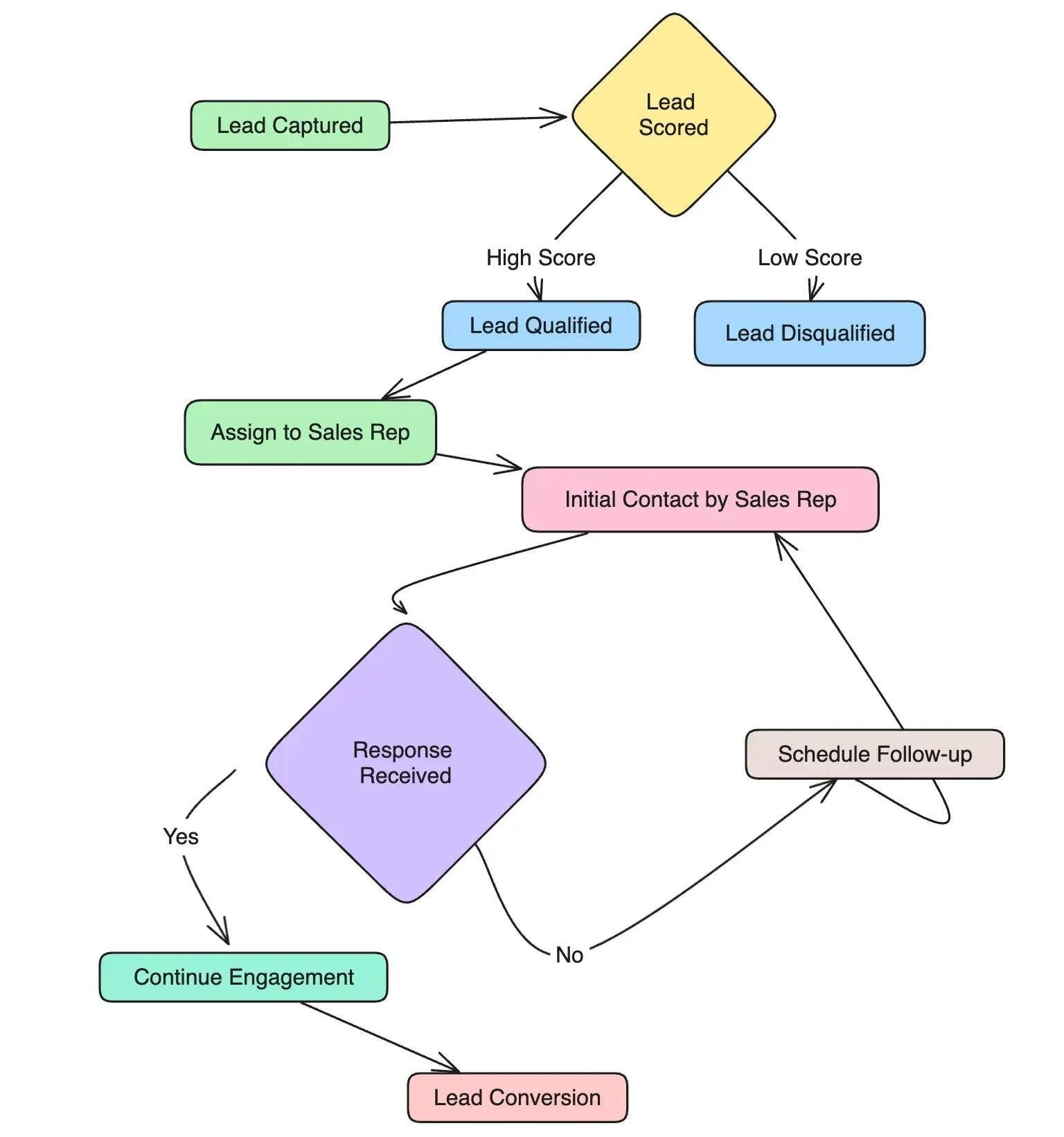
New Lead → Contacted → Qualified → Proposal Sent → Negotiation → Won/Lost
This simple structure gives salespeople a clear understanding of their workload.
A CRM can also help businesses prioritize high-quality leads. For example, a company selling premium services may identify prospects based on budget, location, business size, requirements, or purchase intent.
Better organization means fewer missed opportunities.
2. Business CRM Software Improves Sales Pipeline Management
A sales pipeline provides a visual representation of potential customers moving toward a purchase.
Without proper tracking, sales teams may struggle to answer important questions:
- How many leads are currently active?
- Which prospects need follow-up?
- Which salesperson is handling each lead?
- How many proposals are pending?
- How much revenue could potentially be generated?
- Which deals are close to conversion?
Business CRM Software makes this information easier to monitor.
A well-designed CRM dashboard can display deals according to their stage. Managers can identify bottlenecks and understand where prospects are dropping out.
For instance, if many prospects reach the proposal stage but very few move to negotiation, the business may need to improve its proposal, pricing, communication, or follow-up strategy.
This makes Business CRM Software more than a contact-management tool. It becomes a sales management platform.
Sales managers can also monitor individual team performance and identify opportunities for training and process improvement.
3. Business CRM Software Makes Follow-Ups More Reliable
Follow-up is one of the most important parts of sales.
A prospect may show interest today but may not be ready to purchase immediately. If the salesperson does not follow up at the right time, the opportunity can disappear.
Business CRM Software helps create structured follow-up processes.
Sales representatives can schedule reminders for:
- Phone calls
- Emails
- Product demonstrations
- Meetings
- Proposal follow-ups
- Payment reminders
- Renewal discussions
- Customer check-ins
Automation can make the process even more effective.
For example, after a lead submits a form, the CRM could automatically create a task for the sales representative. The prospect may also receive an acknowledgment message through email or WhatsApp, depending on the system and applicable communication permissions.
This reduces dependence on memory.
Instead of asking, “Which customer should I call today?”, a salesperson can open the CRM dashboard and see the tasks that require attention.
Consistent follow-up can significantly improve the overall customer experience.
4. Business CRM Software Supports Marketing Automation
Marketing and sales should not work as completely separate departments.
A marketing campaign generates leads, while the sales team attempts to convert those leads. Business CRM Software can help connect these two processes.
CRM systems can integrate with marketing activities such as:
- Email marketing
- Lead generation campaigns
- Landing pages
- Website forms
- WhatsApp communication
- Social media campaigns
- Google Ads
- Meta Ads
- Remarketing campaigns
Businesses can use CRM data to understand how prospects entered the sales funnel.
For example, a company may discover that leads from Google Ads have a higher conversion rate than leads from a particular social media campaign. This information can help marketers make better budget decisions.
Marketing automation can also support lead nurturing.
A prospect who is not ready to purchase immediately can receive relevant communication over time rather than being forgotten.
When marketing and sales data work together, businesses can build a more connected customer journey.
5. Business CRM Software Strengthens Customer Communication
Customers expect businesses to respond quickly and professionally.
However, communication can become difficult when customer conversations are spread across multiple channels.
Business CRM Software can help centralize important communication records and connect CRM workflows with tools such as email, WhatsApp, website chat, SMS, and phone systems.
A customer support or sales representative can view previous interactions before responding.
This is particularly useful when multiple employees work with the same customer.
For example, if a customer previously discussed pricing with one salesperson and later contacts another employee, the second employee can review the available CRM information instead of asking the customer to explain everything again.
Better access to customer history can make communication more personalized.
Businesses can also segment customers based on factors such as:
- Previous purchases
- Location
- Industry
- Customer type
- Interest
- Lead source
- Engagement
- Purchase frequency
This allows businesses to send more relevant messages instead of generic communication.
6. Business CRM Software Enables Powerful Automation
Automation is another major advantage of Business CRM Software.
Employees spend considerable time performing repetitive tasks. These activities may include entering customer information, assigning leads, sending reminders, updating deal stages, and generating reports.
CRM automation can reduce manual work.
Possible automated workflows include:
Lead Captured → Lead Assigned → Welcome Message → Follow-Up Reminder → Sales Update → Conversion
Another workflow could be:
Purchase Completed → Customer Added to Retention Campaign → Review Request → Cross-Sell Message → Renewal Reminder
Automation does not necessarily mean removing human interaction. Instead, it allows employees to spend more time on activities requiring human judgment.
For digital marketing agencies, automation can be especially valuable. A lead generated from a landing page can automatically enter the CRM, receive an internal assignment, and trigger a follow-up task.
Businesses can also integrate CRM systems with WhatsApp marketing, bulk SMS, email automation, chatbots, website live chat, and other communication technologies.
7. Business CRM Software Provides Valuable Business Analytics
Data becomes valuable when businesses can turn it into actionable insights.
Business CRM Software can provide reports related to sales, leads, marketing performance, customer activity, and employee productivity.
Important metrics may include:
- Number of new leads
- Lead conversion rate
- Sales revenue
- Average deal value
- Sales cycle length
- Customer acquisition cost
- Lead source performance
- Follow-up performance
- Lost deal reasons
- Salesperson performance
- Customer retention
- Campaign ROI
These reports can help business owners make informed decisions.
Suppose a company receives 500 leads but only 20 become customers. The CRM data can help management investigate why.
Perhaps the problem is:
- Slow response times
- Poor lead qualification
- Inconsistent follow-up
- Pricing
- Weak sales communication
- Low-quality traffic
- Poor landing pages
Without organized data, these issues can be difficult to identify.
With Business CRM Software, decision-making can become more evidence-based.
How Business CRM Software Helps Small Businesses
Small businesses often assume that CRM systems are only necessary for large companies. That is not always true.
A small business may actually benefit significantly from a structured customer management system because employees often handle multiple responsibilities.
A local service provider, for example, may receive inquiries through Google Business Profile, phone calls, WhatsApp, website forms, and social media.
As the number of customers increases, managing these interactions manually becomes increasingly difficult.
Business CRM Software can provide small businesses with a structured process without requiring a large sales department.
A small organization can use CRM technology to:
- Store customer details
- Track inquiries
- Schedule follow-ups
- Manage quotations
- Monitor sales
- Automate messages
- Track customer history
- Generate reports
The important point is to choose a CRM according to the organization’s actual requirements rather than selecting a complicated system simply because it has numerous features.
Business CRM Software for Digital Marketing Agencies
Digital marketing agencies manage multiple clients, campaigns, leads, conversations, and reporting requirements.
For agencies offering services such as SEO, Google Business Profile optimization, social media marketing, website development, paid advertising, WhatsApp marketing, content marketing, and automation, a CRM can provide a centralized operating system.
An agency can use Business CRM Software to track:
- Client inquiries
- Sales calls
- Consultation requests
- Service requirements
- Proposals
- Contracts
- Payment follow-ups
- Campaign leads
- Client communication
- Renewal opportunities
For lead generation campaigns, CRM integration is especially useful.
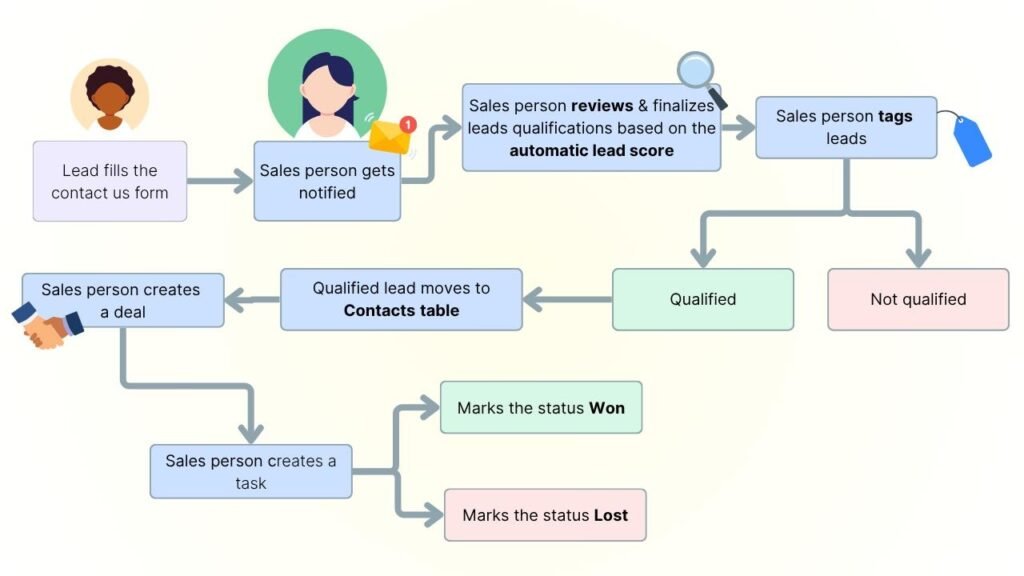
A lead generated through Google Ads or Meta Ads can be automatically transferred into the CRM. The sales team can then assign the lead, contact the prospect, update the status, and record the outcome.
This creates better visibility across the entire lead-generation process.
Business CRM Software and WhatsApp Marketing Integration
WhatsApp has become an important communication channel for many businesses.
However, manually managing hundreds of customer conversations can become difficult.
Integrating Business CRM Software with WhatsApp-based communication can help businesses organize customer interactions and create structured workflows.
Depending on the available integration, businesses can use WhatsApp for:
- Lead notifications
- Appointment reminders
- Customer updates
- Follow-up messages
- Promotional campaigns
- Order notifications
- Support communication
- Feedback requests
Businesses should always follow applicable WhatsApp policies, privacy requirements, and consent rules when sending promotional or automated messages.
The goal should not simply be sending more messages. The goal should be delivering useful communication to the right customer at the right time.
Business CRM Software and Website Integration
A business website is often one of the most important sources of leads.
A CRM can be connected with website forms so that visitor information automatically enters the sales system.
For example:
Website Visitor → Contact Form → CRM → Lead Assignment → Sales Follow-Up
This eliminates the need for employees to manually copy information from website forms into spreadsheets.
Website integration can also help businesses track where inquiries originated.
A company can create separate landing pages for different services and analyze which pages generate the most qualified prospects.
When website development, SEO, paid advertising, analytics, and CRM systems work together, businesses gain a more complete understanding of the customer journey.
How to Choose the Right Business CRM Software
Choosing the right CRM requires understanding business requirements first.
Before investing in Business CRM Software, businesses should evaluate several factors.
1. Ease of Use
A CRM should be simple enough for employees to use regularly. A system with hundreds of features is not useful if the team avoids using it.
2. Scalability
The CRM should support business growth. As the number of employees, leads, customers, and transactions increases, the platform should remain practical.
3. Automation
Look for automation capabilities that can reduce repetitive administrative work.
4. Integration
Check whether the CRM integrates with websites, email, WhatsApp, advertising platforms, analytics tools, payment systems, and other important applications.
5. Reporting
Good reporting features help managers understand sales performance and marketing ROI.
6. Security
Customer information is valuable business data. Security, access controls, backups, and responsible data handling should be considered carefully.
7. Customization
Different industries have different sales processes. A flexible CRM can be customized around specific business workflows.
Business CRM Software vs. Traditional Spreadsheets
Many businesses begin customer management with Excel or Google Sheets.
Spreadsheets can work for a small number of customers, but they often become difficult to manage as the organization grows.
A spreadsheet generally requires manual updates, while Business CRM Software can automate many activities.
| Feature | Spreadsheet | CRM |
|---|---|---|
| Customer database | Yes | Yes |
| Sales pipeline | Basic | Advanced |
| Follow-up reminders | Manual | Automated |
| Lead assignment | Manual | Automated |
| Communication history | Limited | Centralized |
| Reporting | Manual | Automated |
| Workflow automation | Limited | Advanced |
| Team collaboration | Basic | Structured |
| Lead tracking | Basic | Advanced |
The objective is not necessarily to eliminate spreadsheets completely. Instead, businesses should use the right tool for the right purpose.
Common Mistakes When Implementing Business CRM Software
Even the best CRM can fail if it is implemented poorly.
One common mistake is choosing software without understanding the company’s sales process.
Another problem is entering incomplete or inaccurate customer information.
Businesses should also avoid creating unnecessarily complicated pipelines.
Employees need clear instructions about:
- When a lead should be created
- How leads should be categorized
- When follow-ups should be scheduled
- How deal stages should be updated
- What customer information should be recorded
- Who is responsible for each lead
Employee training is equally important.
A CRM should become part of the organization’s daily workflow rather than another application employees are expected to update occasionally.
Regular audits can help identify duplicate contacts, inactive leads, outdated information, and workflow problems.
Business CRM Software for Long-Term Customer Relationships
CRM is not only about acquiring new customers.
Existing customers can often provide valuable opportunities for repeat purchases, referrals, upgrades, renewals, and cross-selling.
Business CRM Software helps businesses maintain customer history after the initial sale.
For example, a company can create reminders for:
- Annual renewals
- Product maintenance
- Service contracts
- Subscription renewals
- Customer birthdays
- Feedback requests
- Review requests
- Cross-selling opportunities
This supports customer retention.
A strong customer relationship can also improve reputation. Satisfied customers are more likely to provide positive reviews and recommend a business to others.
Therefore, CRM should be viewed as a complete relationship-management strategy rather than simply a sales database.
Future of Business CRM Software: AI, Chatbots and Smart Automation
The CRM industry is increasingly moving toward artificial intelligence and intelligent automation.
Modern systems can use AI-powered technologies for activities such as:
- Lead scoring
- Customer segmentation
- Predictive analytics
- Automated responses
- Chatbot conversations
- Sales forecasting
- Content assistance
- Sentiment analysis
- Follow-up recommendations
AI chatbots can answer common questions and collect preliminary information before transferring a qualified prospect to a human representative.
AI-powered analytics may also help businesses identify patterns in customer behavior.
However, businesses should treat AI as a support technology rather than a complete replacement for human relationships.
Customers still value empathy, understanding, transparency, and meaningful communication.
The most successful CRM strategy will likely combine automation with human expertise.
Why Business CRM Software Is an Investment in Growth
Investing in Business CRM Software should not be viewed simply as purchasing another business application.
A properly implemented CRM can improve operational efficiency, sales visibility, customer communication, marketing coordination, and decision-making.
The biggest benefit comes from creating a repeatable process.
Instead of relying on individual employees to remember every customer interaction, the business creates a centralized system that can support the entire team.
For organizations focused on digital growth, CRM can work alongside:
- Website development
- SEO
- Local SEO
- Google Business Profile optimization
- Social media marketing
- Google Ads
- Meta Ads
- WhatsApp marketing
- Email marketing
- Chatbot development
- Lead generation
- Analytics
- Content marketing
This creates a connected digital ecosystem.
Digital Marketing India: Integrated Digital Growth Solutions
Businesses looking for complete digital solutions can work with experienced professionals who understand both marketing and technology.
Saurabh Kumar, with 15+ years of experience in digital marketing, provides a wide range of digital services through Digital Marketing India.
The services include website and app development, SEO, social media marketing, paid advertising, automation and communication solutions, creative services, video production, content marketing, analytics and reporting, and online reputation management.
The automation and communication solutions include WhatsApp marketing, bulk SMS marketing, IVR and promotional calls, WhatsApp chatbot development, AI chatbot development, website live chat integration, marketing automation, CRM integration, email marketing automation, and lead nurturing automation.
For businesses interested in building a stronger digital presence, combining marketing, automation, analytics, and Business CRM Software can create a more efficient customer acquisition and retention system.

Services Offered by Digital Marketing India
Website & App Development
- Business Website Development
- E-Commerce Website Development
- Custom Web Applications
- Android & iOS App Development
- Landing Page Development
- Website Maintenance & Support
SEO Services
- Local SEO
- On-Page SEO
- Off-Page SEO
- Technical SEO
- E-Commerce SEO
- Google Business Profile Optimization
- SEO Audit & Competitor Analysis
Social Media Marketing
- Facebook Marketing
- Instagram Marketing
- LinkedIn Marketing
- YouTube Marketing
- Social Media Management
- Content Creation & Strategy
Paid Advertising
- Google Ads
- Meta Ads
- YouTube Ads
- LinkedIn Ads
- Remarketing Campaigns
- Lead Generation Campaigns
Automation & Communication
- WhatsApp Marketing
- Bulk SMS Marketing
- Voice Call Marketing
- IVR & Promotional Calls
- WhatsApp Chatbot Development
- AI Chatbot Development
- Website Live Chat Integration
- Marketing Automation
- CRM Integration
- Email Marketing Automation
- Lead Nurturing Automation
Creative & Video Services
- Graphic Designing
- Social Media Creatives
- Logo Design
- Banner & Brochure Design
- Brand Identity Design
- Video Editing
- Reels Editing
- YouTube Video Editing
- Corporate Videos
- Motion Graphics
- Promotional Videos
Content Marketing
- Content Writing
- Blog Writing
- Website Content Writing
- SEO Content Writing
- Ad Copywriting
Analytics & Reputation Management
- Google Analytics Setup
- Conversion Tracking
- Performance Reports
- ROI Analysis
- Google Review Management
- Brand Monitoring
- Online Reputation Building
Conclusion: Is Business CRM Software Right for Your Business?
For businesses managing growing numbers of customers and leads, Business CRM Software can become an important part of their digital infrastructure.
It can help organize customer data, improve follow-ups, automate repetitive processes, strengthen communication, manage sales pipelines, connect marketing with sales, and generate useful business insights.
The right CRM is not necessarily the one with the most features. It is the one that fits the organization’s workflow, budget, team size, customer journey, and future growth plans.
Businesses should first identify their biggest operational challenges and then select CRM features that solve those specific problems.
When CRM technology is combined with SEO, paid advertising, social media marketing, website development, automation, analytics, and effective customer communication, businesses can build a stronger and more measurable digital growth system.
For companies that want to improve lead management and create more organized customer relationships, investing in the right Business CRM Software can be a practical step toward long-term growth.
About Saurabh Kumar
Saurabh Kumar is a digital marketing professional with 15+ years of experience in the digital marketing industry.
Digital Marketing India provides integrated digital solutions covering websites, apps, SEO, social media marketing, paid advertising, automation, CRM integration, creative services, video production, content marketing, analytics, and online reputation management.
Official Address:
S15-00709, Vaidehi Niwas, Bhairomunna Link Road
Sahnewal, Ludhiana, Punjab – 141120
Contact: +91 76966 77728
Businesses can explore suitable digital marketing, automation, CRM integration, website, SEO, advertising, and communication solutions according to their individual requirements.