
Introduction
The real estate industry runs on speed, communication, and timely follow-ups. A potential buyer may submit an enquiry today and speak with another property consultant tomorrow if nobody responds quickly. This is where an AI voice agent for real estate can make a significant difference. Instead of depending entirely on sales executives to call every lead manually, businesses can use AI-powered voice technology to handle conversations, answer common questions, qualify prospects, schedule callbacks, and keep leads engaged.
An AI voice agent for real estate creates an automated communication layer between marketing campaigns and sales teams. It can contact prospects, understand their requirements, collect important information, and pass qualified opportunities to human sales professionals.
What Is an AI Voice Agent for Real Estate?
An AI voice agent for real estate is an artificial-intelligence-powered system designed to communicate with prospects through voice calls. Unlike a traditional automated IVR that generally asks users to press numbers, an AI voice agent can conduct more natural conversations.
For example, when a person enquires about a residential project, the AI agent can initiate a conversation such as:
“Hello, you recently requested information about our residential project. Are you looking for a 2 BHK, 3 BHK, or another configuration?”
The prospect can respond naturally. The system can then continue the conversation based on the response.
An AI voice agent for real estate can be configured to collect information such as:
- Preferred property type
- Preferred location
- Budget range
- Number of bedrooms
- Buying or rental requirement
- Preferred possession timeline
- Investment purpose
- Preferred time for a site visit
- Financing requirements
- Contact preferences
The collected information can then be transferred to a CRM or sales team.
This makes AI voice automation particularly useful for companies receiving large numbers of enquiries from digital marketing campaigns.
Why AI Voice Agent for Real Estate Is Becoming Important
Real estate leads are often highly time-sensitive. A prospect searching for a property may contact multiple builders, brokers, agents, and property portals simultaneously.
The business that responds first has an opportunity to create the first meaningful conversation.
However, sales teams may face several challenges:
- Leads arrive outside office hours.
- Sales representatives may already be speaking with other prospects.
- Follow-ups may be delayed.
- Some leads may not receive a second call.
- Lead information may be incomplete.
- Sales teams may spend time calling low-quality enquiries.
- Important follow-up dates can be missed.
An AI voice agent for real estate can help reduce these operational gaps by automating repetitive communication.
Instead of asking a salesperson to manually call every new enquiry, businesses can allow the AI system to initiate the first conversation. The sales team can then focus more of its time on qualified prospects.
This creates a practical division of responsibilities:
AI handles repetitive conversations → CRM stores information → Sales team handles high-value conversations → Automation manages follow-ups.
1. AI Voice Agent for Real Estate Can Respond to New Leads Faster
Speed is one of the biggest advantages of an AI voice agent for real estate.
Imagine that a property advertisement generates 100 enquiries during a campaign. Calling every lead manually may take hours or even days.
By that time, some prospects may have already moved to competitors.
AI-powered voice automation can initiate conversations quickly after a lead is received. Depending on the system configuration, the prospect can receive a call shortly after submitting an enquiry.
The objective isn’t simply to make more calls. The objective is to reduce the time between:
Lead Generated → Lead Contacted → Requirement Understood → Sales Follow-Up
This can be particularly valuable for Google Ads, Meta Ads, landing pages, property portals, and website enquiry forms.
For example, a property company running a Facebook campaign can connect its lead-generation process with an automated voice workflow. Once a prospect submits information, the AI agent can initiate a conversation.
The agent can ask whether the prospect is still looking for a property, understand their requirements, and determine whether a human sales executive should follow up.
This creates a faster and more structured lead-response process.
2. AI Voice Agent for Real Estate Can Qualify Property Leads
Generating enquiries is only one part of real estate marketing. The bigger challenge is determining which enquiries are actually worth prioritising.
Not every lead has the same intent.
One person may be ready to purchase within two weeks. Another may simply be researching prices. Someone else may be interested in a property but have a budget far below the project’s price range.
An AI voice agent for real estate can help classify leads according to predefined criteria.
For example, the agent could ask:
“What type of property are you currently looking for?”
Then:
“What is your approximate budget?”
Then:
“When are you planning to purchase?”
Then:
“Would you like to schedule a site visit?”
Based on these responses, leads can be categorised into groups such as:
Hot Lead: Immediate buying requirement and suitable budget.
Warm Lead: Interested but requires more information or time.
Cold Lead: Early-stage research or unclear buying intention.
This information can be added to a CRM, allowing sales representatives to prioritise their calls.
Instead of spending equal time on every enquiry, the sales team can concentrate on prospects demonstrating stronger buying intent.
3. AI Voice Agent for Real Estate Can Automate Follow-Ups
One of the most common problems in real estate sales is inconsistent follow-up.
A prospect might say:
“Call me next week.”
The salesperson may make a note, but dozens of other conversations can make it easy to miss the follow-up.
An AI voice agent for real estate can support scheduled follow-up workflows.
For example:
Day 1: Initial qualification call
Day 2: Information follow-up
Day 5: Reminder about the property
Day 10: Site-visit invitation
Day 20: Re-engagement call
The exact workflow can be customised according to the business’s sales process.
Follow-ups can also be triggered by specific events. If a prospect requests a callback at a particular time, the system can schedule another interaction.
This can reduce dependence on manual reminders.
However, automation should not mean repeatedly calling people without considering their preferences. A well-designed system should respect consent, communication preferences, applicable regulations, and opt-out requests.
The purpose of AI automation is to make communication more organised and useful—not intrusive.

4. AI Voice Agent for Real Estate Can Schedule Site Visits
A site visit is an important milestone in property sales.
Many prospects may be interested in a property but fail to schedule a visit because of delays in communication.
An AI voice agent for real estate can help simplify the process.
After qualifying a prospect, the AI agent can ask:
“Would you like to schedule a site visit?”
If the prospect agrees, the system can collect a preferred date and time and send the information to the relevant sales team or scheduling system.
For example:
Prospect: Interested in a 3 BHK apartment
Budget: Within project range
Location: Preferred
Buying timeline: Within 30 days
Site visit: Requested
The sales representative receives a structured lead rather than an unqualified enquiry.
This can improve the handover between marketing and sales.
The sales executive can enter the conversation already knowing the prospect’s basic requirements instead of asking the same questions again.
That creates a smoother customer experience.
5. AI Voice Agent for Real Estate Can Answer Common Questions
Real estate prospects often ask similar questions repeatedly.
Examples include:
- Where is the property located?
- What configurations are available?
- What is the approximate price range?
- Is parking available?
- What amenities are included?
- Is home loan assistance available?
- What is the possession timeline?
- Are there any current offers?
- What are the site-visit timings?
- How can I reach the project location?
An AI voice agent for real estate can be trained or configured to answer approved frequently asked questions.
The information should come from verified business data and approved scripts.
For questions requiring professional judgement, negotiation, legal interpretation, or complex financial advice, the AI can transfer or route the prospect to a human representative.
This hybrid approach is often more practical than trying to make AI handle every part of the sales journey.
AI handles repetitive information. Humans handle complex decisions.
6. AI Voice Agent for Real Estate Can Connect Marketing With Sales
Marketing and sales sometimes operate as separate departments.
Marketing generates leads.
Sales receives leads.
But if there is no proper communication between the two, businesses may not know:
- Which campaigns generate serious buyers?
- Which locations generate better enquiries?
- Which budget ranges convert?
- How quickly are leads contacted?
- How many leads request site visits?
- Which sources produce the highest-value opportunities?
An AI voice agent for real estate can become part of this larger marketing automation system.
Suppose a company runs separate campaigns for:
Luxury Apartments
Affordable Housing
Commercial Offices
Plots
Rental Properties
The voice system can collect information from prospects and pass structured data into the CRM.
Over time, businesses can analyse this information to understand lead quality.
This creates a stronger connection between:
SEO → Website → Lead Form → AI Voice Call → Qualification → CRM → Sales → Conversion
Digital marketing becomes more measurable when communication and sales data are connected.
7. AI Voice Agent for Real Estate Can Improve Lead Nurturing
Not every property buyer is ready to purchase immediately.
Someone might be planning to buy six months from now. Another prospect may be waiting for a loan approval. Someone else may be comparing multiple projects.
Instead of treating these leads as permanently lost, businesses can place suitable prospects into nurturing workflows.
An AI voice agent for real estate can help maintain structured communication with such leads.
For example:
Immediate Buyer: Sales representative follow-up
3-Month Buyer: Periodic updates
6-Month Buyer: Long-term nurturing
Information Seeker: Educational communication
This can help businesses stay connected throughout a longer buying journey.
However, nurturing should provide genuine value. Repeated promotional calls without relevance can damage customer trust.
Useful follow-up conversations could focus on:
- New project updates
- Availability changes
- Site-visit invitations
- Approved offers
- Construction updates
- Relevant property options
- Requested information
The objective is to remain useful and relevant until the prospect becomes sales-ready.
How an AI Voice Agent for Real Estate Works
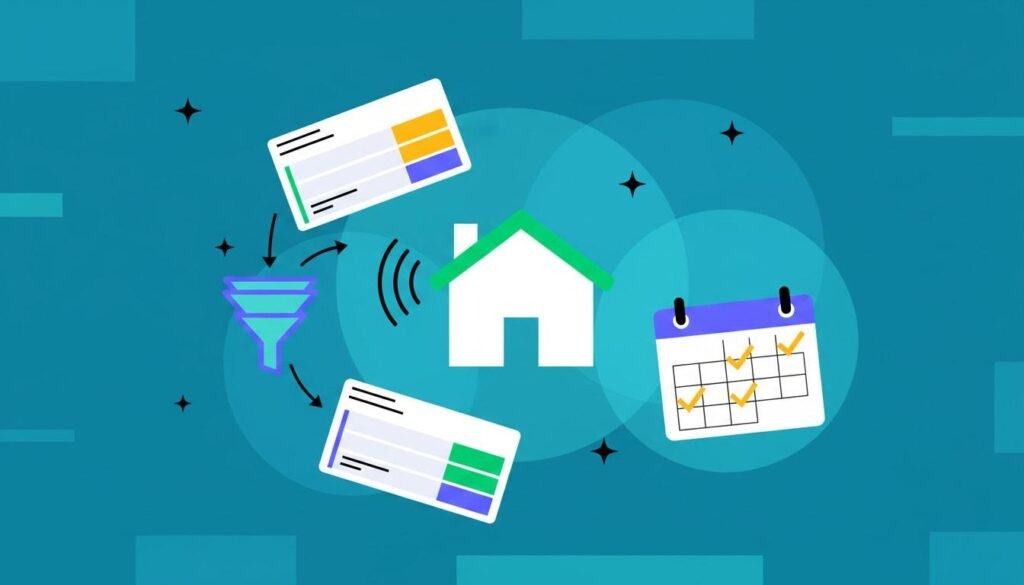
The technology may look complex from the outside, but the basic workflow is relatively straightforward.
Step 1: Lead Generation
A prospect comes through:
- Google Ads
- Meta Ads
- SEO
- Website
- Landing page
- Property portal
- Social media
- Referral
- Existing database
Step 2: Lead Data Capture
Basic information such as name, phone number, property interest, and source is collected.
Step 3: AI Voice Interaction
The AI agent initiates a conversation using a predefined objective and approved information.
Step 4: Qualification
The system asks relevant questions to understand:
- Need
- Budget
- Location
- Timeline
- Property type
- Buying intention
Step 5: Lead Classification
The prospect can be categorised according to predefined criteria.
Step 6: CRM Update
Conversation outcomes and lead information can be recorded in a CRM.
Step 7: Human Handover
Qualified prospects can be passed to a sales representative.
Step 8: Follow-Up Automation
If required, future interactions can be scheduled.
This workflow allows businesses to create a connected lead-management system rather than treating every phone call as an isolated activity.
Key Features to Look for in an AI Voice Agent for Real Estate
Before implementing an AI voice agent for real estate, companies should identify the capabilities they actually need.
Natural Voice Conversations
The system should provide a conversational experience rather than sounding like a basic robotic IVR.
Lead Qualification
Businesses should be able to define the questions and criteria used to identify qualified prospects.
CRM Integration
The system should be capable of transferring relevant information to the CRM or lead-management platform.
Call Recording and Reporting
Where legally permitted and appropriately disclosed, businesses may need call records and performance information for quality monitoring.
Multilingual Communication
Real estate businesses serving diverse markets may benefit from multilingual or regional-language support.
Appointment Scheduling
The system should ideally support site-visit or callback scheduling.
Human Transfer
Complex conversations should be transferable to sales representatives.
Analytics
Useful metrics can include:
- Calls initiated
- Calls answered
- Conversations completed
- Qualified leads
- Follow-ups scheduled
- Site visits requested
- Human transfers
- Conversion outcomes
The exact features required depend on the business model and sales process.
AI Voice Agent for Real Estate vs Traditional Calling
Traditional calling depends heavily on sales executives.
A typical process looks like:
Lead → Sales Executive → Manual Call → Manual Notes → Manual Follow-Up
An automated approach can look like:
Lead → AI Voice Agent → Qualification → CRM → Sales Executive → Follow-Up
This does not necessarily mean replacing salespeople.
Instead, the technology can reduce repetitive tasks and allow sales professionals to spend more time on high-value conversations.
For example, a salesperson who previously spent several hours calling unqualified enquiries may be able to focus more heavily on prospects who have already confirmed their budget, property requirements, and purchase timeline.
The biggest value comes from improving the overall workflow.
Benefits of Using an AI Voice Agent for Real Estate Businesses
A properly implemented AI voice agent for real estate can provide several operational advantages.
Faster Response
New enquiries can be contacted quickly, helping reduce lead-response delays.
Higher Productivity
Sales representatives can spend less time on repetitive qualification calls.
Consistent Communication
Every prospect can be approached using a defined conversation structure.
Better Lead Data
The business can capture structured information about prospects.
Scalable Calling
Businesses can handle larger enquiry volumes without increasing manual calling efforts at the same rate.
Better Follow-Up Management
Scheduled workflows can reduce missed follow-ups.
Improved Customer Experience
Prospects can receive quicker responses and clearer information.
Better Marketing Insights
Call outcomes can help businesses understand lead quality from different marketing channels.
These benefits depend on implementation quality, data accuracy, campaign quality, sales processes, and customer consent.
How Real Estate Companies Can Use AI Voice Automation With Digital Marketing
AI voice technology becomes more powerful when integrated with a complete digital marketing strategy.
For example:
SEO generates organic property enquiries.
Google Ads captures high-intent searches.
Meta Ads generates targeted leads.
Landing Pages collect prospect information.
AI Voice Agent initiates qualification.
CRM stores the conversation outcome.
Sales Team follows up with qualified prospects.
Analytics measures the results.
This creates a complete digital lead-generation ecosystem.
A business may also use remarketing campaigns to reach people who visited a property page but did not submit an enquiry.
When combined with marketing automation, voice communication can become one component of a larger customer journey.

Common Mistakes to Avoid When Implementing an AI Voice Agent for Real Estate
Technology alone cannot fix a weak sales process.
Businesses should avoid several common mistakes.
Using an Overly Long Script
The conversation should be focused. Asking too many questions at once can frustrate prospects.
Providing Incorrect Information
Property prices, availability, offers, possession timelines, and amenities can change. AI systems must use updated and approved information.
Ignoring Human Handover
Some prospects will want to speak with a salesperson. The system should provide a clear path to human assistance.
Calling Without Proper Consent
Businesses should follow applicable telecommunications, privacy, consent, and do-not-call requirements.
Treating Every Lead the Same
A serious buyer and a casual researcher should not necessarily receive identical communication.
Focusing Only on Call Volume
More calls do not automatically mean more sales. Businesses should focus on meaningful metrics such as qualified leads, appointments, site visits, and conversions.
Not Measuring Results
Without analytics, it becomes difficult to determine whether automation is actually improving performance.
Measuring the ROI of an AI Voice Agent for Real Estate
Businesses should measure the system based on business outcomes rather than technology usage.
Important metrics may include:
Lead Response Time: How quickly are new enquiries contacted?
Contact Rate: How many leads answer the call?
Qualification Rate: How many conversations produce qualified prospects?
Appointment Rate: How many prospects schedule a site visit?
Human Transfer Rate: How many conversations require sales intervention?
Conversion Rate: How many qualified prospects eventually become customers?
Cost Per Qualified Lead: What does it cost to generate a genuinely sales-ready opportunity?
Revenue Contribution: How much business can be attributed to the automated workflow?
These metrics provide a more meaningful picture than simply counting how many calls the AI completed.
Why Human Sales Teams Still Matter
An AI voice agent for real estate should not be viewed as a complete replacement for human sales professionals.
Property purchases are often emotionally and financially significant.
Buyers may need help comparing options, understanding financing, discussing negotiations, evaluating documentation, or making a final decision.
Human professionals are particularly important during complex conversations.
A strong strategy therefore combines automation with human expertise.
AI = Speed + Scale + Repetitive Communication
Human Team = Trust + Negotiation + Expertise + Relationship
The strongest system is often the one that gives each side the right responsibility.
Getting Started With AI Voice Agent for Real Estate
A real estate company planning to adopt voice automation can begin with a focused pilot rather than automating the entire sales process immediately.
Start by identifying one specific use case.
For example:
New Lead Qualification
Create the conversation flow.
Define the qualification questions.
Connect the lead source.
Integrate the CRM.
Establish human handover rules.
Measure results for a defined period.
Then improve the workflow based on real conversations and sales feedback.
Once the initial system works effectively, businesses can expand into:
- Follow-up automation
- Appointment scheduling
- Lead nurturing
- Re-engagement
- Customer support
- Campaign-specific voice workflows
This phased approach can make implementation easier to manage.
Why Digital Marketing India Can Help With AI and Marketing Automation
Real estate businesses need more than an isolated calling tool. They need a complete digital ecosystem in which lead generation, communication, automation, sales, and analytics work together.
Saurabh Kumar, with 15+ years of experience in digital marketing, provides digital marketing and technology-related services through Digital Marketing India.

The service portfolio includes:
Website & App Development
- Business Website Development
- E-Commerce Website Development
- Custom Web Applications
- Mobile App Development for Android & iOS
- Landing Page Development
- Website Maintenance & Support
SEO Services
- Local SEO
- On-Page SEO
- Off-Page SEO
- Technical SEO
- E-Commerce SEO
- Google Business Profile Optimization
- SEO Audit & Competitor Analysis
Social Media Marketing
- Facebook Marketing
- Instagram Marketing
- LinkedIn Marketing
- YouTube Marketing
- Social Media Management
- Content Creation & Strategy
Paid Advertising
- Meta Ads
- Google Ads
- YouTube Ads
- LinkedIn Ads
- Remarketing Campaigns
- Lead Generation Campaigns
Automation & Communication Solutions
- WhatsApp Marketing
- Bulk SMS Marketing
- Voice Call Marketing
- IVR & Promotional Calls
- WhatsApp Chatbot Development
- AI Chatbot Development
- Website Live Chat Integration
- Marketing Automation
- CRM Integration
- Email Marketing Automation
- Lead Nurturing Automation
Creative & Video Services
Digital Marketing India also provides graphic designing, social media creatives, logo design, banners, brochures, brand identity, video editing, reels editing, corporate videos, motion graphics, and promotional videos.
Content Marketing
Services include content writing, blog writing, website content, SEO content, and ad copywriting.
Analytics & Reporting
Businesses can also use Google Analytics setup, conversion tracking, performance reports, and ROI analysis to understand campaign performance.
Online Reputation Management
Services include Google review management, brand monitoring, and online reputation building.
For a real estate business, these services can work together to build a complete customer-acquisition system—from attracting the right audience to nurturing and converting enquiries.
The Future of AI Voice Agent for Real Estate
The future of property marketing is moving toward greater automation, faster communication, and more personalised customer journeys.
An AI voice agent for real estate can become an important part of this transformation.
As businesses generate increasing numbers of digital enquiries, manually managing every conversation becomes increasingly difficult.
AI voice systems can help businesses respond faster, organise lead information, automate repetitive conversations, and connect prospects with sales teams.
The technology will continue evolving. Voice interactions are likely to become more natural, systems will become better at understanding customer intent, and integrations with CRM and marketing platforms will become increasingly important.
But successful implementation will still depend on something fundamental:
Good marketing + accurate information + intelligent automation + strong sales execution.
AI is not a substitute for a good real estate business model. It is a tool that can help a strong business operate more efficiently.
Conclusion
The real estate industry depends heavily on timely communication. A lead that is ignored or contacted too late can quickly become a lost opportunity.
An AI voice agent for real estate can help businesses create a faster and more structured communication process by automating initial calls, qualifying prospects, managing follow-ups, answering routine questions, scheduling site visits, and connecting qualified leads with sales representatives.
The real advantage is not simply automation. It is the ability to create a smoother journey from lead generation to sales conversation.
For businesses already investing in SEO, Google Ads, Meta Ads, websites, landing pages, and lead-generation campaigns, integrating AI-powered communication can help strengthen the next stage of the customer journey.
With the right strategy, an AI voice agent for real estate can support scalability while allowing human sales teams to focus on conversations where trust, expertise, negotiation, and personal attention matter most.
Businesses interested in building a complete digital marketing and automation ecosystem can connect with Saurabh Kumar, who brings 15+ years of experience in digital marketing, through Digital Marketing India.
Contact: +91 76966 77728
Official Address:
S15-00709, Vaidehi Niwas, Bhairomunna Link Road
Sahnewal, Ludhiana, Punjab – 141120
Frequently Asked Questions About AI Voice Agent for Real Estate
1. What is an AI voice agent for real estate?
An AI voice agent for real estate is an AI-powered calling system that can communicate with property prospects, answer approved questions, qualify enquiries, schedule follow-ups, and route suitable leads to sales teams.
2. Can an AI voice agent qualify property leads?
Yes. It can ask predefined questions about property requirements, budget, preferred location, buying timeline, and other criteria before categorising or routing the lead.
3. Can AI schedule real estate site visits?
Depending on the technology and integrations used, an AI voice system can collect preferred dates and times and connect the appointment information with the relevant scheduling or CRM workflow.
4. Can AI replace real estate sales executives?
AI can automate repetitive communication, but human sales professionals remain important for complex discussions, negotiation, relationship building, and final purchasing decisions.
5. Can an AI voice agent work with Google Ads and Meta Ads?
Yes. With suitable integrations, leads generated through digital advertising can be connected to automated communication workflows.
6. Is AI voice automation useful for property brokers?
It can be useful for brokers who handle large volumes of enquiries and need a structured process for qualification, follow-up, and lead prioritisation.
7. What information can AI collect from property buyers?
Depending on the workflow, it can collect information such as property type, preferred location, budget, configuration, purchase timeline, investment objective, and site-visit interest.
8. How can businesses measure AI voice performance?
Businesses can monitor contact rate, qualification rate, appointment rate, human transfers, conversion rate, cost per qualified lead, and revenue contribution.
9. Should every real estate lead receive the same AI conversation?
Not necessarily. Conversation flows can be designed around different lead sources, property categories, customer requirements, and stages of the buying journey.
10. Who can help with digital marketing and automation for real estate?
Digital Marketing India, led by Saurabh Kumar with 15+ years of digital marketing experience, provides SEO, paid advertising, website development, social media marketing, automation, communication solutions, content marketing, analytics, and online reputation management services.