Introduction
In a competitive digital marketplace, businesses need more than spreadsheets, scattered customer records, and manual follow-ups to manage their daily operations. Cloud CRM Software provides businesses with a centralized platform where customer information, leads, sales activities, communication, marketing processes, and follow-ups can be managed efficiently. Instead of keeping important business data across different applications, teams can access relevant information from one connected system.
Modern businesses are increasingly using Cloud CRM Software because it allows sales and marketing teams to work from virtually anywhere. Whether a team member is working from an office, home, or another location, customer information can remain accessible through an internet-connected device. This flexibility can be especially valuable for businesses that have remote teams, multiple departments, field employees, or customers in different locations.
A well-planned Cloud CRM Software solution can also support lead management, customer communication, sales tracking, marketing automation, reporting, and business growth. When integrated with digital marketing activities such as SEO, Google Ads, social media marketing, WhatsApp campaigns, email marketing, and website forms, it can create a more organized customer journey.
For businesses looking to improve their digital infrastructure, choosing the right Cloud CRM Software can become an important step toward better productivity and more structured growth.
What Is Cloud CRM Software?
Cloud CRM Software is a customer relationship management system hosted on cloud infrastructure rather than being installed and maintained entirely on individual office computers or local servers.
CRM stands for Customer Relationship Management. A CRM platform is designed to help organizations organize customer and prospect information, monitor interactions, manage sales opportunities, track communication, and improve customer service.
Traditional CRM systems may require dedicated infrastructure, software installation, manual updates, and in-house maintenance. In contrast, Cloud CRM Software is generally accessed through the internet using a browser or supported application.
A typical cloud-based CRM may include features such as:
- Contact management
- Lead management
- Sales pipeline tracking
- Task and reminder management
- Customer communication history
- Email integration
- Marketing automation
- Reporting dashboards
- Conversion tracking
- Team collaboration
- Mobile access
- Workflow automation
- Third-party integrations
The exact features vary from one CRM platform to another. Therefore, businesses should select a solution according to their size, industry, sales process, budget, and operational requirements.
Why Businesses Need Cloud CRM Software Today
Customer expectations have changed significantly. People want faster responses, personalized communication, convenient support, and consistent interactions across different channels. Businesses therefore need an organized way to manage every stage of the customer lifecycle.
Cloud CRM Software can help create that structure.
Without a centralized CRM, important information can become scattered between spreadsheets, emails, messaging platforms, notebooks, website forms, and different employees’ devices. This can make it difficult to understand which leads have been contacted, which prospects need follow-up, and which customers are ready for another purchase.
With Cloud CRM Software, businesses can create a central customer database. Sales representatives can see relevant information before contacting a prospect, while managers can monitor sales activity and identify opportunities that may otherwise be missed.
The benefits can become even more significant when CRM is connected with marketing channels. For example, a business can capture a lead through a website form, record the lead in its CRM, assign it to a sales executive, schedule follow-up reminders, and monitor whether that lead eventually becomes a customer.
This creates a more systematic process instead of relying entirely on manual coordination.
Key Features of Cloud CRM Software
The best Cloud CRM Software solutions combine multiple business functions within one platform. Although feature availability differs, several capabilities are particularly useful for growing businesses.
1. Contact Management
A CRM can store important customer and prospect details in an organized database. Teams can record names, phone numbers, email addresses, company information, previous conversations, requirements, and other relevant information.
2. Lead Management
Lead management allows businesses to track prospects from the initial enquiry to conversion. Leads can be categorized according to source, interest level, location, product, service, or sales stage.
3. Sales Pipeline
A visual sales pipeline can show where prospects currently stand. For example, leads may move through stages such as new enquiry, contacted, qualified, proposal sent, negotiation, and closed.
4. Task Management
Sales teams can create reminders for calls, meetings, emails, demonstrations, quotations, and follow-ups.
5. Communication History
A centralized interaction history can help employees understand previous conversations before communicating with customers again.
6. Reporting
Managers can analyze leads, conversions, sales performance, marketing sources, and team productivity through reports and dashboards.
These capabilities make Cloud CRM Software more than a simple contact database. It can become a central operational tool for customer-facing teams.
Cloud CRM Software for Lead Generation and Management
Generating leads is only one part of digital marketing. Converting those leads requires consistent follow-up and proper organization. This is where Cloud CRM Software can play a major role.
Businesses may generate enquiries through Google Ads, Meta Ads, SEO, landing pages, social media, WhatsApp campaigns, websites, email campaigns, and other channels. If these enquiries are not properly recorded and followed up, valuable opportunities can be lost.
A cloud CRM can help collect leads into a centralized system. Businesses can then assign leads to specific team members and establish follow-up schedules.
For example, suppose a company receives 100 enquiries from an online advertising campaign. Instead of keeping those enquiries in different spreadsheets or inboxes, Cloud CRM Software can help organize them into a structured pipeline.
The team can then identify:
- Which leads are new
- Which leads have been contacted
- Which prospects requested pricing
- Which prospects require another follow-up
- Which leads converted
- Which advertising channel generated the best results
This information can also help businesses evaluate their marketing performance more accurately.
Cloud CRM Software and Sales Automation
Sales teams often spend a significant amount of time performing repetitive administrative tasks. Entering customer information, setting reminders, sending follow-up messages, updating lead stages, and preparing basic reports can consume valuable working hours.
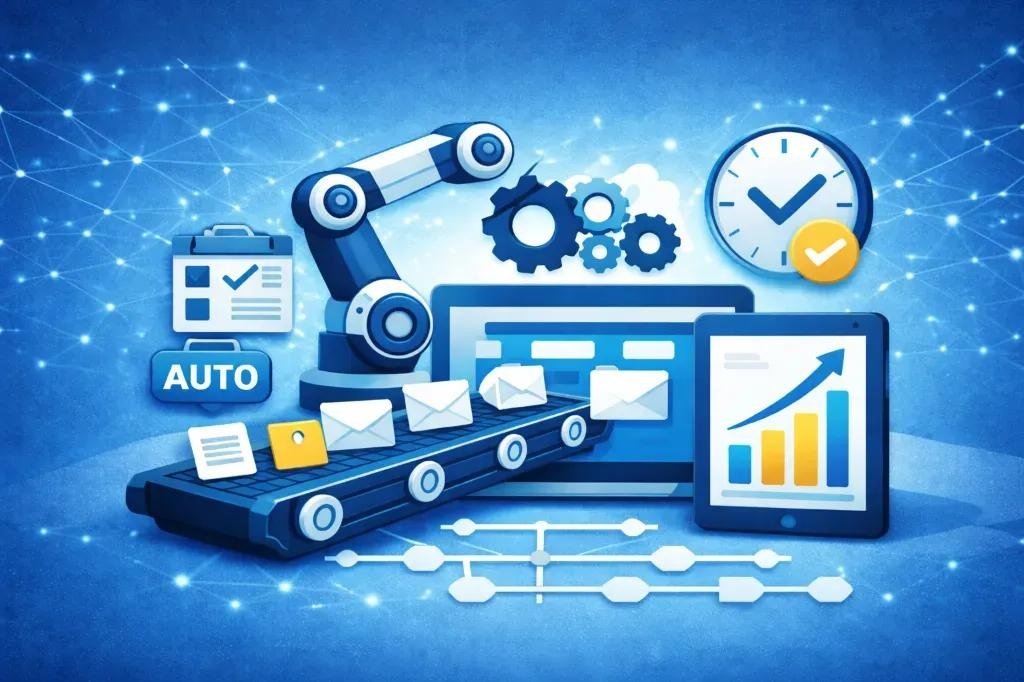
Cloud CRM Software can automate many repetitive workflows.
For instance, when a new enquiry enters the system, an automated workflow may assign the lead to a salesperson. A reminder can then be created for follow-up. Depending on the CRM and integrations being used, the system may also trigger an email, WhatsApp communication, or another predefined action.
Automation does not necessarily eliminate the need for human interaction. Instead, it can reduce repetitive administrative work and allow employees to spend more time on conversations that require personal attention.
A structured automated workflow can include:
Lead Received → Lead Assigned → First Contact → Qualification → Follow-Up → Proposal → Negotiation → Conversion
The exact workflow should be customized according to the business model.
Cloud CRM Software for Marketing Automation
Digital marketing produces large amounts of customer data. Managing this information manually can become challenging as the business grows.
Cloud CRM Software can connect marketing activities with customer records and sales processes. This allows businesses to better understand how prospects move from marketing engagement to actual sales.
For example, a company running Google Ads may generate hundreds of leads every month. CRM integration can help identify which leads came from paid advertising and how many eventually converted.
Similarly, businesses using social media marketing can connect campaigns with lead management workflows where supported by their technology stack.
Marketing automation may include:
- Email follow-up sequences
- Lead nurturing
- Customer segmentation
- Campaign tracking
- Automated reminders
- Website form integration
- Lead scoring
- Re-engagement campaigns
- Conversion tracking
When marketing and sales teams work from shared data, communication can become more coordinated.
Cloud CRM Software for Customer Relationship Management
Customer acquisition is important, but retaining existing customers can be equally valuable. A business needs to understand its customers, their previous interactions, preferences, requirements, and service history.
Cloud CRM Software provides a structured way to manage this information.
Customer relationship management becomes particularly important for service businesses, agencies, consultants, healthcare organizations, education companies, real estate businesses, e-commerce companies, and B2B organizations.
A centralized customer profile can help employees understand the customer journey before starting a conversation.
For example, if a customer has previously contacted the company about a particular service, the next representative can review the relevant information instead of asking the customer to explain everything again.
This can create a smoother experience and help businesses deliver more consistent service.
Cloud CRM Software for Remote and Distributed Teams
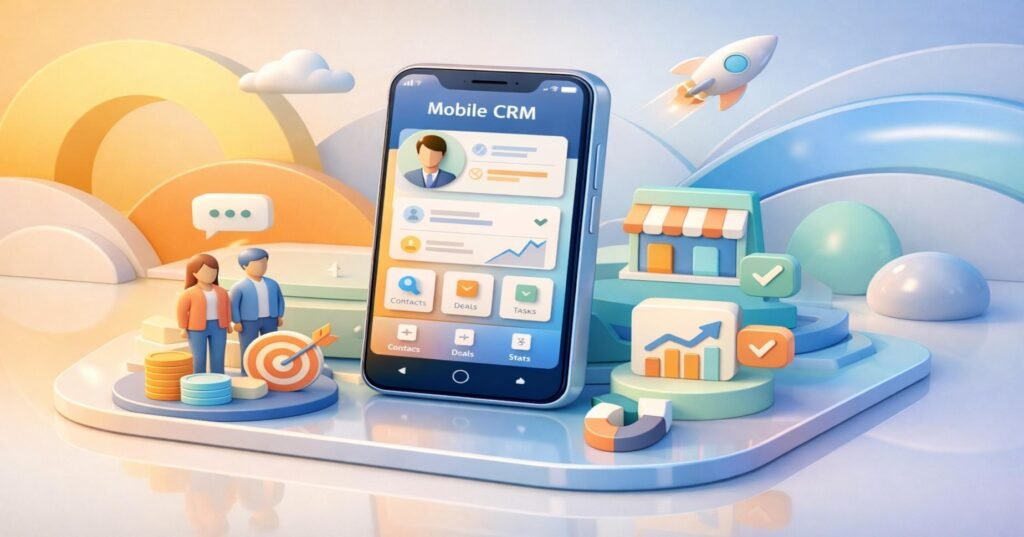
Modern organizations increasingly operate with employees working from different locations. Sales representatives may travel, managers may work remotely, and marketing teams may operate from different cities.
Traditional systems can make collaboration difficult when customer information is stored on a single office computer or in disconnected files.
Cloud CRM Software enables authorized team members to access centralized customer information through supported internet-connected devices.
This can help teams coordinate activities more effectively.
For example:
- A salesperson can update a lead after a meeting.
- A manager can review the updated pipeline remotely.
- A marketing executive can analyze campaign-generated enquiries.
- A support representative can check previous customer interactions.
- A business owner can review performance reports while traveling.
Access permissions should still be configured carefully so that employees only see the information appropriate for their roles.
Cloud CRM Software and WhatsApp Marketing
WhatsApp has become an important communication channel for many businesses. Companies use it for enquiries, customer support, promotions, reminders, updates, and lead nurturing.
When appropriate integrations are available, Cloud CRM Software can work alongside WhatsApp-based communication systems.
For example, a lead captured through a website can be entered into the CRM and subsequently moved into a communication workflow. A sales representative can see customer information and follow-up status without maintaining separate manual records.
Businesses can also combine CRM processes with:
- WhatsApp Marketing
- WhatsApp Chatbots
- Automated notifications
- Customer support
- Promotional communication
- Lead nurturing
- Appointment reminders
However, businesses should always follow applicable privacy, consent, messaging, and platform policies when communicating with customers.
Cloud CRM Software for Digital Marketing Agencies
Digital marketing agencies manage multiple clients, campaigns, leads, communication channels, and reporting requirements. A CRM can help agencies maintain a structured workflow.
For an agency providing SEO, Google Business Profile optimization, social media marketing, paid advertising, website development, content marketing, and automation, Cloud CRM Software can help organize prospects and client relationships.
An agency may use CRM to track:
- New business enquiries
- Discovery calls
- Proposals
- Follow-ups
- Client onboarding
- Campaign requirements
- Service packages
- Renewal opportunities
- Upselling opportunities
- Customer communication
For example, an agency may generate leads through Local SEO, Google Ads, social media campaigns, or its website. Each enquiry can be categorized according to the requested service.
This makes it easier to identify which services generate the strongest commercial opportunities.
Cloud CRM Software for Small Businesses
Small businesses often assume CRM platforms are only useful for large organizations. In reality, a properly selected CRM can also help smaller companies create organized sales processes.
A small business may initially manage customers using spreadsheets. As the number of enquiries grows, however, manual tracking can become increasingly difficult.
Cloud CRM Software can provide a more scalable structure.
A small company can begin with basic functions such as contact management, lead tracking, reminders, and sales pipeline management. As the organization grows, it can introduce automation, reporting, integrations, and advanced workflows.
The important point is to avoid choosing a system with unnecessary complexity. Businesses should select software that their team can actually use consistently.
Cloud CRM Software for E-Commerce Businesses
E-commerce companies deal with large volumes of customers, enquiries, orders, marketing interactions, and repeat purchases.
Cloud CRM Software can help businesses organize customer information and understand purchasing behavior when integrated with suitable e-commerce systems.
Potential applications include:
- Customer segmentation
- Repeat-purchase campaigns
- Abandoned-cart communication
- Customer support
- Promotional campaigns
- Email automation
- Lead nurturing
- Customer retention
- Purchase history analysis
CRM data can help businesses distinguish between new customers, repeat buyers, high-value customers, inactive customers, and prospects.
This segmentation can support more relevant marketing campaigns.
Cloud CRM Software and SEO Lead Tracking
SEO is a long-term marketing channel that can generate valuable organic traffic. However, ranking for keywords is only one part of the process. Businesses also need to understand what happens after visitors become leads.
Cloud CRM Software can help connect organic lead generation with sales outcomes.
Suppose a business receives enquiries from multiple service pages. CRM tracking can help identify which pages or campaigns generate enquiries and which enquiries ultimately become customers.
This can provide useful information for digital marketing strategy.
For businesses investing in Local SEO, Google Business Profile optimization, technical SEO, on-page SEO, off-page SEO, and content marketing, CRM data can help move the focus from simple traffic numbers toward meaningful business results.
Cloud CRM Software and Google Ads
Paid advertising can produce leads quickly, but campaign performance should ideally be measured beyond clicks and impressions.
Cloud CRM Software can help businesses monitor what happens to advertising-generated leads after they enter the sales process.
A simplified process can look like:
Google Ad → Landing Page → Lead Form → CRM → Sales Follow-Up → Qualified Lead → Customer
This structure can help marketing teams understand which campaigns are contributing to actual business opportunities.
When CRM and conversion tracking are configured correctly, companies can make more informed decisions about advertising budgets and campaign optimization.
Cloud CRM Software for Reporting and Analytics
Data becomes valuable when it helps a business make better decisions.
Cloud CRM Software can generate reports related to sales activity, lead sources, conversion rates, pipeline value, customer retention, team performance, and other business metrics.
Useful CRM reports may include:
- Total leads received
- Leads by source
- Qualified leads
- Conversion percentage
- Sales pipeline value
- Follow-up performance
- Average response time
- Sales representative performance
- Customer acquisition trends
- Campaign-generated revenue
Businesses should avoid tracking dozens of unnecessary metrics. Instead, management should identify key performance indicators that directly relate to business objectives.
CRM reporting becomes particularly powerful when combined with analytics platforms and advertising data.
How to Choose the Right Cloud CRM Software
Selecting the right platform requires more than comparing feature lists. Businesses should first understand their operational requirements.
Before selecting Cloud CRM Software, consider the following factors:
Business Size
A small business may need a simple platform, while a large organization may require advanced automation, permissions, integrations, and reporting.
Sales Process
The CRM should support the actual sales journey of the business.
Integrations
Check whether the CRM can connect with websites, email platforms, advertising tools, WhatsApp solutions, payment systems, analytics platforms, and other tools required by the business.
Ease of Use
A complicated CRM may fail if employees do not use it consistently.
Automation
Look for workflow automation that can reduce repetitive administrative work.
Reporting
Ensure the platform provides reports that support real business decisions.
Security
Customer information should be protected through appropriate security controls, authentication, permissions, backups, and other safeguards.
Scalability
The system should be capable of supporting the business as customer and team volumes increase.
Benefits of Cloud CRM Software for Growing Companies
A growing organization needs systems that can handle increasing customer interactions without creating unnecessary administrative complexity.
Cloud CRM Software can provide several advantages:
Centralized Information: Customer data can be organized in one system.
Better Follow-Ups: Automated reminders can reduce the chances of missed opportunities.
Improved Collaboration: Teams can work with shared information.
Greater Visibility: Managers can see the sales pipeline more clearly.
Marketing Integration: Leads from multiple marketing channels can be organized.
Automation: Repetitive processes can be streamlined.
Remote Accessibility: Authorized users can access the platform from supported locations.
Scalability: Cloud-based systems can support business expansion when properly configured.
The actual benefits depend on implementation, employee adoption, data quality, integrations, and the specific CRM platform selected.
Common Mistakes When Using Cloud CRM Software
Buying a CRM does not automatically improve business performance. Poor implementation can reduce the value of even a powerful platform.
One common mistake is entering incomplete customer information. Another is failing to establish clear sales stages. Some businesses also purchase advanced software but never train employees properly.
Other common problems include:
- No clear CRM strategy
- Duplicate customer records
- Poor data organization
- Inconsistent lead updates
- Too many unnecessary fields
- Lack of employee training
- Weak follow-up processes
- Poor integration between marketing and sales
- Ignoring security and access controls
- Failing to review CRM reports
To get better results from Cloud CRM Software, businesses should establish clear processes before introducing extensive automation.
Cloud CRM Software and Business Automation
Automation is one of the strongest reasons businesses adopt modern CRM platforms.
Instead of requiring employees to manually perform every action, predefined workflows can handle routine tasks according to specific conditions.
For example:
New Lead → Automatic Assignment → Follow-Up Reminder → Sales Contact → Status Update → Nurturing → Conversion
Another workflow could be designed for existing customers:
Purchase Completed → Customer Update → Follow-Up Reminder → Review Request → Repeat-Purchase Campaign
These workflows should be carefully tested. Automation should improve customer experience rather than create irrelevant or excessive communication.
Cloud CRM Software for Better Customer Retention
Acquiring a new customer often requires considerable marketing and sales effort. Retaining existing customers can therefore be an important component of sustainable business growth.
Cloud CRM Software can help businesses maintain structured customer records and create follow-up strategies.
Companies can use customer information to identify opportunities such as:
- Renewal reminders
- Repeat purchases
- Service upgrades
- Cross-selling
- Customer feedback
- Review requests
- Re-engagement campaigns
When businesses understand customer history, communication can become more relevant and personalized.
However, personalization should be based on useful information and handled responsibly.
Future of Cloud CRM Software
The CRM industry continues to evolve alongside artificial intelligence, automation, analytics, conversational interfaces, and omnichannel communication.
Future-oriented Cloud CRM Software platforms are increasingly expected to provide smarter automation, predictive insights, AI-assisted customer interactions, advanced reporting, and deeper integration with marketing and communication channels.
AI-powered CRM capabilities may help businesses summarize conversations, identify sales opportunities, prioritize leads, generate reports, and support customer service teams.
The future is likely to involve increasingly connected systems where CRM becomes part of a broader digital business ecosystem rather than functioning as an isolated sales database.
Businesses should therefore consider not only what a CRM can do today, but also how easily it can integrate with emerging technologies.
Why Cloud CRM Software Matters for Digital Transformation
Digital transformation is not simply about purchasing new software. It is about improving how a business operates through technology.
Cloud CRM Software can contribute to this transformation by connecting customer data, sales operations, marketing campaigns, communication, automation, and reporting.
For example, a digitally connected business might have the following ecosystem:
Website + SEO + Google Business Profile + Google Ads + Social Media + WhatsApp + CRM + Analytics + Automation
Each component performs a different function, but integration can allow them to work together.
This approach can provide businesses with a more complete view of their customer journey and help management make decisions using actual data rather than assumptions.
Digital Marketing India: Complete Digital Growth Solutions
Choosing the right CRM is only one part of building a strong digital presence. Businesses also need effective websites, search visibility, advertising, social media communication, creative content, automation, and analytics.
Digital Marketing India, led by Saurabh Kumar with 15+ years of experience in digital marketing, provides a broad range of digital services designed to support businesses at different stages of growth.

Website & App Development
Services include:
- Business Website Development
- E-Commerce Website Development
- Custom Web Applications
- Android & iOS Mobile App Development
- Landing Page Development
- Website Maintenance & Support
SEO Services
The SEO portfolio includes:
- Local SEO
- On-Page SEO
- Off-Page SEO
- Technical SEO
- E-Commerce SEO
- Google Business Profile Optimization
- SEO Audit & Competitor Analysis
Social Media Marketing
Businesses can receive support for:
- Facebook Marketing
- Instagram Marketing
- LinkedIn Marketing
- YouTube Marketing
- Social Media Management
- Content Creation & Strategy
Paid Advertising
Paid media services include:
- Meta Ads
- Google Ads
- YouTube Ads
- LinkedIn Ads
- Remarketing Campaigns
- Lead Generation Campaigns
Automation & Communication Solutions
Businesses can integrate marketing and communication workflows through:
- WhatsApp Marketing
- Bulk SMS Marketing
- Voice Call Marketing
- IVR & Promotional Calls
- WhatsApp Chatbot Development
- AI Chatbot Development
- Website Live Chat Integration
- Marketing Automation
- CRM Integration
- Email Marketing Automation
- Lead Nurturing Automation
Creative Services
Creative support includes:
- Graphic Designing
- Social Media Creatives
- Logo Design
- Banner & Brochure Design
- Brand Identity Design
Video Production
Video services include:
- Video Editing
- Reels Editing
- YouTube Video Editing
- Corporate Videos
- Motion Graphics
- Promotional Videos
Content Marketing
Content solutions include:
- Content Writing
- Blog Writing
- Website Content Writing
- SEO Content Writing
- Ad Copywriting
Analytics & Reporting
Businesses can also receive:
- Google Analytics Setup
- Conversion Tracking
- Performance Reports
- ROI Analysis
Online Reputation Management
Reputation-focused services include:
- Google Review Management
- Brand Monitoring
- Online Reputation Building
Combining these services with an appropriate Cloud CRM Software strategy can help businesses build a more connected digital marketing and customer management ecosystem.
How Cloud CRM Software Can Support Long-Term Growth
Sustainable business growth requires systems that can evolve as the organization becomes larger.
Cloud CRM Software can help businesses move from informal customer management toward structured processes. Instead of depending entirely on individual employees to remember calls, meetings, follow-ups, and customer requirements, information can be stored systematically.
This creates greater operational visibility.
As the company grows, the CRM can potentially support additional users, departments, workflows, communication channels, and reporting requirements.
The most important factor is not simply owning CRM software. The real value comes from using it correctly.
Businesses should define their objectives, establish workflows, train employees, maintain accurate data, review performance regularly, and improve processes based on measurable results.
Conclusion
Modern businesses need efficient systems to manage leads, customers, sales activities, marketing campaigns, communication, and data. Cloud CRM Software provides a centralized environment that can help organizations bring these activities together.
From lead generation and sales automation to customer retention, WhatsApp communication, digital marketing integration, reporting, and remote collaboration, a well-implemented CRM can support many areas of business operations.
The right solution should be selected according to business requirements rather than simply choosing the platform with the longest feature list. Ease of use, scalability, integrations, security, automation, reporting, and employee adoption all matter.
For businesses looking to strengthen their digital presence, CRM can work alongside SEO, website development, Google Ads, social media marketing, WhatsApp marketing, content marketing, automation, analytics, and reputation management.
With the right strategy and implementation, Cloud CRM Software can become an important part of a modern digital business infrastructure.
For businesses seeking professional digital growth solutions, Saurabh Kumar (15+ years of digital marketing experience) and Digital Marketing India offer services covering website and app development, SEO, social media marketing, paid advertising, automation, creative services, video production, content marketing, analytics, and online reputation management.
Official Address:
S15-00709, Vaidehi Niwas, Bhairomunna Link Road
Sahnewal, Ludhiana, Punjab – 141120
Contact: +91 76966 77728