Introduction: Why Choosing the Best CRM for Startups Matters
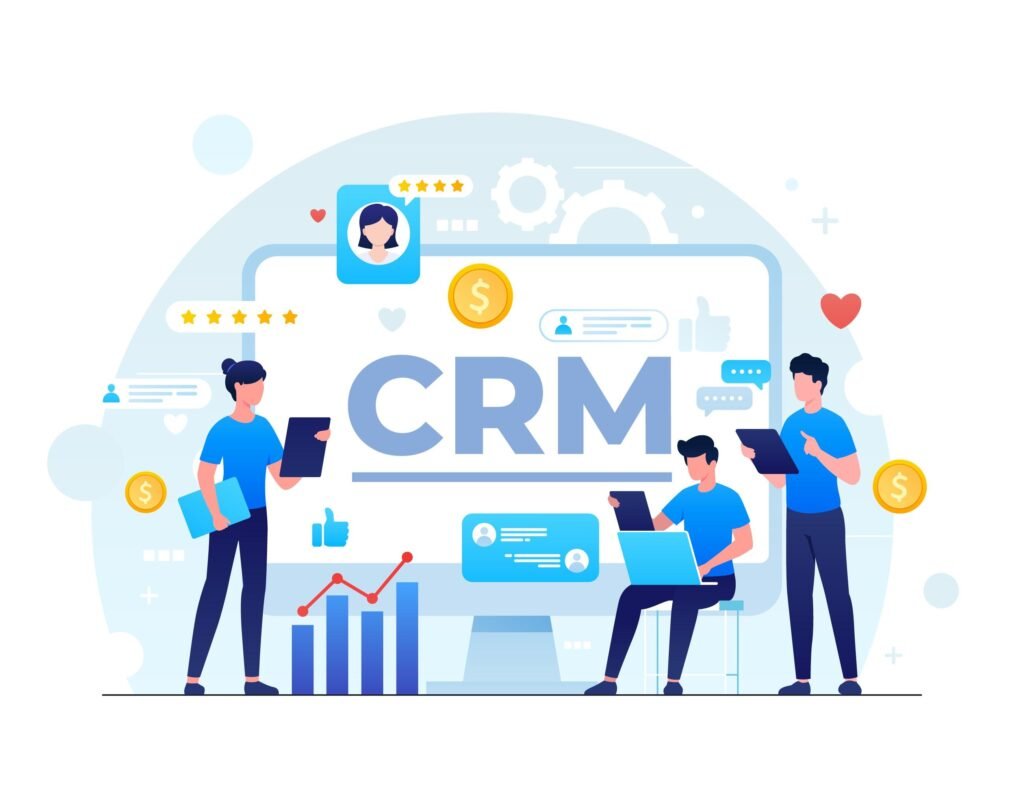
For a growing business, managing leads, customers, follow-ups, sales conversations, and marketing activities manually can quickly become difficult. This is where choosing the best CRM for startups can make a significant difference. A good Customer Relationship Management system helps startups organize customer information, track leads, automate repetitive tasks, improve follow-ups, and create a more consistent sales process.
Startups usually operate with limited budgets, small teams, and ambitious growth targets. They cannot afford to lose potential customers because a salesperson forgot a follow-up or because important information was buried inside spreadsheets, emails, or WhatsApp conversations. The best CRM for startups should therefore be affordable, easy to use, scalable, and capable of supporting sales and marketing operations without creating unnecessary complexity.
In this guide, we will explore some of the most popular CRM options, the features startups should look for, how CRM software can improve business performance, and how to select a system that fits your specific requirements.
What Makes the Best CRM for Startups?
The best CRM for startups is not necessarily the CRM with the largest number of features. Instead, it is the platform that provides the right combination of simplicity, affordability, automation, reporting, integrations, and scalability.
A startup may initially have only a few employees and dozens of leads each month. As the company grows, however, it may start handling hundreds or thousands of leads. A CRM should be capable of growing alongside the business.
When evaluating the best CRM for startups, consider these important factors:
- Ease of use
- Affordable pricing
- Lead management
- Contact management
- Sales pipeline management
- Task and follow-up management
- Email integration
- Marketing automation
- Reporting and analytics
- Mobile accessibility
- Third-party integrations
- Customer support
- Scalability
A simple CRM that the entire team actually uses is often more valuable than an advanced platform that employees find confusing.
1. HubSpot CRM – A Popular Choice for Startups
HubSpot CRM is frequently considered when businesses search for the best CRM for startups because it offers a broad range of sales, marketing, customer service, and automation capabilities.
One of its biggest advantages is that startups can begin with basic CRM functionality and expand into additional tools as their requirements increase.
HubSpot can help businesses manage:
- Contacts
- Leads
- Deals
- Sales pipelines
- Emails
- Meetings
- Tasks
- Marketing campaigns
- Customer interactions
- Reporting
For startups that want to keep customer information organized while building a structured sales process, HubSpot can be a practical option.
The platform can also be useful for businesses that expect their marketing and sales operations to become more sophisticated over time.
Best suited for: Startups looking for an ecosystem that can support sales and marketing growth.
2. Zoho CRM – Flexible and Cost-Conscious
Zoho CRM is another strong contender for the best CRM for startups, particularly for small and growing businesses looking for a wide selection of features.
Zoho provides tools for managing leads, contacts, accounts, deals, activities, sales pipelines, reports, and automation.
One of its strengths is flexibility. Businesses can configure workflows according to their sales process instead of completely changing their process to match the software.
Zoho can be particularly useful for startups that want to connect CRM activities with other business operations.
For example, a company may use CRM data alongside email marketing, customer support, accounting, analytics, and other business applications.
Best suited for: Startups that want customization and a broad business software ecosystem.
3. Freshsales – Useful for Sales-Focused Startups
Freshsales by Freshworks is worth considering when the primary objective is improving sales productivity.
For many sales-oriented businesses, the best CRM for startups should make it easy for salespeople to understand which prospects need attention and what action should happen next.
Freshsales focuses on areas such as:
- Lead management
- Contact management
- Deal tracking
- Sales activities
- Communication
- Automation
- Reporting
- Sales productivity
A CRM that provides sales representatives with relevant customer information can reduce the time spent searching through different platforms.
For startups where sales teams are actively calling prospects, sending emails, scheduling meetings, and managing opportunities, a sales-focused CRM can provide significant value.
Best suited for: Startups that prioritize sales pipeline management and team productivity.

4. Salesforce – Powerful for High-Growth Startups
Salesforce is one of the most recognized CRM platforms in the world and can be considered the best CRM for startups that anticipate complex requirements and rapid expansion.
Salesforce offers extensive customization, automation, reporting, integrations, and ecosystem capabilities.
However, startups should evaluate whether they actually need such a powerful system during their early stages. A sophisticated CRM may require more configuration, training, and management than a small team needs.
For a startup expecting rapid growth, multiple sales teams, complex customer journeys, or extensive integrations, Salesforce may become a valuable long-term platform.
Best suited for: Fast-growing startups with advanced CRM requirements and larger operational ambitions.
5. Pipedrive – Simple Sales Pipeline Management
Pipedrive is another platform that startups can consider when looking for the best CRM for startups.
Its sales-pipeline-focused approach makes it relatively easy for teams to understand where prospects are within the sales journey.
A typical pipeline may include stages such as:
New Lead → Contacted → Qualified → Proposal → Negotiation → Won/Lost
Visualizing deals in this manner allows salespeople and managers to identify opportunities that require immediate attention.
Pipedrive can be particularly useful for businesses that want to improve sales organization without introducing an overly complicated system.
Best suited for: Startups that want straightforward and visual sales pipeline management.
6. Monday CRM – Flexible Workflow Management
Monday CRM can also be evaluated by startups that want to combine customer management with flexible workflow organization.
Its customizable approach can be useful for companies with unique sales processes.
Instead of forcing every organization into one predefined workflow, businesses can configure boards, stages, activities, assignments, and processes according to their requirements.
This can make Monday CRM an interesting option for startups that operate across sales, marketing, projects, and customer relationships.
Best suited for: Startups looking for customizable workflows and collaborative work management.
7. Microsoft Dynamics 365 – For Businesses Planning Enterprise Growth
Microsoft Dynamics 365 can be a strong consideration for startups that already operate within the Microsoft ecosystem or expect to eventually require enterprise-level business tools.
It can connect CRM functionality with broader business operations and provide tools for sales, customer engagement, reporting, and automation.
However, startups should carefully assess implementation requirements before selecting an enterprise-focused platform.
The best CRM for startups should match the company’s current operational maturity while also providing a realistic path for future growth.
Best suited for: Startups planning sophisticated operations and long-term enterprise expansion.
How the Best CRM for Startups Helps Manage Leads
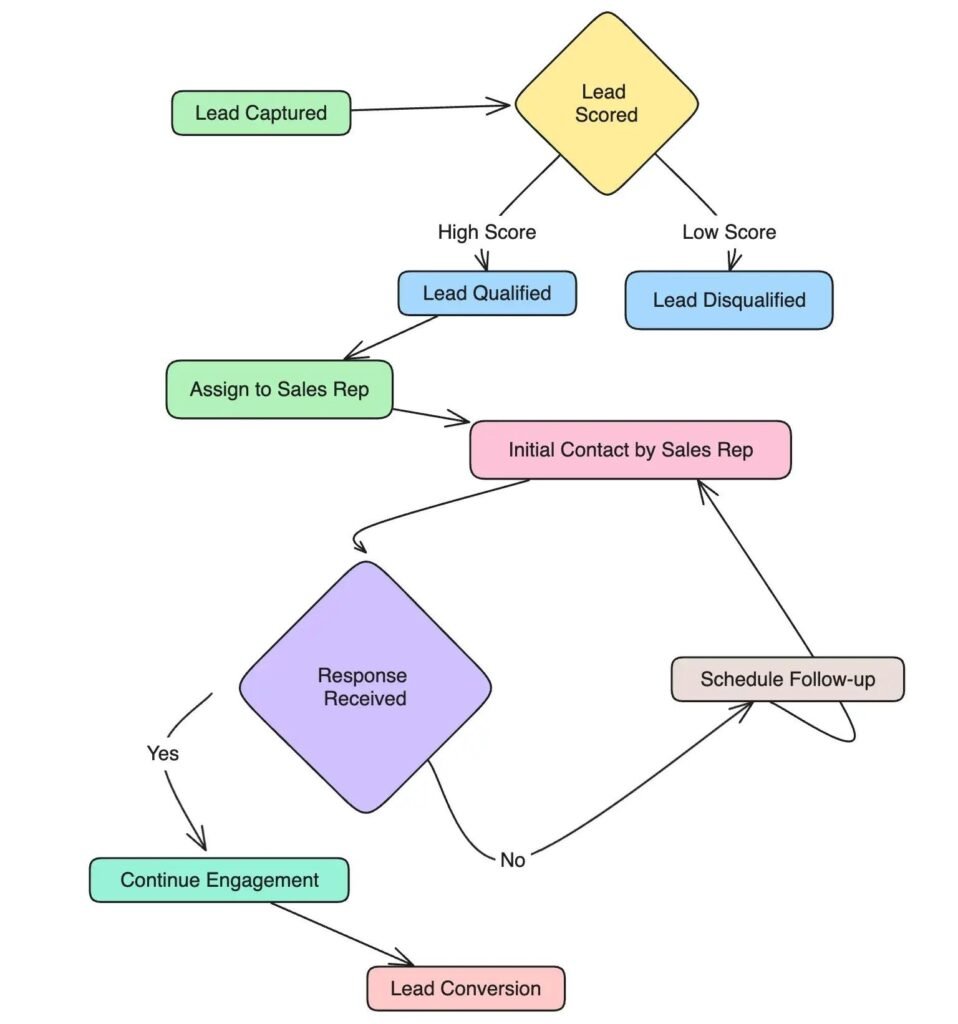
Lead management is one of the most important reasons startups invest in CRM software.
Without a centralized system, leads may come from Google Ads, social media, websites, email, phone calls, WhatsApp, referrals, and other sources. Managing all these leads manually can result in missed opportunities.
The best CRM for startups creates a centralized location where sales teams can record and manage prospects.
A properly configured CRM can help businesses determine:
- Where a lead came from
- What service the prospect is interested in
- When the lead was contacted
- What was discussed
- When the next follow-up is due
- Which salesperson is responsible
- Whether the lead converted
- Why an opportunity was lost
This information becomes particularly valuable as the company grows.
Instead of relying on individual employees to remember customer conversations, the business creates a shared source of information.
How the Best CRM for Startups Improves Follow-Ups
A significant number of sales opportunities can disappear simply because follow-ups are delayed or forgotten.
The best CRM for startups can help create structured follow-up processes.
For example:
Day 1: New lead received
Day 2: First follow-up
Day 4: Second follow-up
Day 7: Value-based follow-up
Day 14: Final follow-up
The exact schedule should depend on the business and industry, but CRM automation can help ensure that prospects do not disappear from the sales pipeline.
Teams can create reminders, assign tasks, automate emails, and monitor pending activities.
This can be particularly useful for startups that generate leads through digital marketing campaigns.
Why Automation Is Important in the Best CRM for Startups
Automation is one of the biggest advantages of modern CRM software.
Instead of manually performing every repetitive activity, businesses can automate selected processes.
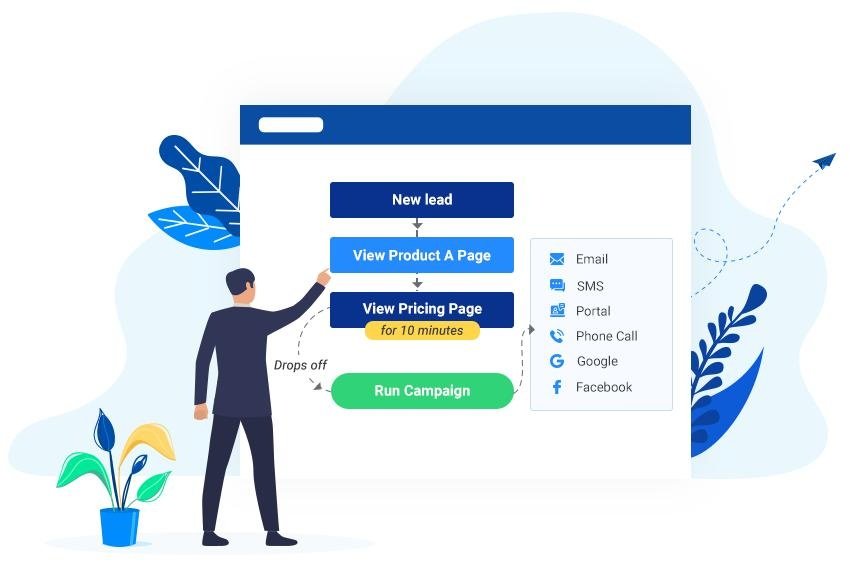
For example, when a new lead enters the CRM, automation may:
- Create a contact record.
- Assign the lead to a salesperson.
- Send a confirmation email.
- Create a follow-up task.
- Add the prospect to an appropriate workflow.
- Notify the sales team.
- Update the pipeline stage.
The best CRM for startups should allow automation without making the process unnecessarily complicated.
Automation saves time and allows employees to focus more on conversations, sales, strategy, and customer relationships.
Best CRM for Startups for Marketing Automation
CRM and marketing automation are increasingly connected.
A startup may use Google Ads, Meta Ads, SEO, social media, email marketing, landing pages, and content marketing to generate leads. But generating leads is only one part of the growth process.
The business also needs to nurture those prospects.
The best CRM for startups can help connect marketing activity with customer information.
For example, a business can identify:
- Which campaign generated a lead
- Which landing page converted the prospect
- Which source generated the highest-quality customers
- How many leads became opportunities
- How many opportunities became paying customers
- Which campaigns produced better ROI
This creates a more complete view of the customer journey.
Best CRM for Startups: Features You Should Not Ignore
While comparing CRM platforms, startups should focus on practical features rather than choosing software simply because it has a long feature list.
Here are some essential capabilities to evaluate.
Lead Management
The system should make it easy to capture, organize, assign, qualify, and track leads.
Sales Pipeline
The CRM should provide clear visibility into the progress of opportunities.
Contact Management
Customer details, communication history, notes, and activities should be accessible from one location.
Task Management
Salespeople should be able to create reminders and follow-up activities.
Automation
The CRM should automate repetitive workflows where appropriate.
Reporting
Managers should be able to monitor leads, conversions, sales performance, and campaign results.
Integrations
The platform should connect with tools that the startup already uses.
Mobile Access
Sales teams often need customer information while working outside the office, making mobile accessibility useful.
Best CRM for Startups: Free vs Paid CRM
Budget is an important consideration for early-stage businesses.
Many CRM platforms offer free or entry-level plans, while advanced automation, reporting, integrations, and customization may require paid subscriptions.
Before selecting the best CRM for startups, calculate the actual business requirement rather than selecting a platform purely because it is free.
A free CRM can be suitable when:
- The team is small.
- Lead volume is low.
- Basic contact management is enough.
- Advanced automation is not required.
A paid CRM may make more sense when:
- Lead volume is increasing.
- Multiple salespeople are involved.
- Follow-ups need automation.
- Detailed reporting is required.
- Marketing and sales need to be connected.
- The company needs advanced integrations.
The objective should always be value rather than the lowest possible subscription cost.
Best CRM for Startups for Digital Marketing Agencies
Digital marketing agencies often manage leads from multiple channels, making CRM particularly important.
For an agency offering SEO, Google Business Profile optimization, paid advertising, website development, social media marketing, content marketing, automation, and other digital services, CRM software can bring sales and marketing activities together.
A structured CRM can help an agency track:
Lead → Consultation → Requirement → Proposal → Negotiation → Client → Retention
It can also help monitor which marketing channels generate clients.
For example, an agency may discover that Google Ads generates a large number of leads but SEO produces more qualified prospects. This type of information can help management make better marketing decisions.
For businesses working across multiple digital channels, the best CRM for startups should ideally integrate with their lead generation and communication systems.
Integrating CRM With WhatsApp, Email and Other Channels
Modern customers communicate through multiple channels.
A prospect may discover a company through Google, visit its website, submit a form, communicate through WhatsApp, and later speak to a salesperson by phone.
If each interaction remains isolated, salespeople may struggle to understand the complete customer journey.
A CRM integrated with communication tools can help bring relevant interactions together.
For example:
Website Lead → CRM → WhatsApp Follow-Up → Email → Sales Call → Proposal → Conversion
This creates a more organized process.
Businesses can also consider integrations with email marketing platforms, advertising systems, websites, chatbots, payment tools, analytics platforms, and other applications.
How to Choose the Best CRM for Startups
Selecting the right CRM should begin with business requirements rather than software features.
Start by asking:
1. How many leads do we receive every month?
A company receiving 30 leads has different requirements from one receiving 3,000.
2. How many people will use the CRM?
Consider salespeople, managers, marketing employees, customer support, and other users.
3. Which channels generate leads?
Identify whether leads come from websites, Google Ads, Meta Ads, social media, referrals, phone calls, email, or other sources.
4. What needs to be automated?
Determine which repetitive activities consume the most time.
5. Which integrations are required?
Make a list of existing business tools before choosing the CRM.
6. What is the expected growth?
The CRM should be able to support increasing leads, employees, customers, and processes.
7. What is the realistic budget?
Consider the total cost, including subscriptions, setup, integrations, training, and maintenance.
Common CRM Mistakes Startups Should Avoid
Choosing the best CRM for startups is only the first step. Poor implementation can prevent the business from receiving the expected benefits.
Choosing Too Many Features
More features do not automatically mean better results.
Not Training Employees
Employees should understand why the CRM matters and how they should use it.
Failing to Define Sales Stages
A CRM becomes much more useful when everyone follows a consistent pipeline.
Ignoring Data Quality
Duplicate, incomplete, or outdated information reduces CRM effectiveness.
Not Following Up
A CRM cannot improve sales if the team does not actually complete assigned activities.
Automating Everything
Automation should support customer experience rather than replacing useful human interaction.
Never Reviewing Reports
CRM data should be analyzed regularly to identify bottlenecks and opportunities.
Best CRM for Startups: CRM + SEO + Paid Advertising
CRM software becomes even more valuable when connected with digital marketing.
For example, SEO can bring organic visitors to a website. Paid advertising can generate immediate traffic. Landing pages can convert visitors into leads. CRM software can then organize and nurture those leads.
This creates a complete growth system:
Traffic → Lead → CRM → Follow-Up → Sales → Customer → Retention
Digital marketing agencies can use this approach to improve campaign measurement.
Instead of simply reporting clicks, impressions, or website traffic, businesses can move toward measuring actual business outcomes such as qualified leads, opportunities, customers, revenue, and ROI.
Best CRM for Startups: Measuring ROI
A CRM should ultimately contribute to better business decisions.
Important metrics can include:
- Total leads
- Qualified leads
- Lead-to-opportunity rate
- Opportunity-to-customer rate
- Sales cycle length
- Average deal value
- Customer acquisition cost
- Revenue by source
- Salesperson performance
- Follow-up completion
- Customer retention
These metrics can help management identify where the sales process is working and where improvements are needed.
For example, if a startup receives 500 leads but only converts 5 customers, the problem may not be lead generation. The issue could be lead quality, sales follow-up, pricing, sales communication, or the conversion process.
CRM data helps businesses investigate these problems.
Why the Best CRM for Startups Should Be Scalable
A CRM that works for a five-person startup may not be appropriate once the company reaches 50 or 500 employees.
Scalability should therefore be considered from the beginning.
The ideal CRM should allow a company to expand its users, workflows, automation, integrations, reporting, and data management without forcing an immediate migration to another platform.
At the same time, startups should avoid overpaying for enterprise-level capabilities they do not currently need.
The goal is to select software that provides a practical balance between current usability and future growth.
Best CRM for Startups: Which One Should You Choose?
There is no single CRM that is perfect for every startup.
The best CRM for startups depends on the company’s size, sales process, budget, industry, marketing channels, technical requirements, and growth plans.
A simple comparison can help:
| CRM | Best For | Main Strength |
|---|---|---|
| HubSpot CRM | Growing startups | Sales + marketing ecosystem |
| Zoho CRM | Small businesses | Flexibility and customization |
| Freshsales | Sales teams | Sales productivity |
| Salesforce | High-growth companies | Advanced customization |
| Pipedrive | Sales-focused teams | Visual pipeline |
| Monday CRM | Flexible teams | Custom workflows |
| Microsoft Dynamics 365 | Enterprise-focused growth | Business ecosystem |
If simplicity is the priority, a straightforward CRM may be the better choice. If automation and marketing integration are important, a broader platform may be more appropriate. Businesses with complex enterprise requirements may need a more powerful solution.
How Digital Marketing India Can Help With CRM Integration
Selecting CRM software is only one part of building an effective digital sales system. The CRM must also work properly with lead generation, websites, advertising, communication, automation, and analytics.
Digital Marketing India, led by Saurabh Kumar with 15+ years of experience in digital marketing, provides digital solutions designed to help businesses strengthen their online presence and customer acquisition processes.

Services include:
- Website & App Development
- Business Website Development
- E-Commerce Website Development
- Custom Web Applications
- Landing Page Development
- Local SEO
- On-Page SEO
- Technical SEO
- Google Business Profile Optimization
- Social Media Marketing
- Google Ads
- Meta Ads
- YouTube Ads
- LinkedIn Ads
- WhatsApp Marketing
- Bulk SMS Marketing
- IVR and promotional calling solutions
- WhatsApp Chatbot Development
- AI Chatbot Development
- Website Live Chat Integration
- Marketing Automation
- CRM Integration
- Email Marketing Automation
- Lead Nurturing Automation
- Graphic Design
- Video Production
- Content Marketing
- SEO Content Writing
- Analytics and Reporting
- Online Reputation Management
For startups, connecting these services with a CRM can create a more organized customer acquisition ecosystem.
For example:
SEO → Website → Lead Form → CRM → Automated Follow-Up → Sales Call → Customer
Similarly:
Google Ads → Landing Page → CRM → Lead Assignment → WhatsApp/Email → Conversion
This approach helps businesses move beyond simply generating leads and focus on converting and retaining them.
Final Thoughts: Finding the Best CRM for Startups
Finding the best CRM for startups should be viewed as a business decision rather than simply a software purchase.
The right CRM can help a startup organize customer data, improve follow-ups, automate repetitive tasks, monitor sales pipelines, connect marketing and sales, and make decisions using real business data.
HubSpot, Zoho CRM, Freshsales, Salesforce, Pipedrive, Monday CRM, and Microsoft Dynamics 365 all offer different approaches. The right choice depends on what your business needs today and where you expect it to be in the future.
Before making a final decision, identify your lead sources, sales process, team size, automation requirements, integration needs, reporting requirements, and budget.
Most importantly, remember that CRM software alone does not create growth. The combination of the right CRM, a clearly defined sales process, effective digital marketing, consistent follow-ups, automation, and data-driven decision-making is what creates long-term results.
If your startup is generating leads but struggling to organize, follow up, nurture, or convert them, implementing a well-planned CRM strategy can be an important step toward building a more efficient sales process.
About Saurabh Kumar
Saurabh Kumar has 15+ years of experience in digital marketing and works with businesses on website development, SEO, social media marketing, paid advertising, automation, CRM integration, content marketing, analytics, and online reputation management.
Official Address:
S15-00709, Vaidehi Niwas, Bhairomunna Link Road
Sahnewal, Ludhiana, Punjab – 141120
Contact: +91 76966 77728
For startups and growing businesses, the right combination of digital marketing, automation, CRM, and analytics can create a stronger foundation for sustainable growth.