Introduction
In today’s competitive digital marketplace, businesses need more than spreadsheets, disconnected software, and manual follow-ups to manage customers effectively. Custom CRM Development provides businesses with a flexible technology solution designed around their specific sales processes, customer journeys, communication requirements, and operational goals. Unlike generic CRM platforms that force businesses to adapt their processes to predefined features, a custom CRM can be designed around the way a company actually works.
A Customer Relationship Management system is no longer limited to storing names, phone numbers, and email addresses. Modern businesses use CRM technology to manage leads, automate communication, monitor sales pipelines, track customer interactions, generate reports, coordinate teams, and improve customer retention. When these capabilities are integrated into one intelligent platform, businesses can make faster decisions and provide a more consistent customer experience.
For businesses looking for greater control, scalability, automation, and integration, Custom CRM Development can become an important part of their digital transformation strategy. A well-designed CRM solution can connect marketing, sales, customer service, management, and analytics while reducing repetitive administrative work.
What Is Custom CRM Development?
Custom CRM Development refers to the process of designing and building a Customer Relationship Management platform specifically for the requirements of a particular business. Instead of purchasing an off-the-shelf CRM with fixed workflows, companies can create a system containing the features, dashboards, integrations, permissions, automation, and reporting tools they actually need.
Every business has a different customer acquisition process. A real estate company may need property and lead management, while an education company may require enquiry tracking, admission workflows, counsellor assignments, and automated reminders. An e-commerce business may need customer segmentation, order information, abandoned-cart communication, and marketing automation.
A custom CRM can accommodate these differences.
The development process generally begins with understanding the company’s business objectives and existing workflows. Developers and business stakeholders then identify required features, integrations, user roles, automation rules, reporting requirements, and security considerations.
The result is a CRM platform that supports the company’s operations instead of forcing employees to change established workflows simply to fit a software product.
Why Businesses Need Custom CRM Development
Businesses often collect customer information from multiple sources. Leads may arrive through websites, Google Ads, Meta Ads, social media, WhatsApp, phone calls, landing pages, email campaigns, or offline enquiries.
Without a centralized system, this information can become fragmented.
Sales teams may not know which employee contacted a lead. Marketing teams may lack visibility into lead quality. Managers may struggle to determine which campaigns are generating revenue. Customer service representatives may have incomplete information about previous conversations.
Custom CRM Development can bring these processes together through a centralized platform.
A properly designed CRM can provide a single source of customer information, allowing authorized employees to access relevant data from one system. This can improve collaboration, reduce duplicate data entry, and make customer communication more organized.
It can also help management identify bottlenecks in the sales process and understand how leads move from initial enquiry to conversion.
1. Custom CRM Development Creates Business-Specific Workflows
One of the biggest advantages of Custom CRM Development is the ability to create workflows according to business requirements.
Generic CRM software often includes standard stages such as:
- New Lead
- Contacted
- Qualified
- Proposal Sent
- Negotiation
- Won
- Lost
These stages may work for some companies but may not accurately represent every sales process.
A custom platform can create industry-specific stages and workflows. For example, a healthcare-related business may need enquiry registration, consultation scheduling, follow-up, service selection, payment tracking, and feedback management.
Similarly, a B2B company may require lead qualification, decision-maker identification, product demonstration, quotation, negotiation, approval, and contract management.
When workflows reflect actual business operations, employees can work more efficiently because the software supports their existing process.
2. Custom CRM Development Improves Lead Management
Lead management is one of the most important functions of a modern CRM.
Businesses spend money on marketing campaigns to generate enquiries, but generating leads is only the beginning. Leads must be captured, categorized, assigned, contacted, followed up, and eventually converted.
Custom CRM Development can automate many of these activities.
For example, when a customer submits a website enquiry form, the CRM can automatically create a lead profile. Based on predefined rules, the lead can be assigned to a salesperson. The system can then send an acknowledgement message and create a follow-up task.
Lead scoring can also be implemented to prioritize prospects according to factors such as:
- Source of the lead
- Product interest
- Location
- Budget
- Engagement
- Previous interactions
- Purchase intent
This helps sales teams focus their time on prospects who are more likely to convert.
3. Custom CRM Development Enables Marketing Automation
Marketing teams frequently perform repetitive activities such as sending emails, WhatsApp messages, reminders, promotional notifications, and follow-up communications.
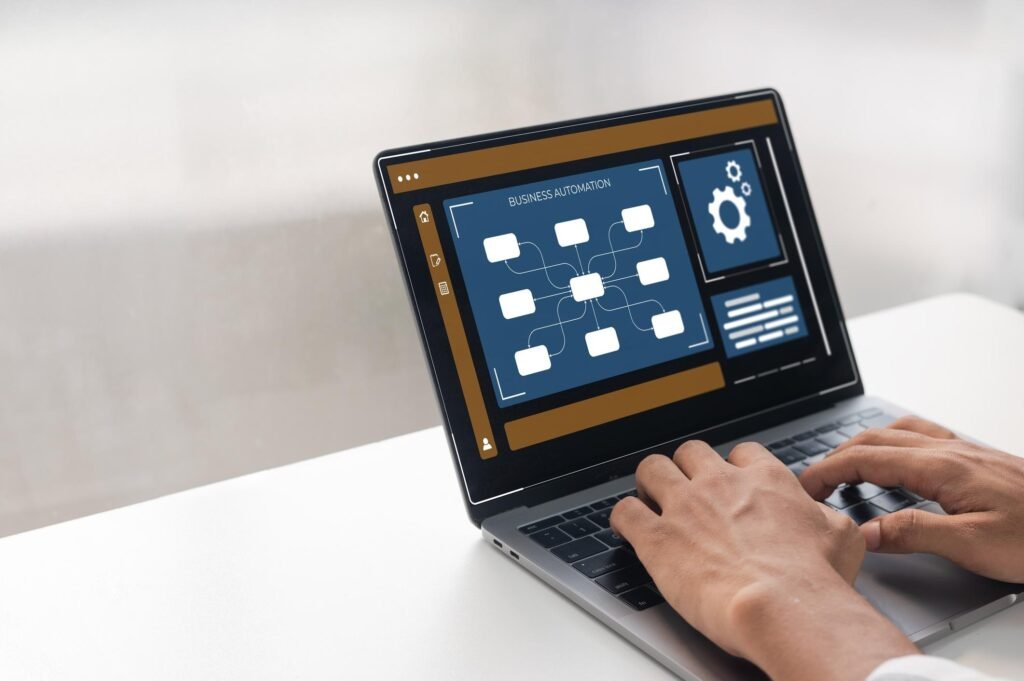
With Custom CRM Development, marketing automation can become part of the CRM ecosystem.
For instance, a business can create an automated workflow where:
- A lead enters the CRM.
- The lead is categorized according to its source.
- An introductory message is sent.
- A salesperson receives a notification.
- A follow-up task is created.
- The lead receives scheduled communication.
- Engagement is recorded.
- The lead is moved through the sales pipeline.
Marketing automation can also support lead nurturing. Prospects who are not immediately ready to purchase can receive relevant information over time rather than being forgotten by the sales team.
This creates a more organized customer journey and can reduce the number of leads lost because of missed follow-ups.
4. Custom CRM Development Connects Multiple Communication Channels
Customers today communicate through multiple channels. Depending on the business, these may include phone calls, email, WhatsApp, websites, social media, and live chat.
Managing these conversations separately can create communication gaps.
A well-planned Custom CRM Development strategy can connect different communication channels with the central customer database.
For example, a salesperson may be able to see a customer’s previous enquiries, communication history, follow-up tasks, and current sales status from one dashboard.
Integration possibilities may include:
- WhatsApp communication
- Email marketing
- Website live chat
- AI chatbot systems
- Voice calls and IVR
- Bulk SMS
- Social media lead forms
- Website enquiry forms
Centralizing communication helps businesses maintain continuity even when different employees interact with the same customer.
5. Custom CRM Development Supports Better Customer Service
Customer experience has a direct impact on customer retention and brand reputation.
When customers contact a company, they expect employees to understand their previous interactions. Repeatedly asking customers to explain their problem can create frustration.
Custom CRM Development can help customer service teams access relevant customer information quickly.
A CRM can store:
- Customer profiles
- Previous conversations
- Purchase history
- Service requests
- Complaints
- Support tickets
- Follow-up records
- Feedback
- Important notes
This information can help service teams respond more efficiently.
CRM systems can also include ticketing workflows, escalation rules, automated notifications, service-level reminders, and customer feedback mechanisms.
As a result, businesses can build a more structured customer support process instead of relying entirely on individual employees to remember customer details.
6. Custom CRM Development Improves Sales Productivity
Salespeople should spend their time selling and building relationships rather than performing repetitive administrative tasks.
However, sales teams often spend significant time entering data, preparing reports, updating spreadsheets, checking follow-up dates, and searching through previous conversations.
Custom CRM Development can automate many administrative activities.
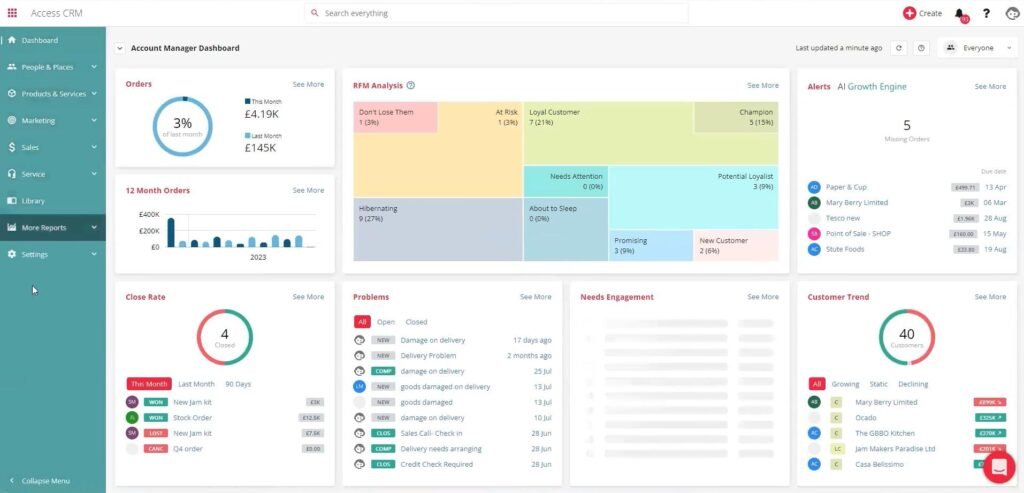
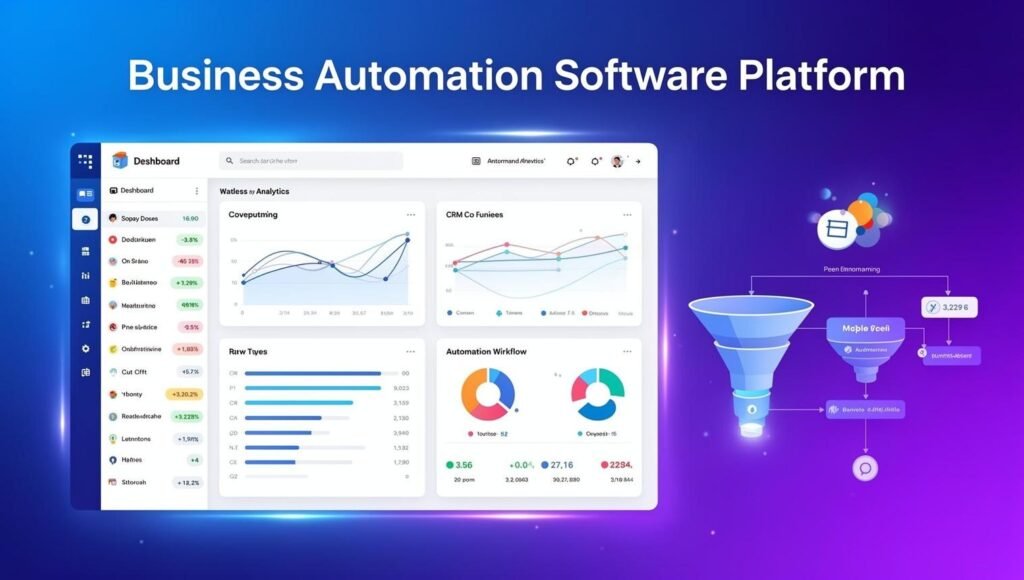
A sales dashboard can show:
- New leads
- Pending follow-ups
- Today’s tasks
- Pipeline value
- Conversion rates
- Sales targets
- Closed deals
- Lost opportunities
- Lead sources
Automated reminders can help sales representatives follow up at the right time.
Managers can also monitor team performance without waiting for manually prepared spreadsheets.
This creates greater transparency and can help management identify employees who need additional support, training, or resources.
7. Custom CRM Development Provides Advanced Reporting and Analytics
Data becomes valuable when businesses can turn it into actionable insights.
A modern CRM should not only store information; it should help businesses understand that information.
Through Custom CRM Development, companies can build dashboards based on their specific KPIs.
Management may want to monitor:
- Lead generation
- Lead-to-customer conversion
- Sales pipeline value
- Average sales cycle
- Customer acquisition cost
- Revenue by source
- Employee performance
- Campaign performance
- Customer retention
- Repeat purchases
Customized dashboards can make this information easier to understand.
For example, if a company discovers that Google Ads generates a large number of leads but a low percentage of conversions, management can investigate lead quality, sales follow-up, landing pages, pricing, or targeting.
Similarly, if one marketing channel generates fewer leads but significantly more customers, the company can reconsider how its advertising budget is allocated.
8. Custom CRM Development Integrates With Digital Marketing
CRM and digital marketing work best when they are connected.
Digital marketing campaigns generate traffic and leads, while the CRM helps businesses manage what happens after the enquiry.
A Custom CRM Development solution can be connected with digital marketing systems to improve lead tracking and attribution.
For example, leads generated through Google Ads, Meta Ads, landing pages, organic search, or social media can be categorized according to their source.
Marketing teams can then evaluate which campaigns produce qualified customers instead of measuring success only through clicks or impressions.
CRM data can also support remarketing and lead nurturing strategies.
This creates a more connected marketing ecosystem where businesses can understand the complete journey from first interaction to conversion.
9. Custom CRM Development Supports WhatsApp and Chatbot Automation
WhatsApp has become an important communication channel for businesses, particularly for lead generation, customer support, reminders, and follow-ups.
A CRM can be integrated with WhatsApp-based communication workflows where appropriate.
With Custom CRM Development, businesses can design automated communication journeys based on customer actions.
For example:
A customer submits an enquiry → CRM creates a lead → automated acknowledgement is sent → salesperson is notified → follow-up reminder is generated → customer receives relevant information → sales status is updated.
AI chatbot integration can further enhance customer communication by answering frequently asked questions, collecting basic information, directing users to appropriate departments, and helping businesses remain responsive outside normal working hours.
Automation should still be designed carefully so that customers can reach a human representative whenever necessary.
10. Custom CRM Development Improves Data Organization
Scattered data creates operational problems.
When customer information exists across Excel files, email accounts, messaging applications, paper documents, and multiple software platforms, employees may struggle to locate accurate information.
Custom CRM Development provides an opportunity to establish structured data management.
Businesses can define which fields should be mandatory, which information should be visible to different departments, and how customer records should be categorized.
Duplicate detection can also be implemented to reduce multiple records for the same customer.
Role-based access can ensure that employees only access the information relevant to their responsibilities.
Better data organization supports better reporting, communication, and decision-making.
11. Custom CRM Development Offers Scalability
A CRM should support a business not only today but also as it grows.
A small business may initially require basic lead management. As the company expands, it may need additional users, departments, communication channels, automation, reporting, integrations, and advanced permissions.
Custom CRM Development can be planned with scalability in mind.
Instead of rebuilding the entire system every time the business introduces a new process, developers can design a flexible architecture that allows new features to be added over time.
Potential future additions may include:
- AI-powered lead scoring
- Predictive analytics
- Advanced customer segmentation
- Mobile CRM applications
- Automated sales forecasting
- Advanced chatbot integration
- Payment integration
- Inventory integration
- ERP integration
- Advanced reporting dashboards
This makes the CRM a long-term digital asset rather than a temporary software solution.
12. Custom CRM Development Enhances Security and Access Control
Customer databases contain valuable business information, so security should be an important consideration.
A custom CRM can be designed with appropriate authentication, authorization, access controls, data backups, activity logs, and other security measures.
Different users can receive different permissions.
For example, a sales executive may access assigned leads, while a manager may access team-level performance reports. An administrator may have broader control over users, workflows, and system settings.
Security requirements should be determined according to the business, the information being processed, applicable regulations, and the technologies used to build the CRM.

13. Custom CRM Development Can Reduce Operational Costs
At first, investing in a custom CRM may appear more expensive than using a basic software subscription.
However, businesses should evaluate the total operational value.
If employees spend hours every week manually updating spreadsheets, preparing reports, searching for customer information, and sending repetitive messages, those activities create hidden costs.
Custom CRM Development can automate repetitive processes and reduce unnecessary manual work.
For example, automated lead assignment can eliminate manual distribution. Automated reports can reduce spreadsheet preparation. Follow-up reminders can reduce missed opportunities. Centralized customer information can reduce time spent searching for records.
Over time, these efficiencies can contribute to improved productivity and better resource utilization.
14. Custom CRM Development for Different Industries
The flexibility of Custom CRM Development makes it suitable for different industries.
Real Estate
Real estate companies can manage property enquiries, buyers, sellers, site visits, agents, follow-ups, and deal stages.
Education
Educational institutions can track student enquiries, counselling sessions, applications, admissions, follow-ups, and communication.
Healthcare
Healthcare organizations can use CRM solutions for enquiry management, appointment communication, patient relationship processes, and service follow-ups, subject to appropriate privacy and compliance requirements.
E-Commerce
Online businesses can use CRM systems to manage customer profiles, purchase behavior, support requests, repeat customers, and marketing campaigns.
Professional Services
Consultancies, agencies, legal service providers, financial services companies, and other professional businesses can manage leads, client communication, proposals, projects, and follow-ups.
B2B Companies
B2B organizations can create customized pipelines for prospects, decision-makers, quotations, negotiations, contracts, and account management.
The important point is that the CRM should be designed around the company’s operational requirements.
15. How to Choose the Right Custom CRM Development Partner
Choosing the right technology partner is an important part of a CRM project.
Businesses should look beyond development cost and evaluate the complete service capability.
Important factors include:
Business Understanding: The development partner should understand the company’s sales and operational workflows before recommending a solution.
Technical Expertise: The team should understand web applications, APIs, databases, integrations, security, cloud technologies, and responsive interfaces.
Customization Capability: The solution should be flexible enough to support business-specific requirements.
Integration Experience: A CRM may need to communicate with websites, marketing platforms, WhatsApp, email, payment systems, analytics platforms, and other software.
Scalability: The system should be capable of supporting future business growth.
Support and Maintenance: CRM development should not end immediately after launch. Businesses may require updates, troubleshooting, security improvements, new integrations, and feature enhancements.
Custom CRM Development and Digital Transformation
Digital transformation is not simply about buying new software. It is about improving the way a business operates through technology.
A CRM can become a central part of this transformation by connecting customer information, marketing, sales, communication, automation, and analytics.
For businesses already investing in SEO, Google Business Profile optimization, social media marketing, Google Ads, Meta Ads, content marketing, website development, or lead generation, connecting these activities with a CRM can provide greater visibility into the customer journey.
For example, SEO may generate organic leads, Google Ads may generate paid leads, social media may generate enquiries, and a website may collect direct enquiries. A CRM can bring these leads into one structured system.
This allows marketing and sales teams to work from the same data.
Custom CRM Development With Automation and AI
Artificial intelligence is creating new opportunities for CRM systems.
AI-powered CRM features can potentially assist with lead prioritization, customer segmentation, response suggestions, data analysis, chatbot conversations, sales forecasting, and automated content generation.
However, AI should be implemented according to practical business needs.
A company does not need AI simply because it is a popular technology trend. The technology should solve a real problem.
For example, if a business receives thousands of enquiries, AI-assisted lead classification may help prioritize prospects. If customer support receives repetitive questions, an AI chatbot may help answer common queries.
Combining automation with intelligent data analysis can make CRM systems more useful as businesses scale.
Custom CRM Development: From Requirement to Launch
A successful CRM project generally follows several stages.
Requirement Analysis
The first step is understanding the company’s existing workflow, pain points, users, customer journey, and business objectives.
Planning
The development team identifies features, integrations, database requirements, user roles, dashboards, automation, and technology architecture.
UI/UX Design
The interface should be easy to understand and efficient for daily users.
Development
Developers build the CRM features and integrations according to the approved specifications.
Testing
The system should be tested for functionality, performance, security, usability, and integration reliability.
Deployment
Once testing is completed, the CRM can be deployed for business users.
Training
Employees should understand how to use the system effectively.
Maintenance
Ongoing maintenance can include updates, bug fixes, security improvements, integrations, performance optimization, and new features.
How Custom CRM Development Supports Long-Term Growth
A CRM should not be viewed merely as an address book.
When properly designed, it becomes a business operating platform that connects customer information with sales, marketing, communication, automation, and analytics.
Custom CRM Development can help companies build processes that are more organized, measurable, and scalable.
The greatest value comes when CRM technology is aligned with business objectives.
A company that wants more qualified leads may prioritize lead scoring and marketing integration. A company struggling with follow-ups may focus on sales automation. A company with customer service challenges may prioritize ticketing and communication history. A growing organization may require advanced dashboards and role-based access.
There is no single CRM structure that is ideal for every company.
That is precisely why customization can be valuable.
Why Digital Marketing India Can Help With Custom CRM Development
Digital Marketing India, led by Saurabh Kumar with 15+ years of experience in digital marketing, provides a broad range of digital solutions for businesses looking to improve their online presence and customer acquisition processes.
The service portfolio includes website and app development, custom web applications, mobile app development, SEO, Google Business Profile optimization, social media marketing, paid advertising, WhatsApp marketing, bulk SMS marketing, IVR solutions, WhatsApp chatbot development, AI chatbot development, live chat integration, marketing automation, CRM integration, email marketing automation, lead nurturing automation, creative services, video production, content marketing, analytics, reporting, and online reputation management.
This combination can be particularly valuable when CRM requirements are closely connected with digital marketing.
Instead of treating website development, lead generation, advertising, automation, and CRM as completely separate activities, businesses can build a more connected digital ecosystem.

Conclusion
The modern customer journey is more complex than ever. Businesses receive enquiries from search engines, websites, advertisements, social media, messaging platforms, referrals, and other channels. Managing these interactions manually can lead to missed opportunities, fragmented information, slow follow-ups, and inconsistent customer experiences.
Custom CRM Development provides a way to bring these processes together through a platform designed around the company’s specific requirements.
From lead management and sales automation to customer service, analytics, communication, marketing integration, and AI-powered workflows, a customized CRM can help businesses create a more organized and scalable operation.
The right CRM should not simply store customer information. It should help employees work smarter, management make better decisions, and customers receive more consistent service.
For businesses planning their next stage of digital growth, investing in a well-designed CRM can be an important step toward building a more efficient, data-driven, and customer-focused organization.
About Saurabh Kumar
Saurabh Kumar has 15+ years of experience in digital marketing and provides digital solutions under Digital Marketing India. His services cover website and app development, SEO, social media marketing, paid advertising, automation and communication solutions, creative services, video production, content marketing, analytics and reporting, and online reputation management.
Official Address:
S15-00709, Vaidehi Niwas, Bhairomunna Link Road
Sahnewal, Ludhiana, Punjab – 141120
Contact: +91 76966 77728
Digital Marketing India – Key Services
- Website & App Development
- Business Website Development
- E-Commerce Website Development
- Custom Web Applications
- Mobile App Development
- SEO Services
- Local SEO
- Technical SEO
- Google Business Profile Optimization
- Social Media Marketing
- Meta Ads
- Google Ads
- YouTube Ads
- LinkedIn Ads
- WhatsApp Marketing
- Bulk SMS Marketing
- IVR & Promotional Calls
- WhatsApp Chatbot Development
- AI Chatbot Development
- Marketing Automation
- CRM Integration
- Email Marketing Automation
- Lead Nurturing Automation
- Graphic Designing
- Video Production
- Content Marketing
- Analytics & Reporting
- Online Reputation Management
Frequently Asked Questions About Custom CRM Development
What is Custom CRM Development?
Custom CRM Development is the process of building a Customer Relationship Management system according to a company’s specific workflows, customer management requirements, integrations, automation needs, and reporting objectives.
Why should a business choose a custom CRM?
A custom CRM can be designed around the business’s actual processes rather than forcing employees to adapt to fixed software workflows. It can also provide greater flexibility for integrations, automation, reporting, and future expansion.
Can a CRM integrate with WhatsApp?
Yes. Depending on the technical architecture and applicable platform policies, a CRM can be integrated with WhatsApp-based communication workflows for lead management, notifications, customer communication, and automation.
Can CRM software integrate with Google Ads and Meta Ads?
CRM platforms can be integrated with advertising and lead-generation systems to capture lead information and improve campaign attribution and follow-up workflows. The exact integration depends on the platforms and APIs being used.
Is Custom CRM Development suitable for small businesses?
Yes. A custom CRM can be designed according to the current size and requirements of a small business while allowing room for future growth. The key is to prioritize essential features rather than building unnecessary complexity.
How long does Custom CRM Development take?
The timeline depends on the number of features, integrations, user roles, automation requirements, design complexity, testing, and technology stack. A basic CRM can have a significantly shorter development cycle than a large enterprise platform.
Can a custom CRM be expanded later?
Yes. A properly planned CRM architecture can allow businesses to add new modules, integrations, dashboards, automation, users, and other functionality as requirements evolve.
Does a CRM help with lead follow-up?
Yes. CRM systems can create reminders, assign leads to team members, track follow-up activities, and automate certain communications, helping reduce the possibility of leads being forgotten.
Can CRM systems include AI chatbots?
Yes. AI chatbot functionality can be integrated into CRM ecosystems to handle appropriate customer interactions, answer common questions, collect information, and route conversations.
What should businesses consider before starting CRM development?
Businesses should clearly identify their workflows, users, pain points, required integrations, reporting requirements, automation opportunities, security needs, scalability expectations, and overall business objectives before beginning development.
Final Takeaway
A CRM becomes truly powerful when it reflects the way a business operates.
Instead of relying on disconnected spreadsheets and multiple communication tools, businesses can use Custom CRM Development to create a centralized system for customer information, lead management, sales, marketing, communication, automation, and reporting.
With the right strategy, technology, integrations, and ongoing support, a custom CRM can become a valuable foundation for sustainable digital growth.
For Custom CRM Development, website development, SEO, digital marketing, automation, and integrated business solutions, contact Saurabh Kumar – Digital Marketing India at +91 76966 77728.
20 SEO Tags:
Custom CRM Development, CRM development company, custom CRM software, CRM software development, CRM development services, CRM solutions, customer relationship management, CRM automation, sales CRM development, lead management CRM, CRM integration, business CRM software, CRM web application, CRM development services India, custom software development, marketing automation, sales automation, AI CRM development, CRM chatbot integration, digital marketing India