Introduction: Why CRM Software Development Matters for Modern Businesses
In today’s competitive digital environment, businesses need more than spreadsheets, scattered customer information, and multiple disconnected applications to manage their operations. CRM Software Development provides businesses with a structured way to manage customer relationships, sales activities, leads, communication, marketing campaigns, and business processes from a centralized platform.
A well-designed CRM solution can help organizations understand their customers, track every interaction, automate repetitive activities, and give sales and marketing teams access to valuable information when they need it. Instead of depending on manual processes, businesses can use CRM Software Development to create customized systems that match their specific workflows and operational requirements.
Whether a business is a startup, growing organization, service provider, e-commerce company, or established enterprise, the right CRM system can improve productivity and create a more organized customer management process.
With professional CRM Software Development, companies can build solutions around their unique requirements rather than adjusting their entire business process to fit generic software.
What Is CRM Software Development?
CRM Software Development is the process of designing, developing, customizing, integrating, testing, and maintaining software that helps businesses manage customer relationships and related business operations.
CRM stands for Customer Relationship Management. A CRM platform generally stores customer information, lead details, communication history, sales activities, follow-ups, tasks, and other business data in one centralized system.
However, modern CRM Software Development goes far beyond storing contact information. Businesses can develop CRM platforms with features such as:
- Lead management
- Customer database management
- Sales pipeline management
- Follow-up reminders
- Marketing automation
- Email automation
- WhatsApp integration
- Reporting dashboards
- Customer support management
- Task management
- Payment and invoice integrations
- Website lead integration
- AI-powered chatbots
- Analytics and reporting
- Third-party software integrations
The primary purpose of CRM Software Development is to create a technology-driven environment where customer information and business activities can be managed efficiently.
1. CRM Software Development Helps Centralize Customer Information
One of the biggest advantages of CRM Software Development is centralized data management.
Many businesses collect customer information from websites, social media platforms, phone calls, email campaigns, advertisements, WhatsApp conversations, forms, and offline interactions. When this information is stored in different places, employees may struggle to find the right information quickly.
A customized CRM can bring customer information into a single platform.
For example, a sales representative can view:
- Customer name
- Contact information
- Lead source
- Previous conversations
- Sales stage
- Follow-up dates
- Purchase history
- Assigned employee
- Notes
- Customer requirements
This centralized structure makes CRM Software Development especially useful for businesses that receive leads from multiple marketing channels.
Instead of searching through different applications, employees can access relevant information from one dashboard.
2. CRM Software Development Improves Lead Management
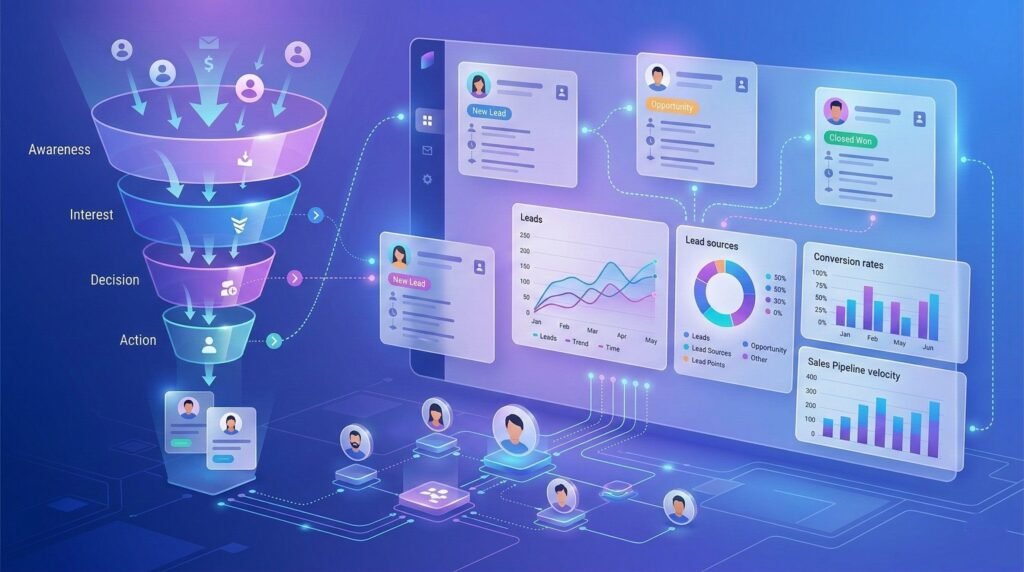
Lead management is an important part of sales growth. Businesses may generate hundreds or thousands of leads through Google Ads, Meta Ads, SEO, websites, social media, landing pages, referrals, and other channels.
Without an organized process, some leads may not receive timely follow-ups.
CRM Software Development can help businesses automatically capture and organize leads.
A customized CRM can assign leads to sales representatives, categorize them according to source, set follow-up reminders, and move prospects through different sales stages.
For example, a typical sales pipeline may include:
New Lead → Contacted → Qualified → Proposal Sent → Negotiation → Converted
Using CRM Software Development, businesses can create pipelines that reflect their actual sales process.
This makes it easier for managers to identify where prospects are dropping out and which sales activities are producing better results.
3. CRM Software Development Supports Sales Automation
Sales teams often spend considerable time performing repetitive administrative activities. Updating records, scheduling follow-ups, sending emails, assigning leads, and preparing reports can consume valuable working hours.
Automation is one of the strongest benefits of CRM Software Development.
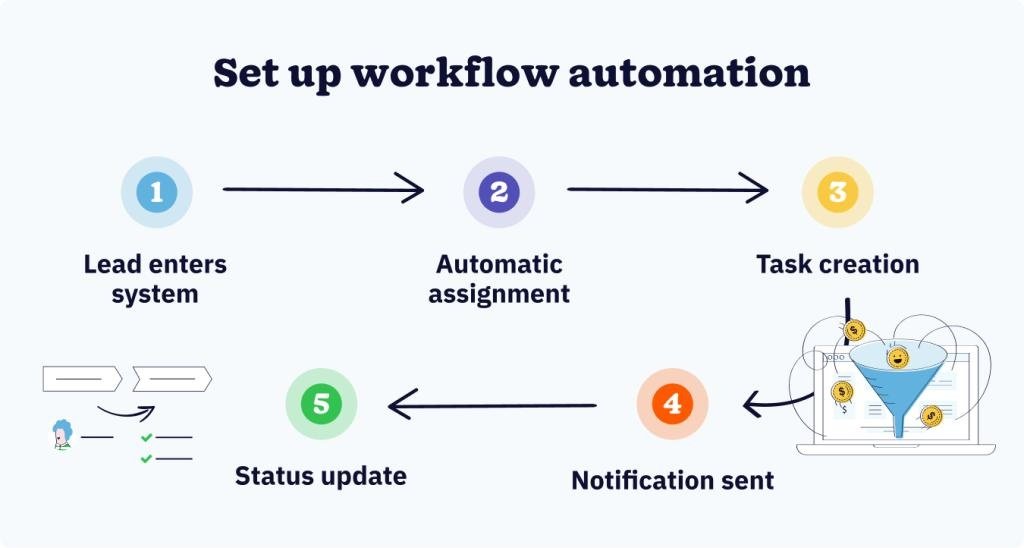
A customized CRM can automate activities such as:
- Lead assignment
- Follow-up reminders
- Email notifications
- Customer updates
- Sales task creation
- Lead status changes
- Appointment reminders
- Internal notifications
- Report generation
For instance, when a new lead arrives through a website form, the CRM can automatically create a customer record, notify the assigned salesperson, send an acknowledgment message, and schedule a follow-up task.
This type of CRM Software Development allows employees to focus more on meaningful customer interactions instead of repetitive administrative work.
4. CRM Software Development Enhances Customer Communication
Customer communication can become complicated when conversations happen through different channels.
A customer may contact a business through a website, WhatsApp, email, phone call, Facebook, Instagram, or another communication channel. If these conversations are not properly organized, employees may lose important context.
Modern CRM Software Development can integrate communication channels into business workflows.
For example, CRM integration can connect:
- Website forms
- Live chat
- SMS
- Voice communication
- Social media leads
When communication data is connected with customer records, employees can understand the customer’s history before starting a new conversation.
This creates a smoother customer experience and makes CRM Software Development a valuable component of modern customer relationship management.
5. CRM Software Development Enables Customized Business Workflows
Every organization operates differently. A real estate company, hospital, educational institution, digital marketing agency, e-commerce company, and manufacturing business may have completely different customer journeys.
Generic CRM platforms may not always accommodate specialized workflows.
This is where customized CRM Software Development becomes valuable.
A business can create workflows based on its own requirements.
For example, a real estate CRM may require:
- Property listings
- Buyer inquiries
- Site visit scheduling
- Broker management
- Property matching
- Booking status
A digital marketing agency may need:
- Client onboarding
- Campaign tracking
- Task allocation
- Content approval
- Lead management
- Reporting
With CRM Software Development, businesses can design features and workflows that match their operational structure rather than changing their processes to accommodate generic software.
6. CRM Software Development Improves Marketing Automation
Marketing and sales teams need to work together to convert prospects into customers.
CRM Software Development can connect marketing activities with customer data and sales processes.
Businesses can automate marketing activities such as:
- Email campaigns
- Lead nurturing
- Customer segmentation
- Follow-up messages
- Promotional notifications
- Remarketing workflows
- Campaign tracking
Suppose a visitor downloads an e-book from a website. The CRM can automatically add the person to a lead segment and initiate a relevant email sequence.
Similarly, leads that do not respond to initial communication can be placed into nurturing workflows.
This makes CRM Software Development useful for businesses looking to create consistent communication without manually contacting every prospect.
7. CRM Software Development Strengthens Customer Retention
Acquiring new customers is important, but retaining existing customers can also contribute significantly to sustainable growth.
A CRM system can help businesses understand customer activity and identify opportunities for continued engagement.
Through CRM Software Development, companies can maintain records of:
- Previous purchases
- Customer preferences
- Complaints
- Support requests
- Communication history
- Renewal dates
- Feedback
- Service requirements
Businesses can then create automated reminders for renewals, follow-ups, service appointments, or promotional offers.
A customer who receives relevant and timely communication is more likely to have a positive experience.
Therefore, CRM Software Development can support both customer acquisition and long-term relationship management.
8. CRM Software Development Provides Better Business Analytics
Business decisions become more effective when they are supported by reliable data.
Traditional methods of preparing reports manually can be time-consuming and may create inconsistencies.
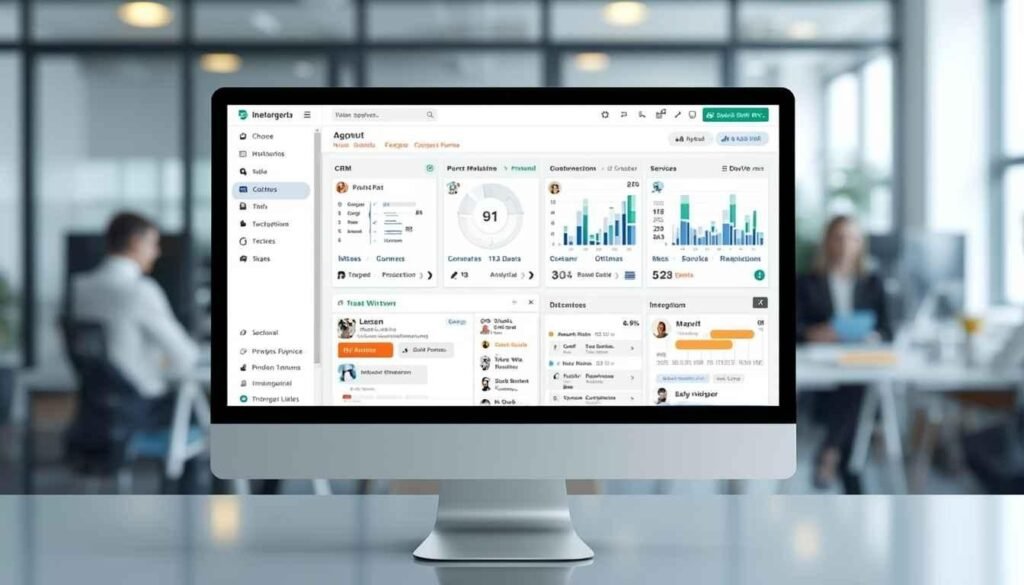
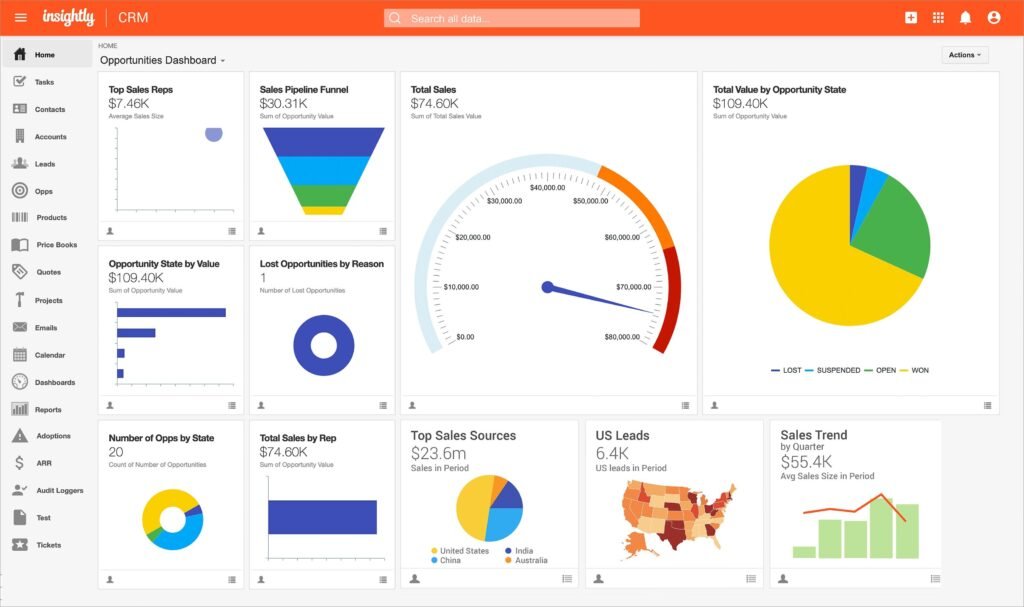
With CRM Software Development, businesses can create customized dashboards and reports.
Management can monitor information such as:
- Number of new leads
- Lead conversion rate
- Sales revenue
- Sales pipeline value
- Employee performance
- Lead sources
- Campaign performance
- Customer retention
- Follow-up activities
For example, if a company receives leads from Google Ads, Instagram, and organic search, a CRM dashboard can help compare the performance of each channel.
This allows businesses to make informed marketing and sales decisions.
Data-driven reporting is one of the reasons CRM Software Development has become increasingly important for growing organizations.
9. CRM Software Development Can Integrate Multiple Business Tools
Businesses rarely depend on one software application.
A company may use accounting software, email platforms, payment gateways, advertising systems, communication tools, websites, analytics platforms, and customer support applications.
Without integration, employees may need to enter the same information multiple times.
CRM Software Development can connect different systems through APIs and integrations.
Possible integrations include:
- Payment gateways
- Email platforms
- WhatsApp solutions
- SMS services
- Google Analytics
- Advertising platforms
- Accounting software
- E-commerce platforms
- Websites
- Chatbots
- Customer support systems
These integrations reduce manual data entry and improve information flow across departments.
As a result, CRM Software Development can become a central technology layer connecting multiple business operations.
10. CRM Software Development Supports Mobile Access
Modern employees are not always working from a desktop computer. Sales professionals, managers, field employees, consultants, and business owners may need customer information while traveling or working remotely.
Mobile CRM applications can provide access to important information from smartphones and tablets.
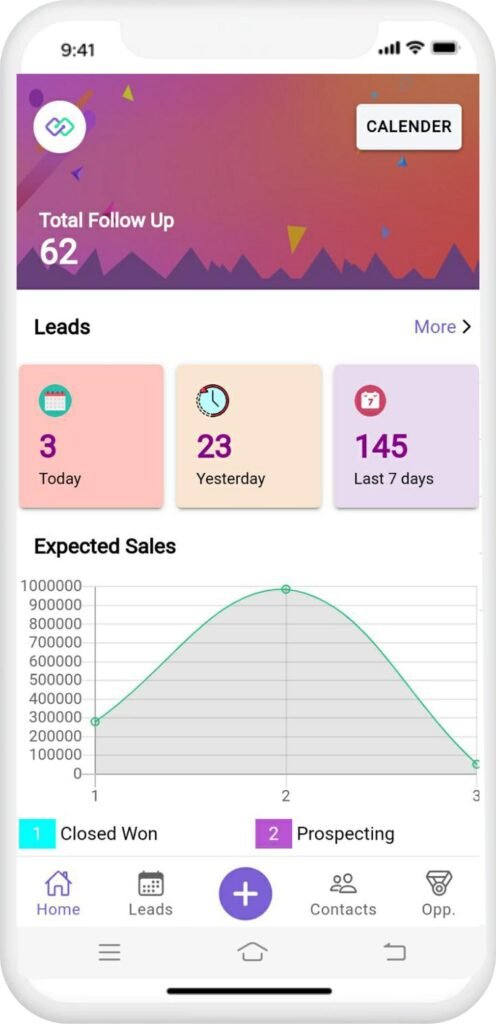
With mobile-focused CRM Software Development, businesses can provide features such as:
- Mobile lead management
- Customer records
- Task management
- Notifications
- Sales updates
- Follow-up reminders
- Communication history
- Sales reporting
For field sales teams, mobile CRM access can be particularly valuable because employees can update information immediately after meetings.
This makes CRM Software Development more flexible and suitable for modern hybrid and mobile work environments.
11. CRM Software Development Can Incorporate AI and Chatbots
Artificial intelligence is increasingly becoming part of business automation.
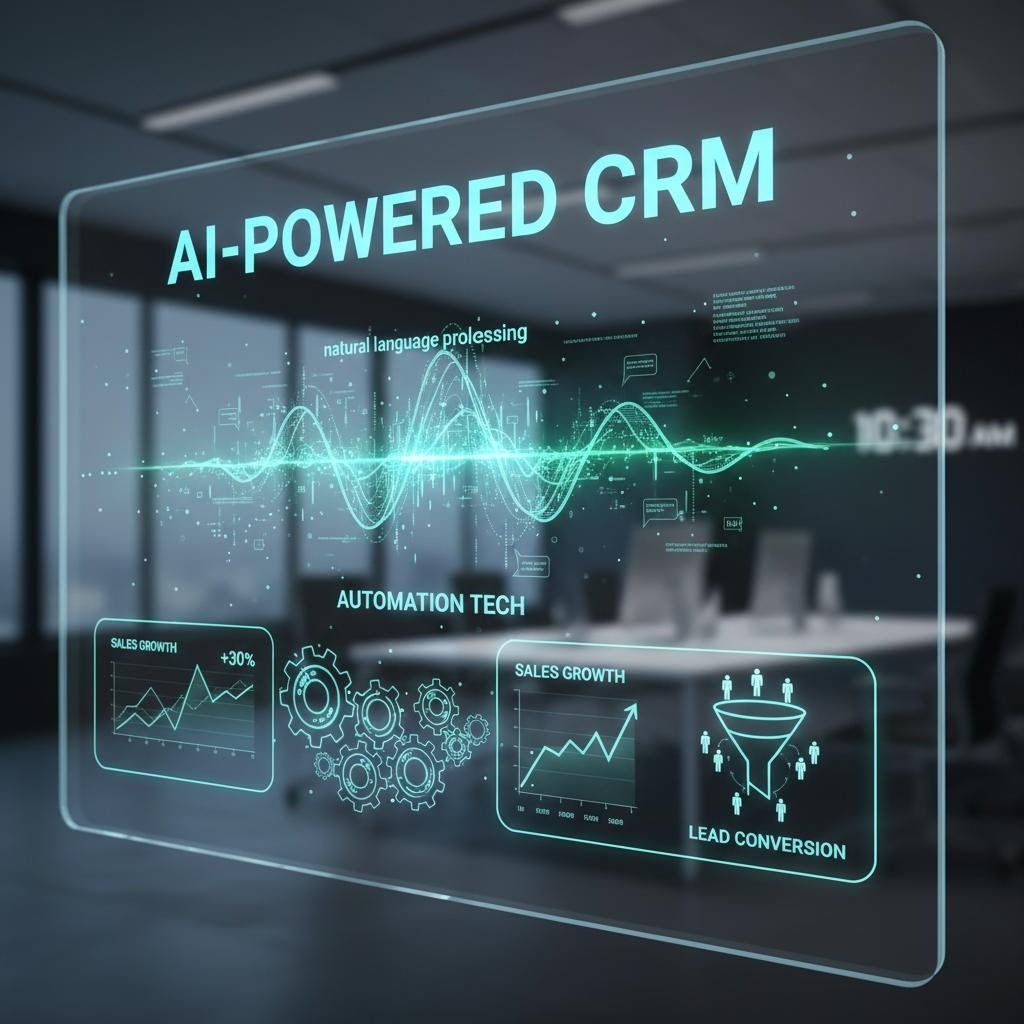
Modern CRM Software Development can incorporate AI-powered features to improve customer support, lead qualification, communication, and productivity.
AI-powered CRM solutions may help businesses with:
- Lead scoring
- Automated responses
- Customer segmentation
- Chatbot communication
- Predictive analytics
- Sales recommendations
- Email assistance
- Customer query classification
AI chatbots can respond to frequently asked questions and collect basic customer information before passing qualified prospects to human representatives.
For businesses receiving inquiries outside working hours, chatbot integration can help maintain communication availability.
As AI technology continues to evolve, CRM Software Development can provide businesses with opportunities to automate increasingly sophisticated processes.
12. CRM Software Development Improves Team Productivity
When employees have access to organized information and automated workflows, they can spend less time searching for data and performing repetitive tasks.
CRM Software Development can help different departments work from the same customer information.
Sales teams can manage prospects.
Marketing teams can track campaigns.
Customer support teams can access customer history.
Managers can monitor performance.
Business owners can review reports.
This shared environment improves collaboration and reduces information gaps.
A well-planned CRM Software Development project should therefore consider not only technical features but also how different teams will use the system in their daily activities.
13. CRM Software Development Helps Businesses Scale
A CRM that works for a small organization may need additional capabilities as the company grows.
More customers mean more records. More employees mean more users. More marketing campaigns mean more lead sources. More transactions mean more data.
Scalability should therefore be considered during CRM Software Development.
A scalable CRM can support:
- Additional users
- Larger databases
- Multiple departments
- Multiple sales pipelines
- Advanced reporting
- New integrations
- Additional automation
- Increased communication volume
Planning for scalability from the beginning can reduce the need for expensive technology changes later.
For growing organizations, CRM Software Development can provide a technology foundation that evolves alongside the business.
Key Features to Consider in CRM Software Development
A successful CRM project should be designed according to the organization’s actual requirements.
Some commonly requested features include:
Lead Management
Capture, organize, assign, qualify, and track leads throughout the sales process.
Customer Management
Maintain customer profiles, interaction history, documents, preferences, and other relevant information.
Sales Pipeline
Create customizable stages to monitor prospects from initial inquiry to conversion.
Task and Follow-Up Management
Create reminders, assign tasks, and ensure important follow-ups are not missed.
Communication Integration
Connect email, WhatsApp, SMS, live chat, and other communication channels.
Marketing Automation
Automate lead nurturing, email campaigns, segmentation, and promotional communication.
Analytics Dashboard
Display business performance through customized dashboards and reports.
User Management
Control user roles, permissions, departments, and access levels.
Mobile Compatibility
Allow authorized employees to access CRM information from mobile devices.
Third-Party Integration
Connect the CRM with existing business applications and platforms.
These features can be customized according to the requirements of each business through professional CRM Software Development.
How CRM Software Development Works
A professional CRM project generally follows a structured development process.
1. Requirement Analysis
The development team first understands the company’s business model, customer journey, existing software, challenges, and objectives.
2. Planning
The required modules, integrations, workflows, user roles, database structure, and technical architecture are planned.
3. UI/UX Design
The interface is designed to ensure that users can navigate the system easily.
4. Development
Developers build the CRM modules and integrate required technologies.
5. Integration
External systems such as payment platforms, websites, communication services, analytics tools, or marketing platforms can be connected.
6. Testing
The system is tested for functionality, security, performance, usability, and compatibility.
7. Deployment
After successful testing, the CRM is deployed for business use.
8. Maintenance and Improvements
Ongoing support, updates, security improvements, new integrations, and feature enhancements can be provided.
A structured CRM Software Development process helps minimize implementation issues and ensures that the final solution supports business objectives.
Custom CRM vs Ready-Made CRM Software
Businesses often have to decide between purchasing ready-made CRM software and investing in custom CRM Software Development.
Ready-made CRM solutions can be useful when a company requires standard features and wants quick implementation.
Custom CRM development may be more appropriate when a business has specialized workflows, complex integrations, unique reporting requirements, or specific automation needs.
Ready-Made CRM
- Faster implementation
- Standardized features
- Subscription-based pricing
- Limited customization in some cases
- Suitable for common business processes
Custom CRM
- Designed around business requirements
- Greater flexibility
- Custom workflows
- Specialized integrations
- Custom dashboards
- Greater control over features
The right approach depends on business size, budget, operational complexity, technical requirements, and long-term goals.
Benefits of Choosing Professional CRM Software Development Services
Working with an experienced development and digital technology team can make the implementation process more structured.
Professional CRM Software Development services can help businesses with:
- Requirement analysis
- CRM architecture
- UI/UX design
- Custom development
- API integrations
- Automation
- Security implementation
- Testing
- Deployment
- Maintenance
- Technical support
Businesses should evaluate developers based on their technical expertise, understanding of business processes, communication, development methodology, support capabilities, and ability to build scalable solutions.
A CRM should not simply look modern. It should solve actual business problems.
CRM Software Development and Digital Marketing Integration
CRM systems can become even more effective when combined with digital marketing services.
A business may generate traffic through SEO, Google Ads, Meta Ads, social media marketing, content marketing, and other digital channels.
When these activities are connected with CRM Software Development, businesses can better understand where leads originate and how they move through the sales funnel.
For example:
SEO → Website Visit → Lead Form → CRM → Sales Follow-Up → Conversion
Similarly:
Meta Ads → Lead Generation → CRM → Automated Follow-Up → Sales Team → Customer
This connected approach helps organizations understand marketing performance and customer journeys more effectively.
CRM Software Development for Small and Medium Businesses
CRM systems are not limited to large enterprises.
Small and medium-sized businesses can also benefit from CRM Software Development when customer management becomes difficult to handle manually.
A smaller organization may begin with essential features such as lead management, customer records, follow-up reminders, communication integration, and reporting.
As the business grows, additional automation and integrations can be introduced.
This gradual approach allows businesses to develop technology according to their changing requirements.
How to Choose the Right CRM Software Development Partner
Selecting the right development partner is an important decision.
Before starting a project, businesses should consider:
- Understanding of business requirements
- Experience with CRM systems
- Development expertise
- Integration capabilities
- Security practices
- Scalability
- UI/UX capabilities
- Post-launch support
- Communication process
- Project transparency
A good development partner should focus on business outcomes rather than simply delivering software.
The objective of CRM Software Development should be to create a system that improves efficiency, customer experience, sales processes, reporting, and long-term business operations.
Why Businesses Should Invest in CRM Software Development
Customer expectations are changing rapidly. Businesses need to respond quickly, communicate consistently, and maintain accurate customer information.
Manual processes can become difficult to manage as the number of customers and leads increases.
CRM Software Development provides an opportunity to bring customer data, sales processes, communication, automation, analytics, and marketing activities together.
A customized CRM can help businesses:
- Reduce repetitive work
- Improve lead follow-up
- Organize customer data
- Increase sales visibility
- Improve communication
- Automate business processes
- Monitor performance
- Support customer retention
- Integrate multiple tools
- Prepare for business growth
The long-term value of CRM Software Development comes from creating a system that works around the business and evolves with it.
Digital Marketing India – CRM Software Development and Technology Services
Businesses looking for technology, marketing, automation, and digital growth solutions can work with Saurabh Kumar, who brings 15+ years of experience in digital marketing.
Digital Marketing India offers a broad range of services designed to help businesses establish, promote, automate, and grow their digital presence.

Website & App Development
Services include business website development, e-commerce website development, custom web applications, Android and iOS mobile applications, landing pages, and website maintenance and support.
SEO Services
The SEO portfolio includes local SEO, on-page SEO, off-page SEO, technical SEO, e-commerce SEO, Google Business Profile optimization, SEO audits, and competitor analysis.
Social Media Marketing
Businesses can leverage Facebook marketing, Instagram marketing, LinkedIn marketing, YouTube marketing, social media management, content creation, and social media strategy.
Paid Advertising
Services include Meta Ads, Google Ads, YouTube Ads, LinkedIn Ads, remarketing campaigns, and lead generation campaigns.
Automation & Communication Solutions
Digital Marketing India provides WhatsApp marketing, bulk SMS marketing, IVR and promotional voice calls, WhatsApp chatbot development, AI chatbot development, website live chat integration, marketing automation, CRM integration, email marketing automation, and lead nurturing automation.
Creative Services
Creative solutions include graphic designing, social media creatives, logo design, banners, brochures, and brand identity design.
Video Production
Video services include video editing, reels editing, YouTube video editing, corporate videos, motion graphics, and promotional videos.
Content Marketing
Content services include content writing, blog writing, website content, SEO content, and advertising copywriting.
Analytics & Reporting
Businesses can benefit from Google Analytics setup, conversion tracking, performance reports, and ROI analysis.
Online Reputation Management
Services include Google review management, brand monitoring, and online reputation building.
For businesses that need a combination of marketing, technology, automation, and customer management solutions, integrating CRM Software Development with digital marketing can create a more connected growth ecosystem.
Conclusion
In an increasingly competitive marketplace, businesses need systems that can manage customer relationships while supporting sales, marketing, communication, automation, and business intelligence.
CRM Software Development allows organizations to move beyond basic customer databases and build customized platforms around their unique operational requirements.
From lead capture and sales automation to communication integration, analytics, AI chatbots, marketing automation, and mobile access, a properly developed CRM can improve the way businesses manage customers and internal processes.
The right CRM strategy can reduce manual work, improve follow-up consistency, strengthen customer relationships, provide valuable business insights, and support long-term scalability.
If your business is struggling with scattered customer information, missed follow-ups, disconnected communication channels, or repetitive manual processes, investing in professional CRM Software Development can be an important step toward building a more organized and efficient digital operation.
For businesses seeking CRM, automation, website, SEO, paid advertising, social media, content, analytics, and digital growth solutions, Saurabh Kumar, with 15+ years of digital marketing experience, provides a broad range of digital services through Digital Marketing India.
Official Address:
S15-00709, Vaidehi Niwas, Bhairomunna Link Road
Sahnewal, Ludhiana, Punjab – 141120
Contact: +91 76966 77728
20 SEO Tags
CRM Software Development, custom CRM development, CRM development company, CRM software, custom CRM software, CRM solutions, CRM development services, customer relationship management, CRM automation, sales CRM software, lead management software, CRM integration, business automation software, CRM application development, CRM system development, digital marketing services, marketing automation, AI CRM software, CRM chatbot development, business software development