
Introduction
If you want to learn how to analyse Sarvatobhadra Chakra, you are exploring one of the specialised and fascinating techniques of traditional Vedic astrology. Sarvatobhadra Chakra is a Nakshatra-based system that brings multiple astrological factors together in a structured format. For students and astrology enthusiasts, understanding how to analyse Sarvatobhadra Chakra can provide a deeper perspective on planetary transits, Vedha and different sensitive points used in predictive astrology.
Unlike a conventional Kundli, where astrologers primarily examine planets, houses, zodiac signs, Dashas and planetary relationships, Sarvatobhadra Chakra presents several important astrological reference points within a systematic grid. The technique traditionally considers Nakshatras, Rashis, Tithis, weekdays and Aksharas, allowing an astrologer to study planetary influences from a different perspective.
Understanding the Basic Structure
Before learning how to analyse Sarvatobhadra Chakra, it is important to understand its basic structure. The Chakra is traditionally represented as a 9 × 9 grid, within which different Nakshatras and other astrological reference points are arranged. The system traditionally works with 28 Nakshatras, including Abhijit, along with Rashis, Tithis, weekdays and syllables associated with names.
For beginners, this arrangement may initially appear complicated. However, once the structure is understood clearly, how to analyse Sarvatobhadra Chakra becomes easier to follow. The most important concept to understand is Vedha, which refers to the influence or obstruction created by a planet on specific sensitive points of the Chakra.
Why Vedha Is Important
When studying how to analyse Sarvatobhadra Chakra, Vedha is one of the fundamental concepts that students need to understand. Planetary movement through particular Nakshatras and other points can create different types of influences. These influences are then interpreted according to the nature of the planet, the affected point and the broader astrological context.
This is why learning how to analyse Sarvatobhadra Chakra should not be limited to memorising the chart. Students should understand the relationship between planetary transit, Nakshatra, Vedha and the relevant points of the Chakra.
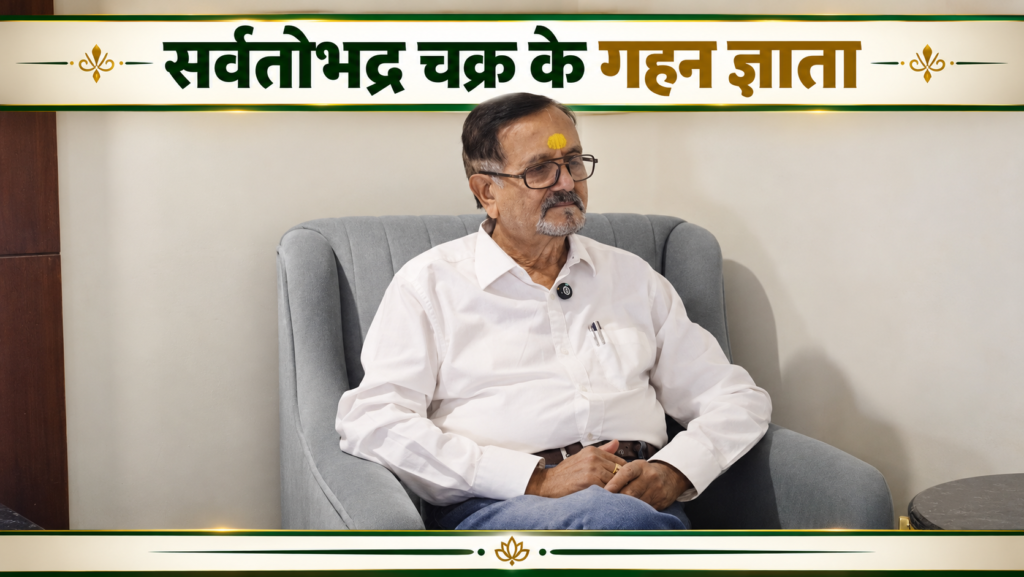
Learning from Dr. Raghav Bhatt
For students who want to understand how to analyse Sarvatobhadra Chakra in a more structured manner, learning from an experienced Vedic astrology expert can be helpful. Dr. Raghav S. Bhatt is a Vedic astrologer, Vastu Shastra expert and numerologist with extensive experience in Vedic sciences. His areas of expertise include KP Astrology, Nadi Astrology, Tarot readings and matchmaking, along with other traditional astrology-related disciplines.
Dr. Raghav Bhatt’s educational approach can help astrology learners understand advanced concepts in a practical and organised manner. Students interested in how to analyse Sarvatobhadra Chakra can benefit from studying the underlying principles rather than simply memorising placements and rules.
Digital Presence by Digital Marketing India
Team Digital Marketing India is associated with Dr. Raghav Bhatt and manages his social media handles and digital presence. Our team works on social media management, content creation and digital communication to help present his astrology-related knowledge and educational content to a wider audience.
Through digital platforms, learners can discover information about astrology, Vedic sciences and educational opportunities associated with Dr. Raghav Bhatt. This digital presence also makes it easier for students interested in how to analyse Sarvatobhadra Chakra to find relevant information and connect with the team.
Start Learning Sarvatobhadra Chakra
If you are a beginner, do not feel overwhelmed by the complexity of the Chakra. Start by understanding its structure, learn the Nakshatras and other reference points, and then gradually study Vedha and planetary transits. With consistent practice, how to analyse Sarvatobhadra Chakra becomes much easier to understand and apply.
This guide will take you through the important concepts step by step so that you can build a clear foundation before moving towards advanced interpretation. If you are interested in learning how to analyse Sarvatobhadra Chakra through structured classes and expert guidance, you can contact Team Digital Marketing India at +91 76966 77728 for more information.

1. How to Analyse Sarvatobhadra Chakra by Understanding Its Basic Structure
The first step in learning how to analyse Sarvatobhadra Chakra is to understand what the Chakra represents.
Sarvatobhadra Chakra is traditionally drawn as a 9 × 9 square containing 81 divisions. Different schools may display or orient the Chakra slightly differently, but its fundamental purpose remains the same: multiple astrological indicators are placed together so that planetary influences can be studied through Vedha.
The Chakra can incorporate:
- 28 Nakshatras, including Abhijit
- 12 Rashis
- Tithis or Tithi groups
- Seven weekdays
- Sanskrit vowels and consonants
- Name-related Aksharas
- Planetary transit positions
The outer portion of the Chakra is associated primarily with the Nakshatras. The inner sections contain other astrological factors.
This arrangement makes Sarvatobhadra Chakra different from an ordinary birth chart. Instead of simply asking which house a planet occupies, the astrologer examines which points of the Chakra are being affected by planetary Vedha.
Therefore, understanding the layout is essential before attempting an interpretation.
2. How to Analyse Sarvatobhadra Chakra Through the 28 Nakshatras
A major part of learning how to analyse Sarvatobhadra Chakra involves understanding its Nakshatra system.
Most Vedic astrology calculations commonly work with 27 Nakshatras. Sarvatobhadra Chakra traditionally includes 28 Nakshatras by adding Abhijit. Abhijit is placed between Uttara Ashadha and Shravana in this system.
The Nakshatras form the outer framework of the Chakra.
This is important because planets are generally positioned in the Chakra according to the Nakshatra they occupy rather than simply according to their zodiac sign.
For example, suppose Jupiter is transiting a particular Nakshatra. In Sarvatobhadra analysis, the astrologer identifies Jupiter’s Nakshatra position and then examines the Vedha lines associated with that position.
Similarly, the Moon’s birth Nakshatra can be marked as an important reference point.
This is why knowing the native’s Janma Nakshatra is one of the first requirements for a detailed personal analysis.
The inclusion of Abhijit also means that astrologers should not automatically assume that the standard 27-Nakshatra arrangement is identical to the Sarvatobhadra arrangement.
3. How to Analyse Sarvatobhadra Chakra Using Janma Nakshatra
To understand how to analyse Sarvatobhadra Chakra for an individual, start with the Moon’s Nakshatra at birth.
The Nakshatra occupied by the Moon at the time of birth is generally called the Janma Nakshatra.
This Nakshatra becomes an important reference point for transit analysis.
The astrologer can then observe which transiting planets are creating Vedha with respect to the Janma Nakshatra.
A simple approach is:
- Identify the birth Moon Nakshatra.
- Locate that Nakshatra on the Sarvatobhadra Chakra.
- Calculate the current planetary positions.
- Place the transiting planets in their corresponding Nakshatras.
- Identify the Vedha lines produced by those planets.
- Check whether those lines affect the Janma Nakshatra.
- Evaluate whether the influence is supportive, challenging or mixed.
This should not be interpreted as an isolated prediction.
A planet affecting the Janma Nakshatra does not automatically mean that something negative or positive must happen. The result needs to be considered alongside the natal horoscope, planetary strength, Dashas and other relevant factors.
4. How to Analyse Sarvatobhadra Chakra and Understand Vedha
The most important concept when learning how to analyse Sarvatobhadra Chakra is Vedha.
The Sanskrit term Vedha is commonly associated with piercing, obstruction or a directed planetary influence. In Sarvatobhadra Chakra, planets placed in particular Nakshatra positions create specific lines of influence across the Chakra.
Traditional systems describe these Vedha relationships using straight and diagonal lines across the grid. Some modern implementations describe three major lines from a planetary position: one straight line and two diagonal lines.
These lines can touch different elements within the Chakra.
For example, a planetary Vedha may affect:
- A Nakshatra
- A Rashi
- A Tithi group
- A weekday
- A vowel
- A consonant
- A name-related Akshara
This is what makes the system particularly interesting.
Instead of examining one planetary influence in isolation, the astrologer can see whether the same transit is simultaneously connected with several sensitive points.
The nature of the planet must also be considered.
Traditionally, benefic and malefic planets can produce different types of results. Jupiter and Venus are generally considered benefic influences, while Saturn, Mars, Rahu and Ketu may create stronger challenging influences depending on the context.
However, planetary nature alone should never be used to make an absolute prediction.
5. How to Analyse Sarvatobhadra Chakra for Planetary Transits
Another important part of learning how to analyse Sarvatobhadra Chakra is studying planetary transits.
Sarvatobhadra Chakra is particularly useful as a transit-oriented technique. The astrologer maps the current planetary positions onto the Chakra and then checks their Vedha relationships.
The nine major planetary influences generally considered are:
- Sun
- Moon
- Mars
- Mercury
- Jupiter
- Venus
- Saturn
- Rahu
- Ketu
Each planet’s current Nakshatra becomes important.
Fast-moving planets can produce short-term influences, while slower planets such as Jupiter and Saturn may create longer-lasting patterns.
The Moon is especially important for short-term analysis because it changes Nakshatra relatively quickly.
For practical prediction, an astrologer may compare the current transit positions with the native’s:
- Janma Nakshatra
- Moon sign
- Lagna Nakshatra
- Name Akshara
- Relevant Tithi
- Relevant Rashi
This provides a more comprehensive picture than looking at one factor alone.
6. How to Analyse Sarvatobhadra Chakra Through Planetary Nature
To improve your understanding of how to analyse Sarvatobhadra Chakra, you should also understand the nature of the planets involved.
A planetary Vedha should not be interpreted simply as “good” or “bad.”
The planet’s natural characteristics, current strength, movement and relationship with the relevant natal factors should be considered.
For example:
Jupiter: Traditionally associated with wisdom, expansion, learning, prosperity and guidance.
Venus: Associated with relationships, comfort, creativity, luxury and harmony.
Mercury: Associated with communication, intelligence, business, analysis and learning.
Moon: Connected with emotions, mind, public response and daily fluctuations.
Sun: Associated with authority, confidence, leadership and vitality.
Mars: Connected with energy, action, competition, courage and conflict.
Saturn: Associated with discipline, responsibility, delays, endurance and long-term lessons.
Rahu: Often associated with unconventional developments, ambition, uncertainty and sudden changes.
Ketu: Traditionally associated with detachment, spirituality, separation and unusual experiences.
The actual result depends on the context.
For example, Saturn’s influence may feel restrictive in one situation but may support discipline and long-term achievement in another.
Therefore, how to analyse Sarvatobhadra Chakra correctly requires interpretation rather than simply counting planetary contacts.
7. How to Analyse Sarvatobhadra Chakra Using Rashi, Tithi and Vara
A complete approach to how to analyse Sarvatobhadra Chakra should not focus only on Nakshatras.
The Chakra also brings other calendar and zodiac factors into the same framework.
Rashi
The 12 Rashis are incorporated into the Chakra. When a planetary Vedha touches a relevant Rashi, the astrologer can examine whether that sign has importance in the natal chart.
Tithi
Tithi represents the lunar day. Sarvatobhadra systems commonly organise Tithis into groups such as Nanda, Bhadra, Jaya, Rikta and Purna.
Vara
Vara refers to the weekday. The seven weekdays are also represented within the Chakra.
These factors allow an astrologer to examine the quality of a particular day or Muhurta.
For example, when selecting a date for an important activity, an astrologer may check the day’s Nakshatra, Tithi, Vara and planetary Vedha together.
This is one reason Sarvatobhadra Chakra is traditionally associated with Muhurta and timing analysis.
8. How to Analyse Sarvatobhadra Chakra Through Name Akshara
One of the distinctive features of learning how to analyse Sarvatobhadra Chakra is the role of letters and syllables.
The Chakra contains Sanskrit vowels and consonants that can be connected with the first sound or Akshara of a person’s name.
This provides another entry point for interpretation.
For example, if the first sound of a person’s name corresponds to a particular Akshara represented in the Chakra, the astrologer can examine whether current planetary Vedha is affecting that point.
This can be especially useful when analysing a person, organisation, place or event through name-based references.
However, name-based analysis should be treated as an additional layer rather than a replacement for a complete horoscope.
When accurate birth information is available, the Janma Nakshatra and natal chart provide important additional context.
The name Akshara can then be used as a supplementary indicator.
9. How to Analyse Sarvatobhadra Chakra for Muhurta Selection
One of the practical applications of how to analyse Sarvatobhadra Chakra is choosing an appropriate time for an important activity.
Muhurta means selecting a favourable time for starting an activity.
Traditional applications of Sarvatobhadra Chakra include examining whether the selected time is affected by unfavourable planetary Vedha.
A basic Muhurta workflow can include:
- Select the proposed date.
- Calculate the day’s Tithi.
- Identify the weekday.
- Identify the Nakshatra.
- Calculate planetary positions.
- Place the planets in the Sarvatobhadra Chakra.
- Check the Vedha affecting sensitive points.
- Compare benefic and challenging influences.
- Verify the Muhurta using other relevant Jyotish principles.
This approach can be applied to activities such as:
- Business launches
- Travel
- Important meetings
- Ceremonies
- Property-related activities
- Religious functions
- Major professional decisions
Sarvatobhadra Chakra should ideally be used as one layer of Muhurta analysis rather than the only deciding factor.
10. How to Analyse Sarvatobhadra Chakra by Combining It With the Birth Chart
The most reliable way to understand how to analyse Sarvatobhadra Chakra is to avoid reading it in isolation.
A complete Vedic astrology analysis can combine:
- Birth chart
- Moon Nakshatra
- Lagna
- Planetary Dashas
- Current transits
- Sarvatobhadra Chakra
- Muhurta principles
- Other relevant Nakshatra techniques
Think of Sarvatobhadra Chakra as an additional analytical lens.
Suppose a person is experiencing career-related difficulties.
Instead of concluding that a single Saturn Vedha is responsible, an astrologer should examine the tenth house, tenth lord, relevant Dasha, Saturn’s natal condition, current transit and then use Sarvatobhadra Chakra to see whether the same theme receives additional support or pressure.
If multiple techniques indicate a similar trend, the interpretation becomes stronger.
This approach also reduces the risk of making exaggerated predictions from a single astrological indicator.
11. How to Analyse Sarvatobhadra Chakra Step by Step
Now that we have covered the important components, here is a simplified workflow for how to analyse Sarvatobhadra Chakra.
Step 1: Collect Accurate Birth Details
Use the correct date, time and place of birth whenever a personal analysis is required.
Step 2: Find the Janma Nakshatra
Identify the Nakshatra occupied by the Moon at birth.
Step 3: Prepare the Sarvatobhadra Grid
Use the traditional 9 × 9 arrangement containing Nakshatras and other reference points.
Step 4: Add the Relevant Birth Indicators
Mark the Janma Nakshatra, Moon sign, Lagna Nakshatra and relevant name Akshara where applicable.
Step 5: Calculate Current Transits
Find the current Nakshatra positions of the Sun, Moon, Mars, Mercury, Jupiter, Venus, Saturn, Rahu and Ketu.
Step 6: Place the Planets
Put each planet in its corresponding Nakshatra position on the Chakra.
Step 7: Identify Vedha
Draw or calculate the relevant Vedha lines from each planetary position.
Step 8: Check Sensitive Points
Observe whether the Vedha affects the Janma Nakshatra, Moon sign, Lagna Nakshatra, name Akshara or other relevant points.
Step 9: Evaluate Planetary Nature
Determine whether the influencing planets are traditionally benefic, malefic or mixed in the context of the chart.
Step 10: Compare With the Natal Horoscope
Check whether the Sarvatobhadra indication is supported by the birth chart and current Dasha.
Step 11: Make a Balanced Interpretation
Do not make absolute predictions from one Vedha. Consider the entire astrological picture.
This systematic approach makes the process easier for both students and practising astrologers.
Common Mistakes While Learning How to Analyse Sarvatobhadra Chakra
While learning how to analyse Sarvatobhadra Chakra, beginners often make a few common mistakes.
Looking Only at One Planet
A single planetary influence rarely provides the complete picture.
Ignoring Planetary Motion
Traditional Sarvatobhadra methods can consider whether planets are moving normally, quickly or retrograde when evaluating Vedha.
Treating Every Vedha as Negative
Vedha represents an influence or contact. Its result depends on the planet and the point being affected.
Ignoring the Natal Horoscope
Sarvatobhadra Chakra should generally complement, rather than completely replace, natal chart analysis.
Confusing Sarvatobhadra With Other Chakras
Sarvatobhadra Chakra, Navatara Chakra and other Nakshatra-based techniques have different structures and purposes. They should not be treated as interchangeable systems.
Making Absolute Predictions
Astrology involves interpretation. A responsible reading should avoid presenting one indicator as an unavoidable event.
Sarvatobhadra Chakra vs Traditional Transit Analysis
Sarvatobhadra Chakra and conventional transit analysis are related but not identical.
In traditional transit analysis, planets are generally studied through zodiac signs, houses and their relationships with the natal horoscope.
Sarvatobhadra Chakra instead organises Nakshatras, Rashis, Tithis, weekdays and Aksharas into a grid and evaluates planetary influence through Vedha.
This makes the Chakra particularly useful when an astrologer wants to investigate a transit from a Nakshatra-oriented perspective.
Using both methods together can provide a broader interpretation.
Why Sarvatobhadra Chakra Is Important in Vedic Astrology
The main strength of Sarvatobhadra Chakra is its ability to bring multiple factors into one visual framework.
Instead of separately checking the Nakshatra, Tithi, Rashi, weekday and name-related syllable, the astrologer can observe how planetary influences interact with these reference points on one Chakra.
This makes it useful for:
- Transit analysis
- Muhurta
- Nakshatra-based predictions
- Event timing
- Travel-related analysis
- Name-based analysis
- Comparative astrological study
- Confirming indications from a horoscope
Its complexity is also the reason why beginners should learn the system step by step.
The goal is not simply to identify a Vedha but to understand what is being affected, which planet is causing the influence, how strong the influence may be and whether the natal horoscope confirms the indication.
Frequently Asked Questions About How to Analyse Sarvatobhadra Chakra
What is Sarvatobhadra Chakra?
Sarvatobhadra Chakra is a traditional Vedic astrology technique represented through a 9 × 9 grid. It brings Nakshatras, Rashis, Tithis, weekdays and name-related letters together for specialised transit and Muhurta analysis.
How many Nakshatras are used in Sarvatobhadra Chakra?
The traditional system uses 28 Nakshatras, including Abhijit. This differs from the commonly used 27-Nakshatra framework used in many other Vedic astrology calculations.
What does Vedha mean?
Vedha refers to the planetary influence or “piercing” relationship created between points of the Chakra. The exact Vedha rules depend on the traditional framework being followed.
Can Sarvatobhadra Chakra be used for Muhurta?
Yes. Sarvatobhadra Chakra has traditional applications in Muhurta and transit analysis, particularly for checking whether a proposed time has significant planetary afflictions or supportive influences.
Is Sarvatobhadra Chakra enough for a complete prediction?
It is better used as a specialised analytical technique rather than as a complete replacement for the birth chart, Dashas and other established Jyotish principles.
Is Sarvatobhadra Chakra the same as Navatara Chakra?
No. They are different Nakshatra-based systems. Sarvatobhadra Chakra uses a 9 × 9 framework with multiple astrological reference points, while Navatara Chakra classifies Nakshatras into nine Tara categories from the Janma Nakshatra.
Final Thoughts
Learning how to analyse Sarvatobhadra Chakra can add an advanced dimension to Vedic astrology practice. Its 9 × 9 structure, 28-Nakshatra framework, planetary Vedha, Tithi, Rashi, weekday and Akshara relationships make it a detailed system for studying transits and auspicious timing.
The most important principle is to avoid reading any single Vedha mechanically.
Start with the Janma Nakshatra, understand the Chakra structure, place the transiting planets, identify the Vedha, examine the affected points and finally compare the result with the natal horoscope and running planetary periods.
When used thoughtfully, Sarvatobhadra Chakra can become a valuable supporting technique for astrologers who want to explore Nakshatra-based transit analysis and Muhurta in greater depth.
For serious students of Vedic astrology, the best way to master this system is through repeated chart practice, comparison of planetary transits and careful observation of actual events.
About Saurabh Kumar
Saurabh Kumar has 15+ years of experience in Digital Marketing and works on SEO, digital branding, website development, social media marketing and performance marketing.

Digital Marketing India – Services
🌐 Website & App Development
- Business Website Development
- E-Commerce Website Development
- Custom Web Applications
- Mobile App Development – Android & iOS
- Landing Page Development
- Website Maintenance & Support
🔍 SEO Services
- Local SEO
- On-Page SEO
- Off-Page SEO
- Technical SEO
- E-Commerce SEO
- Google Business Profile Optimization
- SEO Audit & Competitor Analysis
📱 Social Media Marketing
- Facebook Marketing
- Instagram Marketing
- LinkedIn Marketing
- YouTube Marketing
- Social Media Management
- Content Creation & Strategy
🎯 Paid Advertising
- Meta Ads
- Google Ads
- YouTube Ads
- LinkedIn Ads
- Remarketing Campaigns
- Lead Generation Campaigns
🤖 Automation & Communication Solutions
- WhatsApp Marketing
- Bulk SMS Marketing
- Voice Call Marketing
- WhatsApp Chatbot Development
- AI Chatbot Development
- Website Live Chat Integration
- Marketing Automation
- CRM Integration
- Email Marketing Automation
- Lead Nurturing Automation
🎨 Creative Services
- Graphic Designing
- Social Media Creatives
- Logo Design
- Banner & Brochure Design
- Brand Identity Design
🎬 Video Production
- Video Editing
- Reels Editing
- YouTube Video Editing
- Corporate Videos
- Motion Graphics
- Promotional Videos
✍️ Content Marketing
- Content Writing
- Blog Writing
- Website Content Writing
- SEO Content Writing
- Ad Copywriting
📊 Analytics & Reporting
- Google Analytics Setup
- Conversion Tracking
- Performance Reports
- ROI Analysis
⭐ Online Reputation Management
- Google Review Management
- Brand Monitoring
- Online Reputation Building
Official Address
S15-00709, Vaidehi Niwas, Bhairomunna Link Road
Sahnewal, Ludhiana, Punjab – 141120
Contact: +91 76966 77728