
Introduction: Why Business CRM Software Matters Today
In today’s highly competitive digital marketplace, generating leads is only the beginning of the customer acquisition journey. Businesses need a reliable and organized system to manage what happens after a potential customer shows interest. Leads need to be captured properly, customer information needs to be organized, sales teams need timely follow-ups, and every interaction needs to be tracked. Without a structured process, valuable opportunities can easily be missed. This is where Business CRM Software becomes an essential technology for modern businesses.
A CRM, or Customer Relationship Management system, helps businesses centralize important customer and prospect information in one organized platform. Instead of maintaining separate spreadsheets, notebooks, email conversations, WhatsApp chats, call records, and customer databases, businesses can use Business CRM Software to bring relevant information together. This creates a clearer view of every customer and helps teams understand where each prospect stands in the sales journey.
One of the major advantages of Business CRM Software is improved lead management. When a business receives enquiries through its website, landing pages, Google Ads, social media campaigns, WhatsApp, phone calls, or other marketing channels, those leads can be recorded and organized systematically. Sales representatives can identify new enquiries, qualified prospects, follow-up opportunities, and customers who are ready to make a purchase.
Follow-ups are another important area where CRM technology can make a difference. A potential customer may not make a purchasing decision immediately. They may need additional information, a product demonstration, a quotation, or simply some time before making a decision. Business CRM Software can help sales teams schedule reminders and track follow-up activities, reducing the possibility of important opportunities being forgotten.
A centralized CRM system can also improve communication between departments. Sales teams, marketing teams, customer support representatives, and management can access relevant customer information according to their roles. This means employees do not have to depend entirely on individual team members for customer history or sales updates.
For startups and small businesses, Business CRM Software can provide structure as the organization grows. For larger companies, it can help manage complex sales pipelines, multiple teams, large customer databases, and high volumes of enquiries. Agencies and service providers can use CRM systems to organize prospects and clients, while e-commerce businesses can use them to manage customer relationships, repeat purchases, and marketing communication.
Another important advantage is automation. Businesses can automate repetitive tasks such as lead assignment, follow-up reminders, email communication, customer notifications, lead nurturing, and reporting. Automation allows employees to spend less time on administrative work and more time on activities that require human interaction and decision-making.
Modern Business CRM Software can also connect with digital marketing and communication tools. Integrations with websites, email marketing platforms, WhatsApp solutions, chatbots, advertising platforms, analytics tools, and other business applications can create a connected customer journey.
Ultimately, Business CRM Software is not simply a database for storing customer details. It is a business management system that can help organizations organize leads, improve customer communication, manage sales opportunities, automate workflows, and make data-driven decisions.
Whether a company is a startup, small business, growing organization, digital agency, service provider, e-commerce brand, or established enterprise, implementing the right Business CRM Software can improve productivity and create a more consistent, professional, and customer-focused experience.
1. What Is Business CRM Software?
Business CRM Software refers to Business Customer Relationship Management Software, a technology-based solution designed to help organizations manage, organize, and improve their relationships with both existing customers and potential prospects. In today’s business environment, companies interact with customers through multiple channels, including websites, social media, email, phone calls, online advertisements, WhatsApp, and other digital platforms. Managing all these interactions manually can become complicated, especially as the number of customers and leads increases. A CRM system provides businesses with a centralized and structured way to manage this information.
The primary purpose of Business CRM Software is to bring important customer and business information together in one place. Instead of maintaining separate spreadsheets, documents, contact lists, emails, and manually updated records, businesses can use a CRM platform to organize relevant information in a single system. This allows authorized team members to access customer information quickly and understand the history of interactions with a particular prospect or customer.
A modern Business CRM Software platform can store a wide range of information. This may include customer names, contact details, lead sources, previous conversations, sales activities, enquiry details, follow-up dates, assigned team members, tasks, purchase information, communication records, and sales pipeline stages. Having this information available in one centralized location can make daily business operations more organized and efficient.
One of the most valuable features of Business CRM Software is lead management. Businesses may receive enquiries from Google Ads, Meta Ads, websites, landing pages, social media, search engines, referrals, phone calls, and messaging platforms. Without a proper system, it can become difficult to determine which leads have been contacted, which prospects require follow-up, and which customers have already converted. CRM software can help organize these leads according to their current stage and source.
Business CRM Software can also help sales teams manage follow-ups more effectively. Employees can create tasks, schedule reminders, update customer information, and monitor the progress of individual opportunities. This reduces dependence on memory and manual tracking while helping teams maintain consistent communication with prospects.
Another important benefit is improved collaboration. When different departments have access to relevant CRM information, sales, marketing, customer support, and management teams can work with a clearer understanding of customer activity. This can reduce information gaps and improve internal coordination.
For businesses receiving leads through multiple channels, Business CRM Software becomes particularly useful because it can bring information from different customer touchpoints into a more organized workflow. Instead of treating every communication channel separately, businesses can develop a connected process for capturing, managing, nurturing, and converting leads.
Whether it is used by a startup, small business, digital marketing agency, service provider, e-commerce company, or established organization, Business CRM Software can provide a structured foundation for managing customer relationships. With the right setup, it can support lead management, sales tracking, communication, automation, reporting, and customer retention, helping businesses create a more efficient and professional approach to customer relationship management.
2. Business CRM Software for Lead Management
Lead management is one of the most important applications of Business CRM Software. Businesses invest significant time and money in generating leads through SEO, Google Ads, Meta Ads, social media, websites, landing pages, referrals, WhatsApp, and other channels.
Without a structured process, valuable leads can easily be forgotten.
Business CRM Software allows businesses to capture and organize leads systematically. Each lead can be categorized according to source, location, product interest, service requirement, sales stage, and other relevant criteria.
A business can use Business CRM Software to identify:
- New leads
- Contacted leads
- Qualified leads
- Follow-up leads
- Proposal-stage leads
- Negotiation-stage leads
- Converted customers
- Lost opportunities
This organized approach gives sales teams a clear understanding of their pipeline and reduces the chances of missing potential customers.
3. Business CRM Software Improves Customer Relationship Management
Strong customer relationships are essential for long-term business growth. Customers expect quick communication, personalized service, accurate information, and timely follow-ups.
Business CRM Software provides teams with customer history that can help them understand previous conversations and requirements before communicating with a customer.
Instead of asking a customer to repeatedly explain their situation, employees can review the information available in the CRM system.
A good Business CRM Software platform can maintain information such as:
- Customer contact details
- Previous enquiries
- Purchase history
- Communication records
- Follow-up dates
- Customer preferences
- Complaints or service requests
- Sales representative information
This helps create a more consistent customer experience.

4. Business CRM Software for Sales Pipeline Management
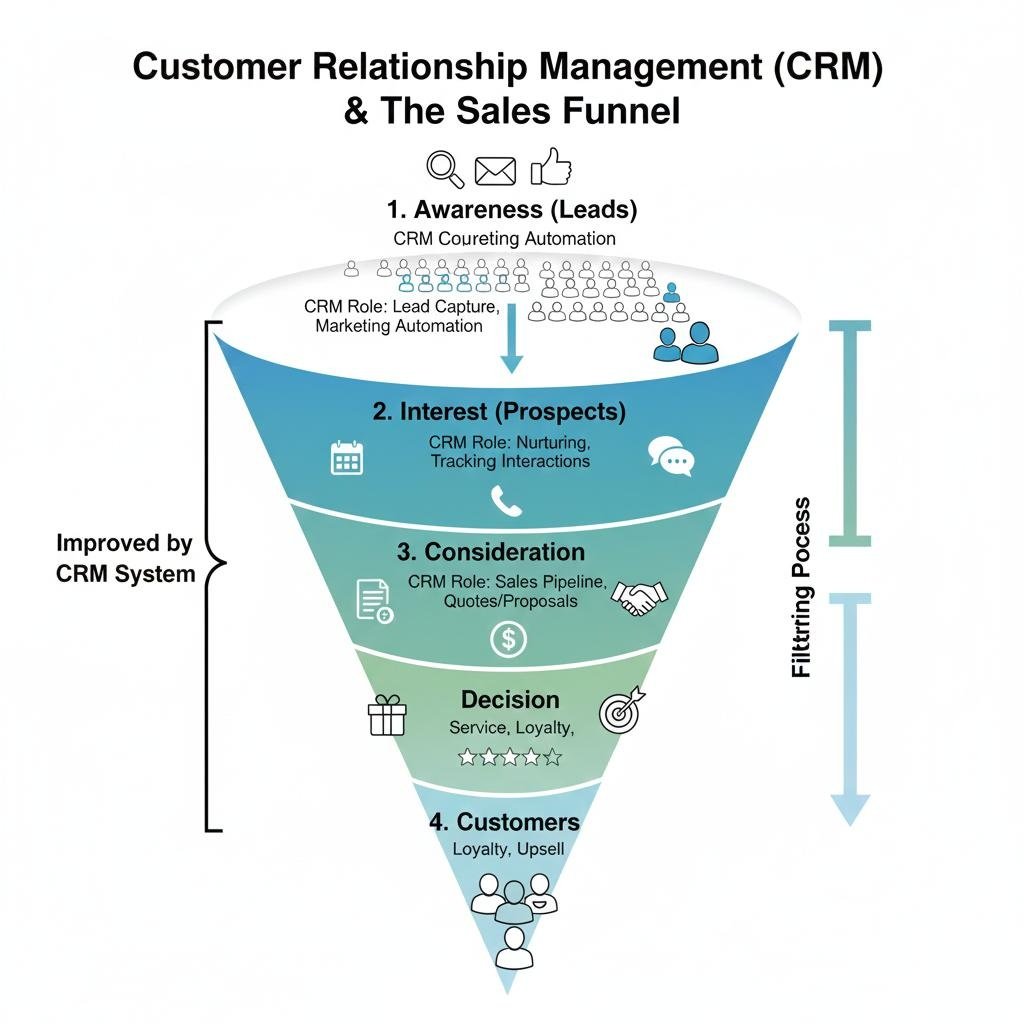
A sales pipeline shows where prospects currently stand in the purchasing journey. Without proper tracking, sales managers may not know which opportunities are active, which require follow-up, and which are close to conversion.
Business CRM Software provides businesses with a visual and structured sales pipeline.
For example, a pipeline can include stages such as:
New Lead → Contacted → Qualified → Meeting → Proposal → Negotiation → Won/Lost
Using Business CRM Software, sales teams can move prospects from one stage to another as the relationship develops.
Sales managers can also identify opportunities that have remained inactive for too long. This helps teams prioritize their efforts instead of treating every lead in exactly the same way.
5. Business CRM Software and Marketing Automation
Marketing teams often manage multiple activities simultaneously. They may run Google Ads, Meta Ads, email campaigns, social media campaigns, SEO campaigns, WhatsApp marketing, and remarketing campaigns.
Business CRM Software can connect customer information with marketing activities, allowing businesses to create more organized customer journeys.
Marketing automation through Business CRM Software can support activities such as:
- Automated email follow-ups
- Lead nurturing
- Customer segmentation
- Campaign tracking
- Lead scoring
- Remarketing workflows
- Communication reminders
- Customer re-engagement
For example, if someone downloads a service brochure but does not contact the company, an automated workflow can send relevant follow-up communication.
This allows businesses to remain connected with prospects without requiring employees to manually perform every action.
6. Business CRM Software for WhatsApp and Communication
Communication is an essential part of modern customer acquisition. Many businesses receive enquiries through WhatsApp because customers prefer fast and convenient communication.
Business CRM Software can help organizations structure WhatsApp-based customer communication when integrated with appropriate communication platforms and APIs.
Instead of allowing customer conversations to remain isolated on individual devices, businesses can create processes where customer information and communication activities are recorded systematically.
A Business CRM Software solution can work alongside:
- WhatsApp Marketing
- Bulk SMS Marketing
- Email Marketing
- IVR and voice campaigns
- Website live chat
- AI chatbots
- WhatsApp chatbots
This creates a connected communication ecosystem.
For businesses managing hundreds or thousands of leads, Business CRM Software can make communication significantly more organized.
7. Business CRM Software Helps Automate Repetitive Tasks
Employees spend considerable time performing repetitive administrative tasks. These can include entering customer information, setting reminders, sending follow-up messages, assigning leads, updating sales stages, and preparing reports.
Business CRM Software can automate many of these activities.
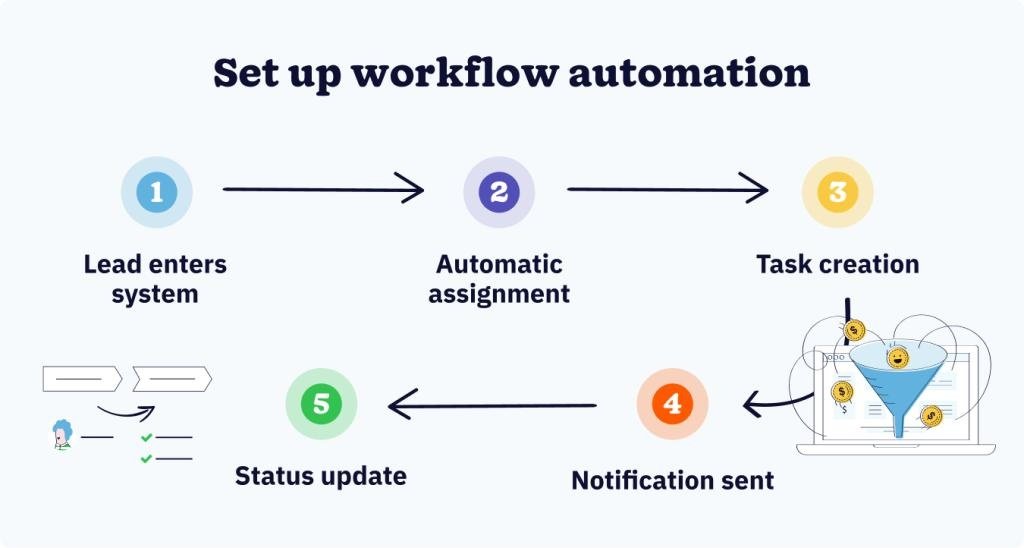
For example, when a new lead enters the system, the software may automatically:
- Create a customer profile.
- Record the lead source.
- Assign the lead to a salesperson.
- Create a follow-up task.
- Send an acknowledgement message.
- Update the sales pipeline.
- Notify the relevant team member.
This type of workflow automation reduces manual effort and allows employees to concentrate on higher-value activities.
When combined with marketing automation, Business CRM Software can become an important operational system for a growing organization.
8. Business CRM Software for Better Sales Follow-Ups
One of the most common reasons businesses lose potential customers is poor follow-up.
A customer may show interest today but make a purchasing decision several days or weeks later. If the sales team does not follow up at the appropriate time, the opportunity can disappear.
Business CRM Software helps businesses schedule and track follow-ups.
Sales representatives can receive reminders for:
- Calls
- Meetings
- Product demonstrations
- Proposal follow-ups
- Payment reminders
- Renewal discussions
- Customer check-ins
With Business CRM Software, managers can also monitor whether follow-ups are actually being completed.
This creates accountability within the sales team while improving the overall customer journey.
9. Business CRM Software for Customer Segmentation
Not every customer has the same requirements. A company may have customers from different industries, locations, budgets, age groups, product categories, or stages of the buying journey.
Business CRM Software allows businesses to segment customers according to relevant characteristics.
For example, a company could create segments such as:
- New prospects
- Existing customers
- High-value customers
- Repeat customers
- Inactive customers
- Local customers
- Corporate clients
- E-commerce buyers
- Service-based clients
Customer segmentation through Business CRM Software can support personalized communication.
Instead of sending the same message to everyone, businesses can develop targeted campaigns that are more relevant to specific customer groups.
10. Business CRM Software Supports Data-Driven Decisions
Business decisions should ideally be based on reliable information rather than assumptions.
Business CRM Software provides valuable data about leads, customers, sales activities, conversion rates, revenue opportunities, marketing sources, and team performance.
Managers can use CRM reports to understand:
- Which marketing channel generates the most leads?
- Which source produces the highest-quality customers?
- Which salesperson converts the most opportunities?
- How long does the average sales cycle take?
- How many leads are currently active?
- Where are prospects dropping out?
- Which customers require attention?
This information allows businesses to optimize their strategies.
When integrated with analytics tools, Business CRM Software can provide an even broader view of business performance.
11. Business CRM Software and Google Ads Lead Generation
Paid advertising can generate a large volume of enquiries, but generating leads is only one part of the process.
The business must also respond quickly, qualify leads, follow up, and convert opportunities.
Business CRM Software can connect the lead generation process with sales management.
For example, a lead generated through Google Ads can enter the CRM system with information about the campaign or source. The sales team can then follow the lead through different stages.
This helps businesses evaluate not only how many leads their advertising generates but also how many of those leads become customers.
Therefore, Business CRM Software can help connect advertising investment with sales outcomes.
12. Business CRM Software for Social Media Marketing
Social media platforms have become important channels for customer acquisition and brand communication.
Businesses may generate enquiries through Facebook, Instagram, LinkedIn, and YouTube. Managing these enquiries separately can become difficult as lead volume increases.
Business CRM Software can help organize leads generated from social media campaigns and integrate them into a broader sales workflow.
When social media marketing is connected with Business CRM Software, businesses can potentially gain a clearer understanding of the customer journey from initial interaction to final conversion.
This can make social media marketing more measurable and structured.
13. Business CRM Software for E-Commerce Businesses
E-commerce businesses handle large amounts of customer data and transactions. Customers may interact with the brand through websites, advertisements, email, social media, WhatsApp, and customer support channels.
Business CRM Software can help organize these interactions.
For an e-commerce company, Business CRM Software can support:
- Customer database management
- Repeat purchase campaigns
- Customer segmentation
- Abandoned customer follow-ups
- Promotional communication
- Customer support
- Feedback management
- Loyalty initiatives
By understanding customer behavior, businesses can create more relevant marketing campaigns and improve customer retention.
14. Business CRM Software and Customer Retention
Acquiring a new customer can require significant marketing and sales investment. Retaining an existing customer can therefore be extremely valuable.
Business CRM Software helps businesses maintain an ongoing relationship with customers after the initial sale.
Businesses can use Business CRM Software to schedule:
- Renewal reminders
- Service follow-ups
- Customer satisfaction calls
- Product recommendations
- Birthday or anniversary communication
- Loyalty campaigns
- Cross-selling campaigns
- Upselling opportunities
Consistent communication helps businesses remain connected with their customers.
A CRM system can therefore support both customer acquisition and long-term retention.
15. Business CRM Software for AI Chatbots and Intelligent Automation
Artificial intelligence is changing the way companies communicate with customers.
AI chatbots can answer common questions, collect information, qualify leads, and direct customers toward relevant services. When integrated with Business CRM Software, these interactions can become part of the overall customer journey.
For example, an AI chatbot on a website can collect:
- Customer name
- Contact information
- Service requirement
- Preferred time
- Budget range
- Location
- Product interest
This information can then be transferred into the CRM workflow.
The combination of AI and Business CRM Software can help businesses respond faster while reducing repetitive work for employees.
16. Business CRM Software for Small Businesses
CRM technology is not limited to large corporations.
Small businesses can also benefit from Business CRM Software, especially when they begin receiving more leads than they can comfortably manage through spreadsheets or notebooks.
For a small business, Business CRM Software can create a structured process without requiring a large administrative team.
A small organization can use CRM technology for:
- Lead tracking
- Sales follow-ups
- Customer management
- Marketing automation
- Communication
- Reporting
- Task management
As the business grows, its CRM system can become an important foundation for organized operations.
17. Business CRM Software for Digital Marketing Agencies
Digital marketing agencies manage multiple clients, campaigns, leads, and communication channels. Business CRM Software can help agencies organize this complexity.
A digital marketing agency may combine CRM systems with services such as SEO, Google Business Profile optimization, Google Ads, Meta Ads, social media marketing, website development, WhatsApp marketing, email marketing, and lead generation.
With Business CRM Software, agencies can track leads generated through different campaigns and provide clients with better reporting.
For example, an agency can evaluate whether a campaign generated traffic, enquiries, qualified leads, appointments, or actual sales.
This creates a stronger connection between digital marketing activity and business outcomes.
18. How to Choose the Right Business CRM Software
Selecting Business CRM Software should depend on the company’s actual requirements rather than simply choosing the platform with the largest number of features.
Before selecting Business CRM Software, businesses should consider:
Ease of Use
The software should be simple enough for employees to understand and use consistently.
Scalability
The CRM should be able to accommodate increasing numbers of leads, customers, employees, and communication activities.
Automation
Businesses should evaluate whether the Business CRM Software can automate repetitive workflows.
Integration
The CRM should ideally integrate with websites, advertising platforms, email systems, communication tools, analytics platforms, and other business applications.
Reporting
Good reporting capabilities are important for understanding sales and marketing performance.
Security
Customer data is valuable, so businesses should evaluate authentication, access control, backups, data security, and privacy practices.
Customization
Every organization has different sales processes. The chosen Business CRM Software should provide sufficient flexibility for customized pipelines and workflows.
19. Business CRM Software Integration With Digital Marketing Services
CRM technology becomes even more powerful when integrated with a complete digital marketing strategy.
A business can combine Business CRM Software with:
Website & App Development: Business websites, e-commerce websites, custom applications, mobile apps, landing pages, and website maintenance can be connected with CRM workflows.
Paid Advertising: Google Ads, Meta Ads, YouTube Ads, LinkedIn Ads, remarketing, and lead generation campaigns can be connected with CRM processes.
Automation & Communication: WhatsApp marketing, bulk SMS, IVR, promotional calls, chatbots, email automation, and lead nurturing can work alongside Business CRM Software.
This integrated approach can help businesses create a connected marketing and sales ecosystem.
20. Business CRM Software and Online Reputation Management
Customer relationships do not end after a sale. Customer satisfaction can influence online reviews, referrals, repeat purchases, and brand reputation.
Business CRM Software can help businesses maintain customer records and identify opportunities to request feedback after successful interactions.
When combined with online reputation management, businesses can develop systematic processes around:
- Google review management
- Customer feedback
- Brand monitoring
- Reputation building
- Customer engagement
A satisfied customer can become a repeat buyer or brand advocate, while unresolved customer issues can potentially damage reputation.
Therefore, CRM and reputation management can work together as part of a broader customer experience strategy.
21. Business CRM Software Can Improve Team Productivity
When customer information is scattered between employees, communication becomes difficult.
Business CRM Software creates a centralized environment where authorized team members can access relevant information.
Sales managers can see team activities, marketing teams can review lead sources, customer support teams can access customer history, and management can evaluate performance.
This can reduce unnecessary internal communication and improve coordination.
For growing companies, Business CRM Software can provide the structure required to manage increasingly complex customer operations.
22. Business CRM Software and ROI Measurement
Marketing spending should ideally produce measurable business outcomes.
Business CRM Software can help organizations connect lead sources with sales results.
Suppose a company receives 1,000 leads from different marketing channels. A basic lead report may show the number of enquiries, but CRM reporting can provide deeper insights into qualification, conversion, sales value, and customer retention.
23. Business CRM Software: Why Professional Implementation Matters
Buying software is only one part of successful CRM implementation.
Businesses also need proper configuration, workflow planning, integrations, employee training, data organization, and ongoing optimization.
Poor implementation can result in employees avoiding the system or entering incomplete information.
Professional CRM implementation should consider:
- Business objectives
- Customer journey
- Lead sources
- Sales pipeline
- Team responsibilities
- Automation requirements
- Communication channels
- Reporting requirements
- Integration requirements
A customized approach ensures that Business CRM Software supports the actual business process rather than forcing the company into an unsuitable workflow.
24. Digital Marketing India: Helping Businesses Build Connected Growth Systems
Digital Marketing India, led by Saurabh Kumar with 15+ years of experience in digital marketing, provides a broad range of digital solutions designed to help businesses establish and grow their online presence.
For businesses exploring Business CRM Software, integrating CRM with digital marketing activities can help create a more organized customer acquisition and retention process.
The objective should not simply be to generate more leads. Businesses should build a system in which leads are captured, organized, nurtured, converted, and retained.

25. Business CRM Software: The Future of Business Growth
The future of business management is increasingly connected, automated, and data-driven.
Business CRM Software is evolving beyond traditional customer databases. Modern CRM ecosystems can combine automation, artificial intelligence, chatbots, marketing platforms, analytics, communication systems, sales pipelines, and customer support.
Businesses that build connected systems can potentially respond faster to customers and make more informed decisions.
From lead generation to customer retention, Business CRM Software can support multiple stages of the customer journey.
The key is to choose a solution that aligns with business objectives and implement it properly.
Conclusion: Build a Smarter Customer Management System
In today’s competitive environment, businesses cannot depend entirely on spreadsheets, manual reminders, scattered customer records, or disconnected communication channels.
Business CRM Software provides a structured way to manage leads, customers, sales opportunities, communication, automation, marketing activities, and reporting from a centralized environment.
From small businesses to growing enterprises, the right Business CRM Software can improve organization, support sales teams, strengthen customer relationships, and provide valuable insights into business performance.
Digital Marketing India, led by Saurabh Kumar with 15+ years of digital marketing experience, offers solutions across website and app development, SEO, social media marketing, paid advertising, automation, communication, creative services, video production, content marketing, analytics, reporting, and online reputation management.
Contact Digital Marketing India
Name: Saurabh Kumar
Experience: 15+ Years in Digital Marketing
Official Address: S15-00709, Vaidehi Niwas, Bhairomunna Link Road, Sahnewal, Ludhiana, Punjab – 141120
Contact: +91 76966 77728